Up to 328 kVA
Danfoss powertrain combinations deliver up to 328 kVA. The configuration is selected against the vessel load and the available port supply.
Green Harbor Technology · Shore power
Mobile shore power, configured for the ships you serve.
A trailer mounted container unit for supplying compatible docked ships from shore. Configurable Danfoss drivelines deliver up to 328 kVA, with vessel consumption records and billing workflows in the Emiko platform.
Key features
Custom shore power developed with customers and Danfoss, monitored and billed on the Emiko platform.
Danfoss powertrain combinations deliver up to 328 kVA. The configuration is selected against the vessel load and the available port supply.
Built on Danfoss drivelines, ShoreSupply is configured per port and ship rather than sold as one fixed unit size, developed in collaboration with customers.
For the electrical load transferred to shore power, switching off the ship's auxiliary generator removes its exhaust and engine noise at the dock. Total emissions depend on the electricity source and system losses.
Running on shore power instead of diesel generators reduces noise and vibration on board, for the crew and for workers and neighbours ashore.
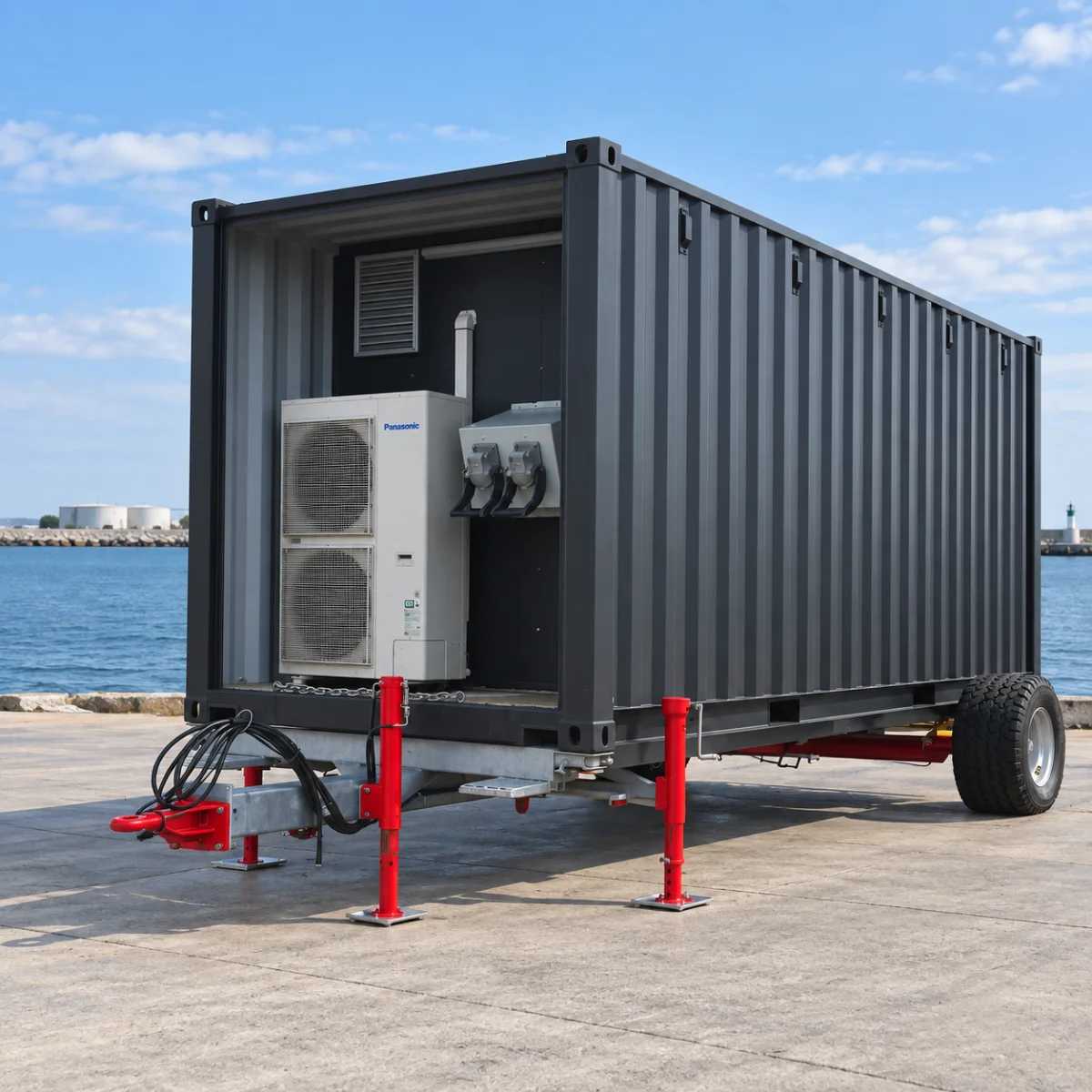
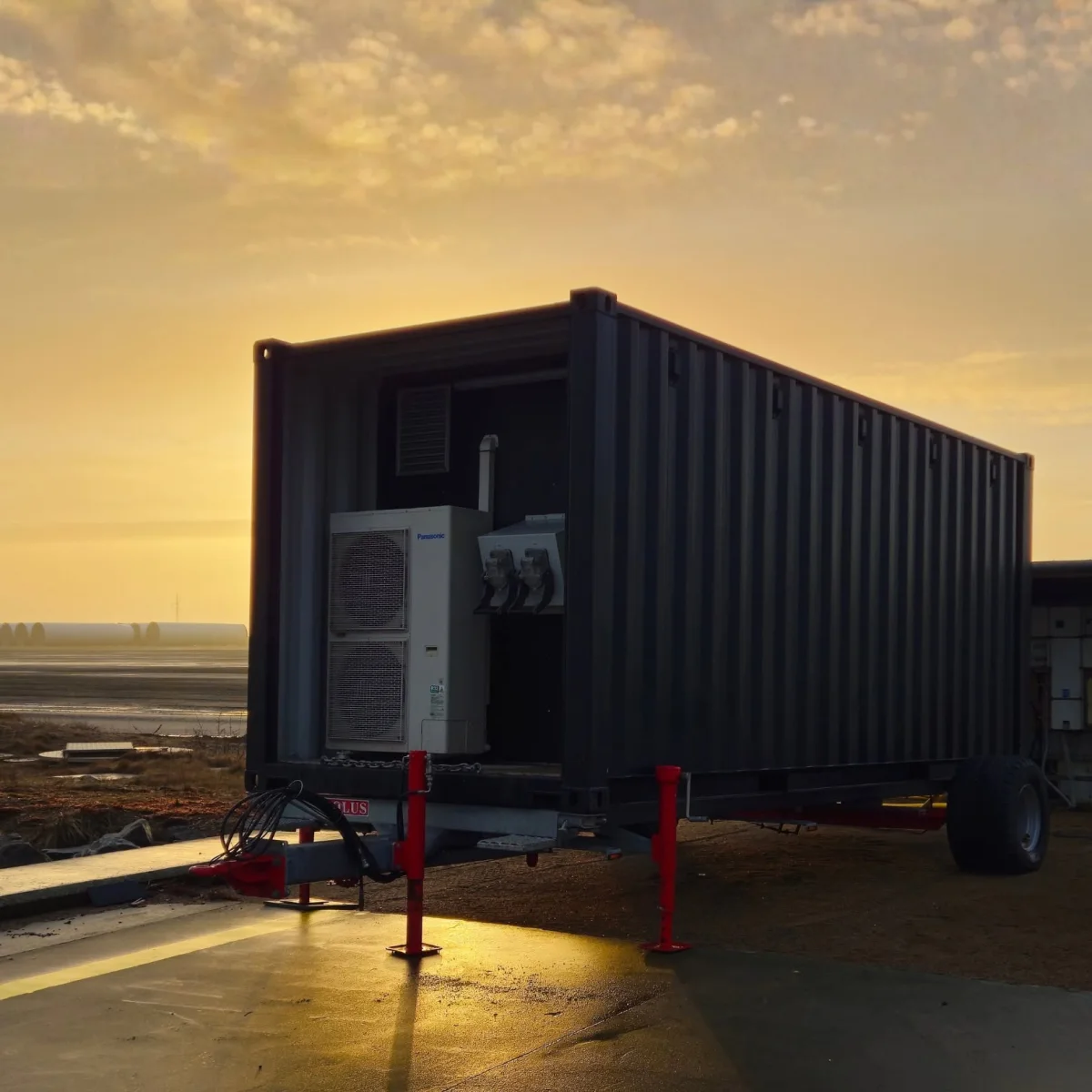
The conversion equipment is housed in a container on a road trailer chassis with stabiliser jacks. Grid connection, protection and cabling are planned for each operating location.
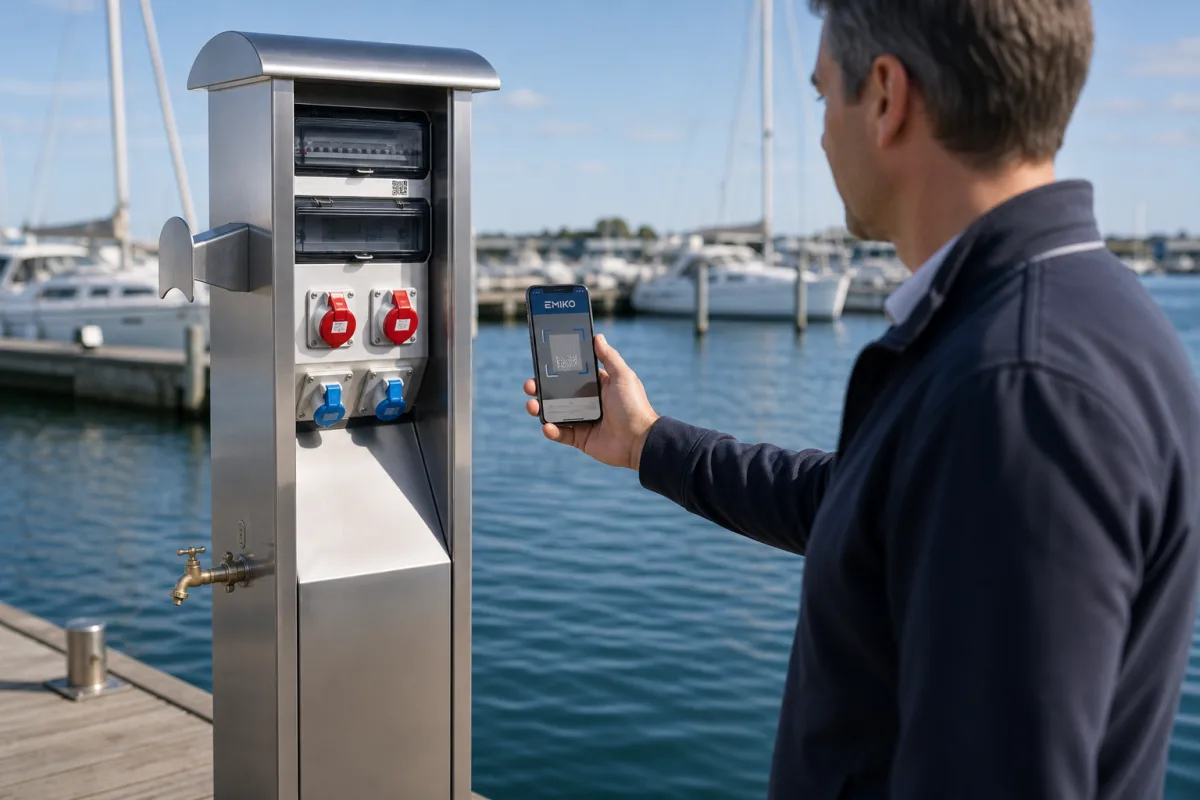
All power usage is monitored and logged in real time in the Emiko platform, giving ports and ship operators a complete overview of consumption per connected ship.
Emiko generates advanced consumption reports and automates invoicing through the Oeconomia API, for fast and accurate billing of each ship.
ShoreSupply can support battery charging for hybrid or electric vessels where the ship and shore installation are designed for the required charging profile.
How it works
Position and connect the unit, transfer compatible vessel loads to shore power, and record consumption in the Emiko platform.
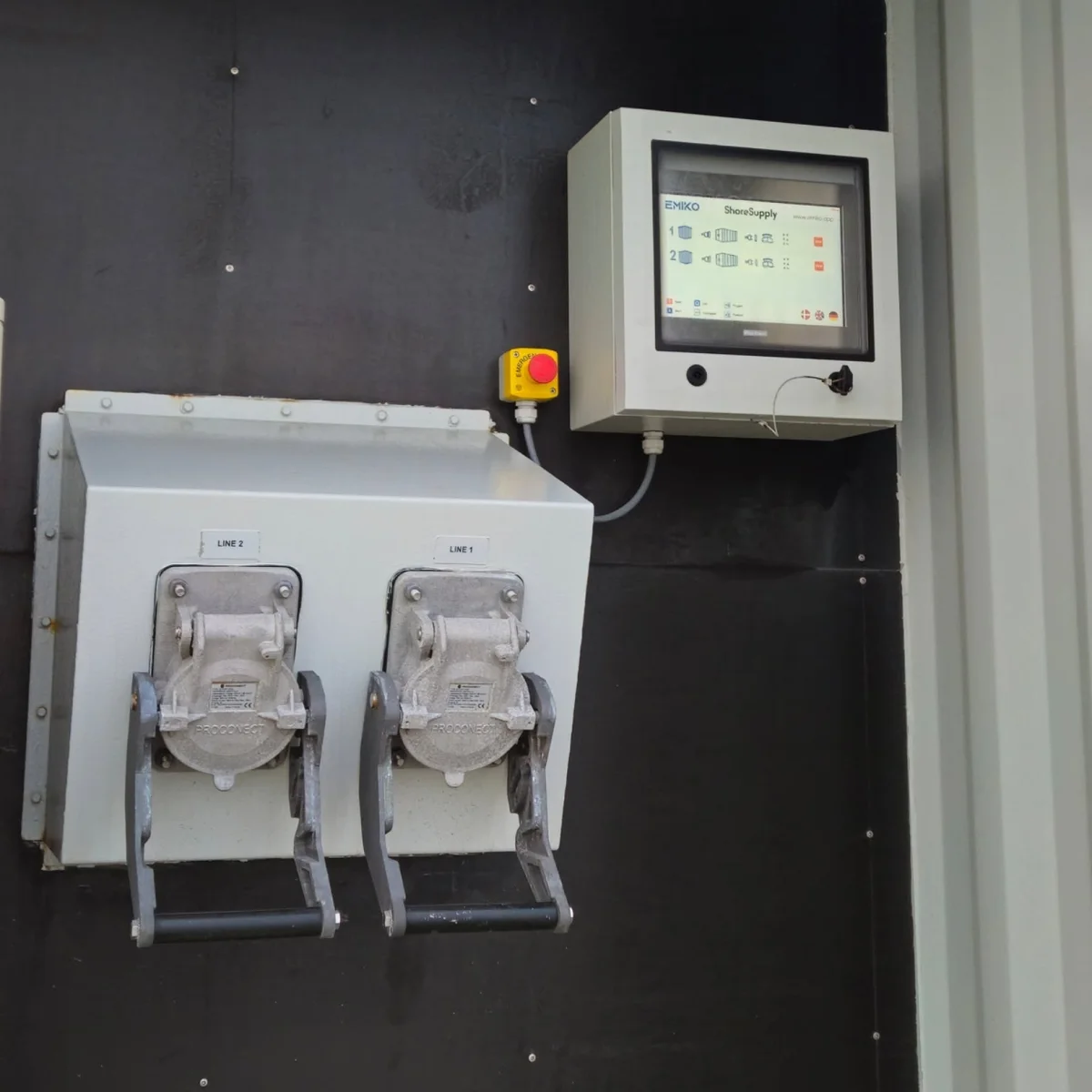
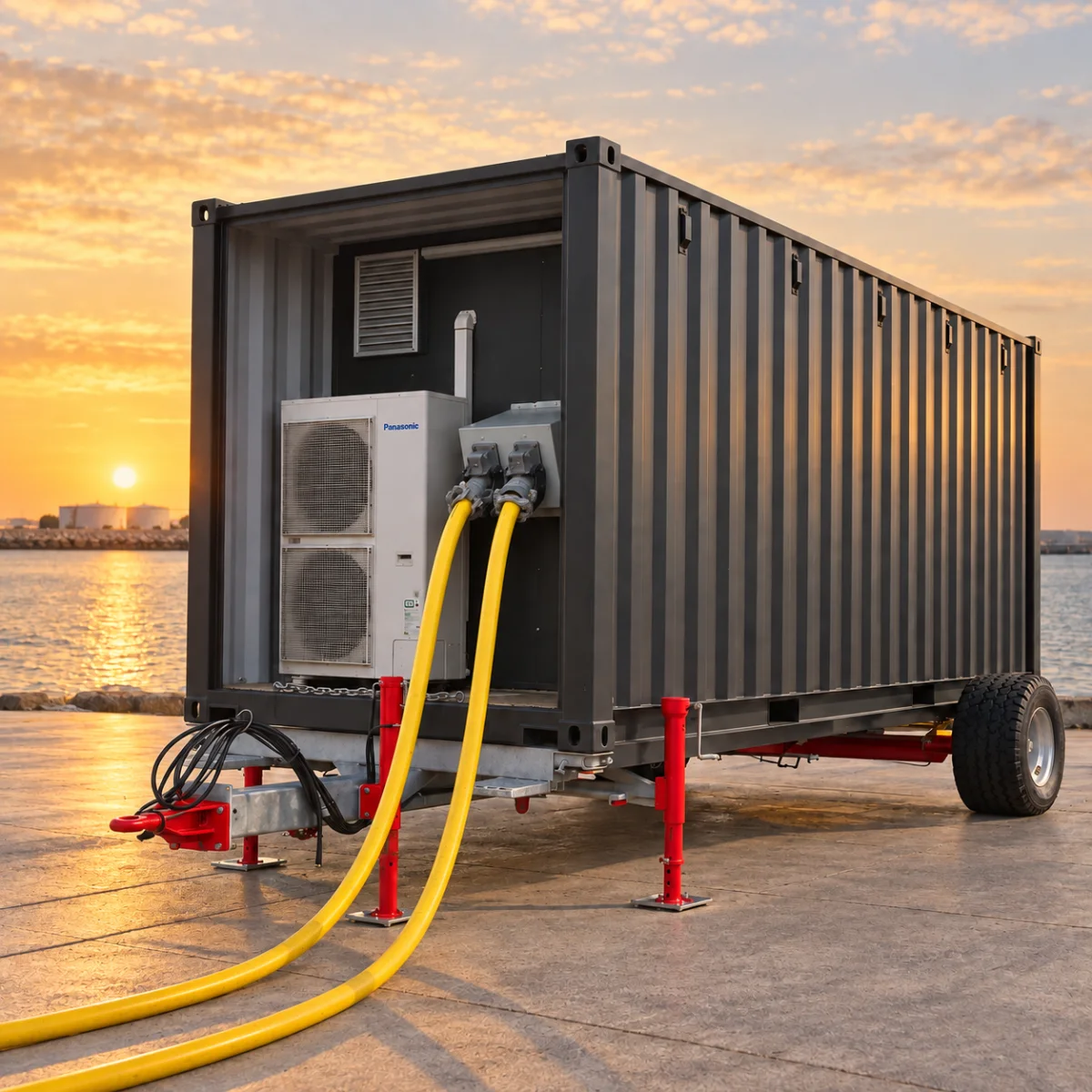
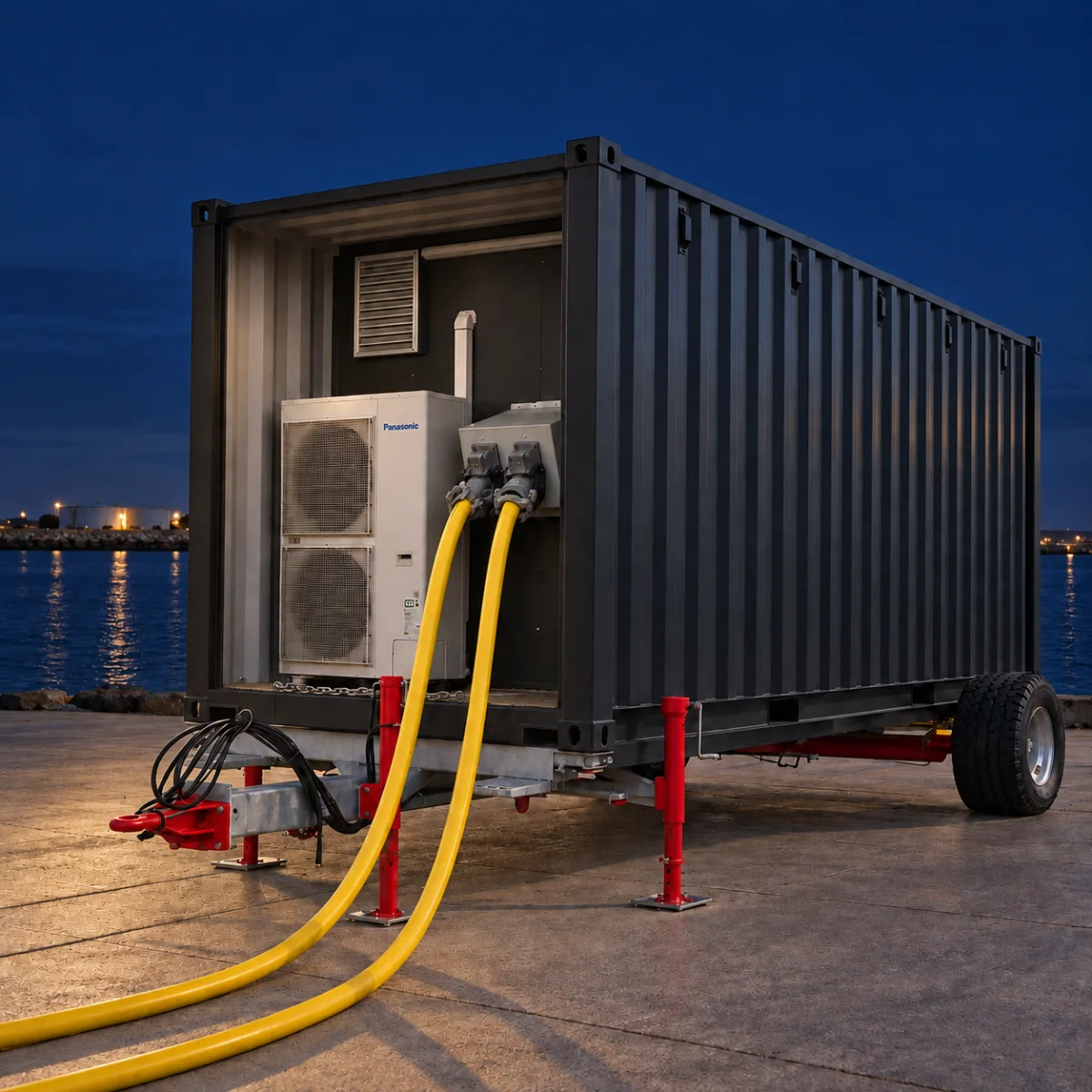
ShoreSupply is a mobile unit built into a standard black shipping container enclosure fitted with a road trailer chassis: a tow coupling at the front and folding stabiliser legs to level and steady it once positioned. One end wall is a wide roller door that opens onto the power conversion and cooling equipment and a bank of disconnect switches.
The mobile unit can be relocated when the assigned docking position changes. Each location still needs suitable electrical supply, protection, cabling and access.
Tow the unit to the ship's mooring, lower the stabiliser jacks and connect it to the port supply
Connect the ship's shore power cable to ShoreSupply
Transfer the compatible vessel loads to shore power using the agreed ship and port procedure
Emiko monitors and logs power consumption per ship in real time
Consumption reports and invoices are generated automatically through the Oeconomia API
The crew follows usage and billing in the Emiko Customer App on a mobile device
Ecosystem
ShoreSupply is developed with Danfoss, runs on Danfoss VLT drivelines and is managed on Vikingegaarden's Emiko platform.
The Emiko platform provides consumption monitoring, reports and agreed billing workflows through the Oeconomia API. Ship operators can review their usage and billing in the Emiko Customer App.
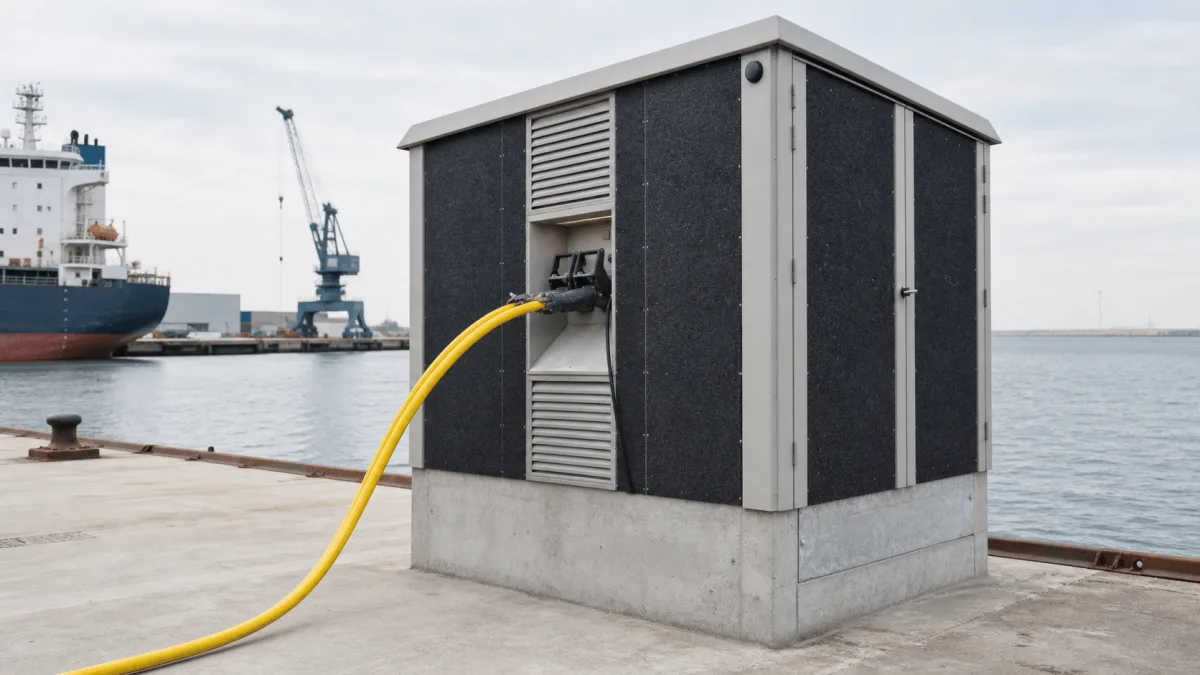
ShoreSupply can form part of an installation with MarineMax power kiosks. The grid and vessel requirements determine the conversion equipment and connection arrangement.
Technical details
One container, sized to the vessels that actually call: the powertrain combination is chosen per site.
Ask about a specification| Spec | ShoreSupply |
|---|---|
| Power output | Up to 328 kVA |
| Driveline | Danfoss VLT drives, flexible powertrain combinations |
| Format | Standard shipping container on a trailer |
| Metering | Per ship, in Emiko |
| Invoicing | Automated through the Oeconomia API |
| Customer access | Emiko Customer App |
Product guide
ShoreSupply places the shore power conversion unit in a mobile container. Plan vessel compatibility, port infrastructure and the billing workflow around the ships using the service.
ShoreSupply is intended for ports and terminals where docked vessels need electrical power for onboard loads such as lighting, refrigeration and ventilation. Supplying those loads from shore can allow a compatible vessel to stop its auxiliary generator while docked.
Suitability depends on vessel voltage, frequency, connector, load profile and the available grid connection. The system can also support battery charging where the vessel and installation are designed for it; every project requires electrical and operational validation.
ShoreSupply is not sold as one fixed unit size. It is built on Danfoss VLT drivelines, and the powertrain combination is configured per port and per ship profile, up to 328 kVA from a single unit. That flexibility matters because shore power can strain a port's existing grid when several large ships draw power at once, so the configuration should reflect which vessels actually call, how long they stay and what they draw while docked.
ShoreSupply can be planned together with MarineMax power kiosks where the project calls for conversion. The required voltage, frequency and connection arrangement are confirmed for the complete installation. Vikingegaarden developed ShoreSupply in collaboration with customers and Danfoss, and helps specify the right combination for each site.
ShoreSupply places the conversion equipment in a container on a road-trailer chassis, with stabiliser legs for positioning. This mobile arrangement can reduce waterfront construction for the conversion unit itself, but the port may still require a suitable grid connection, protection, cabling and connection equipment.
The unit can be positioned for the assigned docking position and moved when operating plans change. Site access, towing, connection procedures and applicable electrical and maritime requirements must be resolved during project design.
Configured installations can meter each connected vessel and pass consumption records to the Emiko platform for reporting and billing workflows. The exact meter architecture, sampling interval, data availability and settlement process are defined for the project.
Where enabled, authorised users can review consumption and billing information in the Emiko Customer App. Integration with the Oeconomia API is available for agreed invoicing workflows.
When a compatible vessel switches off its auxiliary generator, local engine exhaust, noise and vibration associated with that generator are removed at the dock. The overall greenhouse-gas result depends on the vessel baseline, electricity mix and conversion losses and should be calculated for the specific installation.
The mobile format can reduce permanent construction for the conversion unit. The commercial case still depends on grid work, utilisation, energy tariffs, vessel compatibility, maintenance and the port’s billing model; grants or subsidies should be treated as programme- and date-specific.
Development partner
ShoreSupply was developed with Danfoss drive technology. The final powertrain and interface are specified for the vessels and electrical infrastructure at each port.
Good to know
Shore supply is electrical power supplied to a vessel while it is connected to a shore power source at a pier. Instead of running its own generators or engines, the ship uses shore power for lighting, air conditioning, appliances and battery charging while docked.
ShoreSupply is Vikingegaarden's shore power solution for docked ships, developed with customers and built on Danfoss drivelines. Flexible powertrain combinations deliver up to 328 kVA from a mobile, trailer mounted container unit, with monitoring and billing per ship in the Emiko platform.
For the electrical load moved from the auxiliary engine to shore power, exhaust, engine noise and vibration are removed at the dock. The total greenhouse-gas change depends on the electricity mix, conversion losses and the vessel baseline and should be calculated for the project.
It can support battery charging when the vessel, connector, protection and shore installation are designed for the required charging profile. Compatibility and available capacity must be confirmed for each project.
Requirements may include a grid connection, transformer or conversion equipment, protection, switchgear, cables and a vessel connection system. ShoreSupply makes the conversion unit mobile, but it does not remove the need for an electrical study, regulatory compliance or site-specific infrastructure.
Configured installations can record vessel-level consumption in the Emiko platform and use those records in an agreed billing workflow through the Oeconomia API. Meter class, data interval, tariff logic and settlement responsibilities are defined for the project.
Shore power can strain a port's existing electrical grid, especially when several large ships are docked and drawing power at the same time. That is why ShoreSupply's powertrain combination is sized per site, and why ports may pair shore power with grid upgrades or renewable sourcing as part of wider decarbonisation efforts.
Provide the required voltage, frequency, connector, load profile and intended charging use, together with the available port supply. Vikingegaarden uses these details to configure the Danfoss powertrain and confirm the ship and shore interfaces.
Have a question about your project?
Talk to our teamExplore
Let’s talk about your project
Tell us which ships call at your port, how long they stay and what power they need while docked. We help with the powertrain configuration and the Emiko setup.
Tinnetvej 70, 7173 Vonge, Denmark