AtoN House Nordic · Lights and lanterns

Marker lights

Marker lights for marine equipment and emergency wreck marking

Daniamant ML 100, ML 200 and ML 300 marker lights identify nets, moorings, aquaculture installations and marine work areas according to the marking plan. MSM MCL360N provides alternating blue and yellow light for emergency wreck marking under IALA recommendation R1001.

  • Daniamant ML 100, ML 200 and ML 300
  • Battery or external supply by model
  • MSM MCL360N emergency wreck lantern
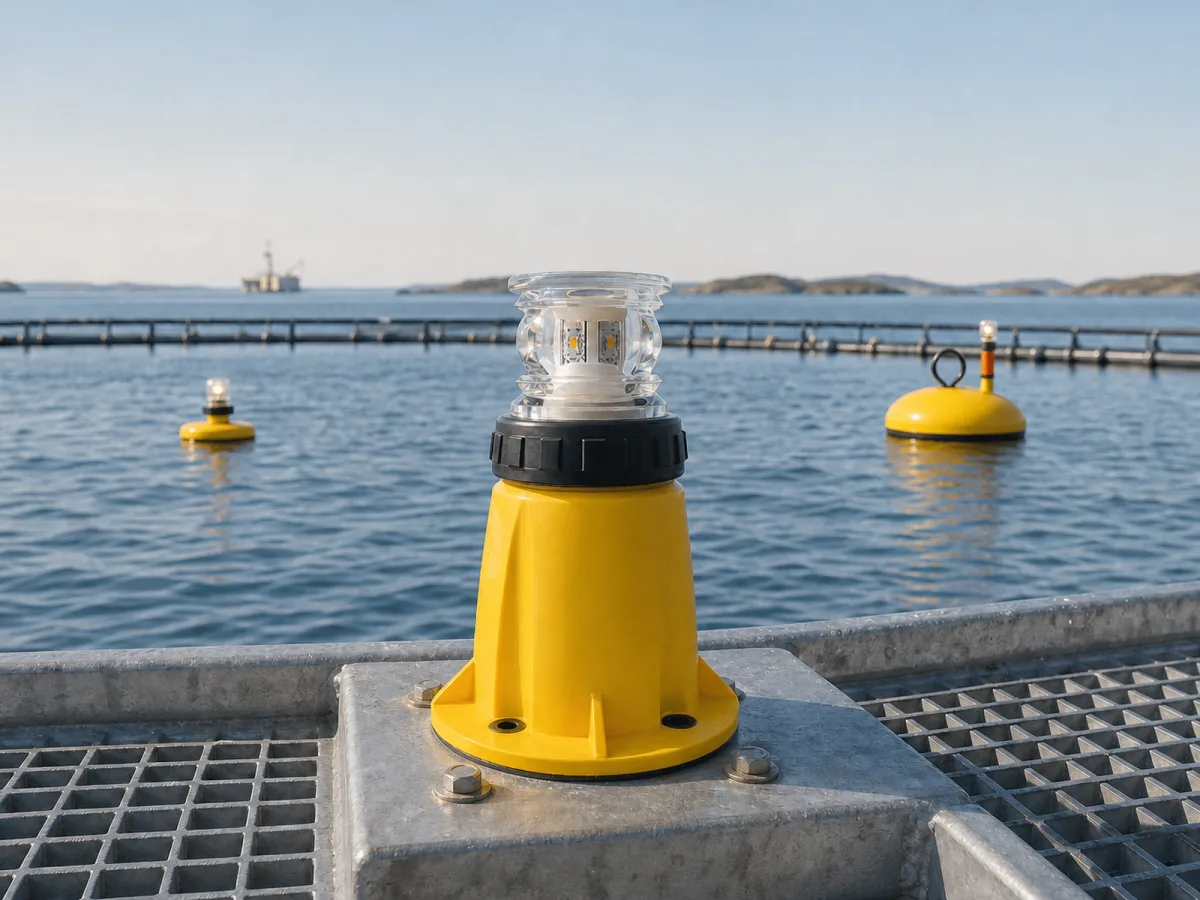
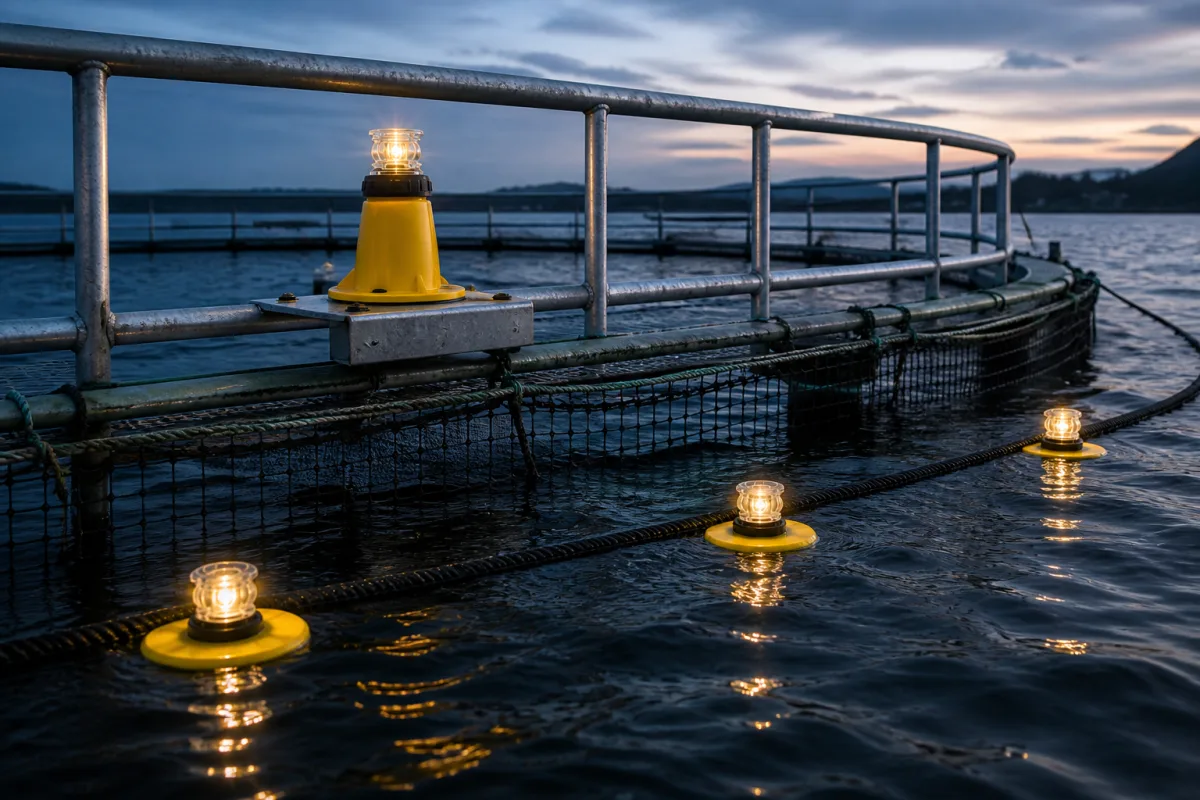
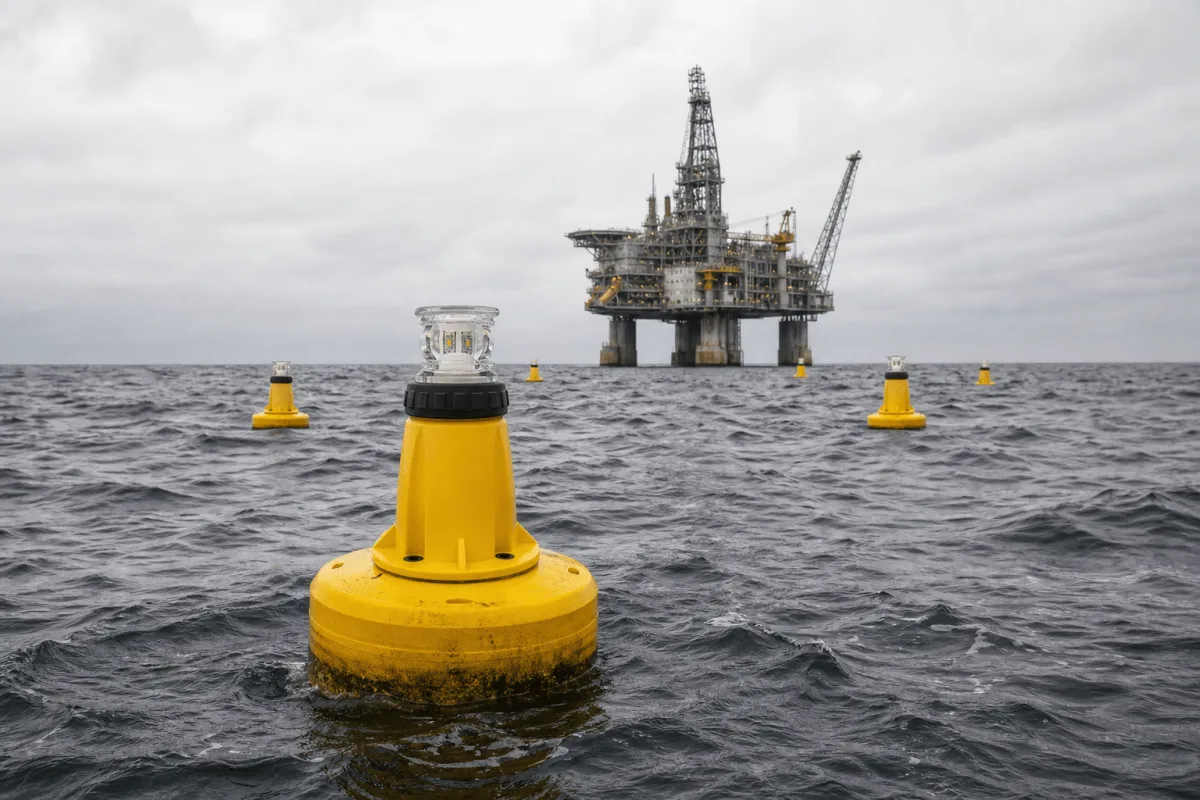
ML 300 marker light bolted to a fish-farm walkway, with an ML 200 on its yellow dome buoy and an ML 100 float disc in the water behind.
AtoN House Nordic Explore this division
ML series published range
2 or 3 NM
ML minimum intensity options
5 or 15 cd
MCL360N published range
Up to 6 NM

Key features

Application and selection criteria

The ML series provides specified colour and flash options for equipment marking. The MCL360N has a separate emergency wreck-marking function; its blue and yellow signal is selected by the responsible authority under the new-danger marking plan.

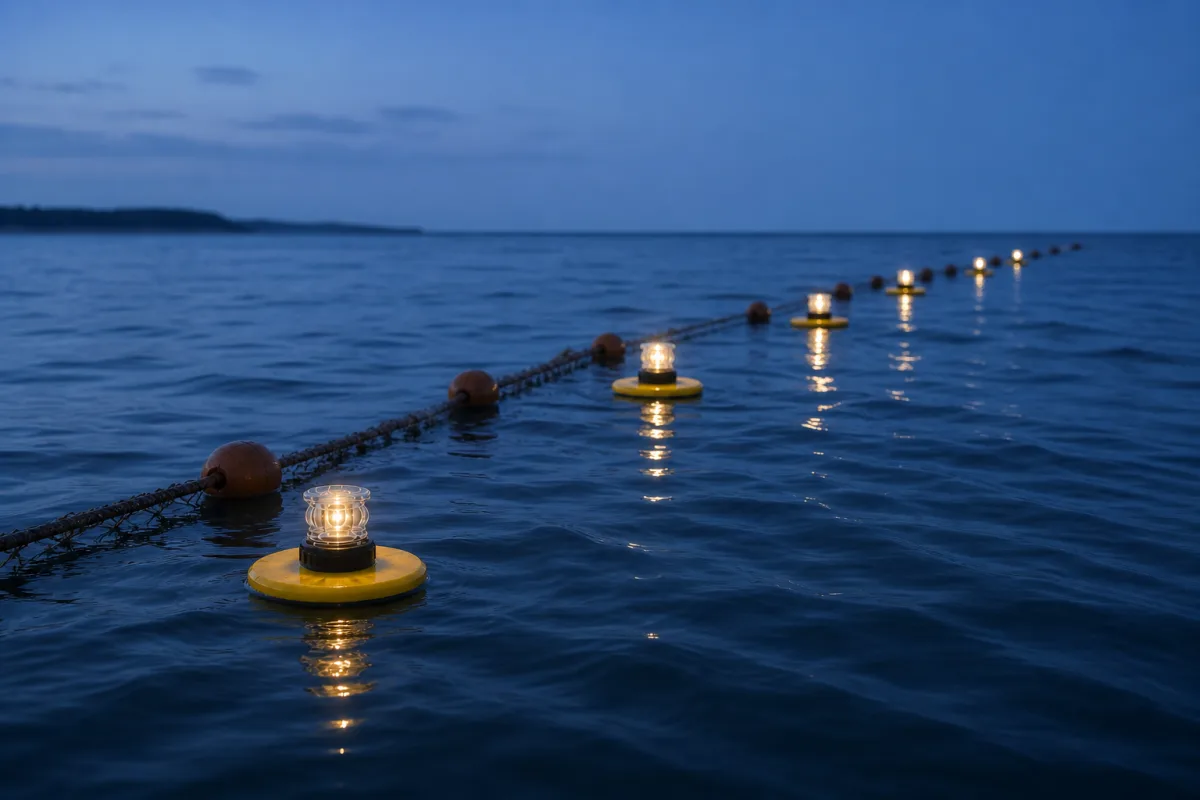
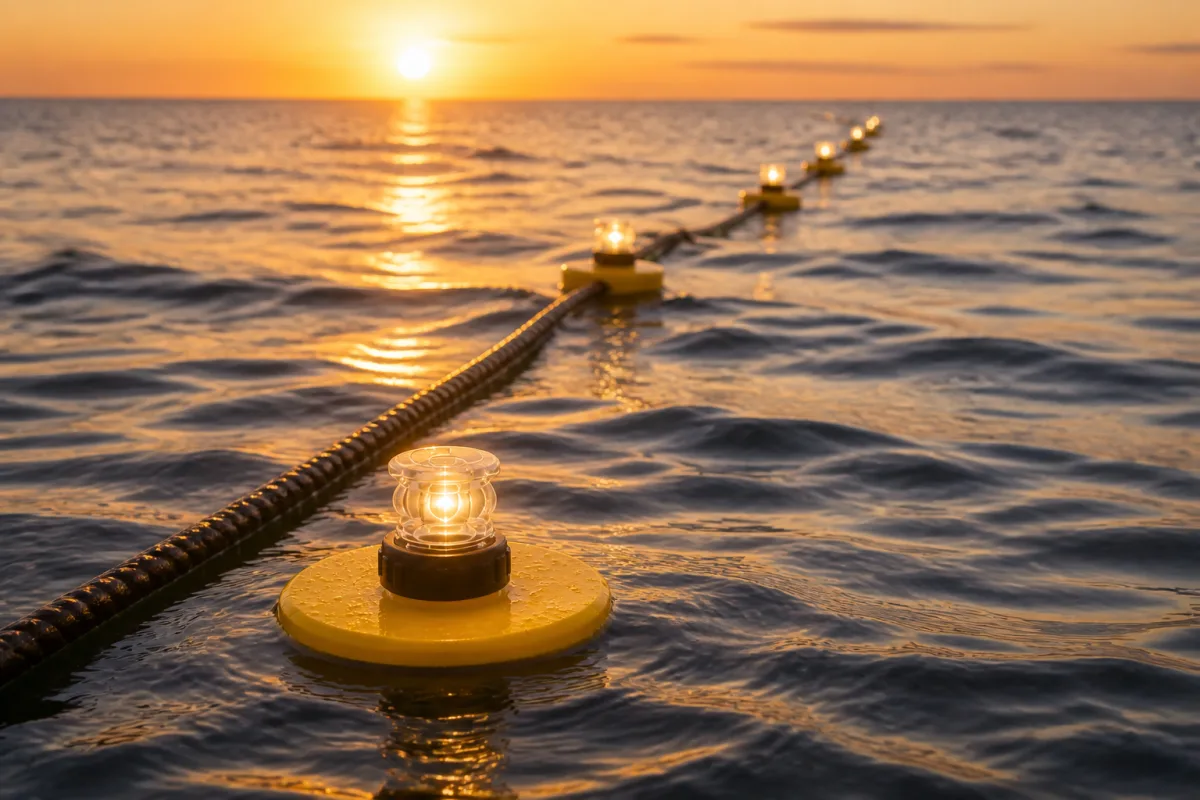
A line of ML 100 marker lights floating on a net line at blue hour, only the float discs and lit lanterns above the water.

Installation geometry

Selection accounts for mounting arrangement, exposure and required visibility. ML 100, ML 200 and ML 300 differ in body dimensions, immersion rating and supply arrangement; the published intensity classes are the same across the series.

Power and autonomy

ML 100 uses three alkaline D cells at 4.5 VDC; ML 200 uses a 4.5 VDC battery pack. ML 300 requires 10–27 VDC external supply, while MCL360N is a self-contained solar lantern; autonomy is confirmed for the selected operating character.

Equipment documentation

The supplied configuration is identified in the project documentation. Published figures and any applicable certificates are checked against the specified operating conditions.

Monitoring interfaces

Emiko monitoring is specified where supported by the equipment. Available signals, communications and alarm handling are confirmed before supply.

Commissioning record

Commissioning records the installed equipment, settings and functional checks. The handover documentation defines the inspection and maintenance requirements.

Site conditions

Selection accounts for the mounting arrangement, exposure and access for servicing. Site data forms part of the agreed specification.

Applications

Applications for marine marker lights

Anywhere a position, boundary or hazard has to stay visible after dark.

Buoys and mooring lines

Illuminate floating buoys and fixed mooring points for safe navigation around ports, shipping lanes and aquaculture zones.

Nets and aquaculture

Mark net positions and farming boundaries in coastal and offshore waters, with the model selected for mounting, power and intensity.

Platforms and wind farms

Highlight infrastructure, exclusion zones, seismic cable areas and temporary work sites at night and in poor visibility.

Port entrances and barriers

Improve visibility at approach points, floating barriers, containment lines and protected environmental zones.

How it works

Specification and commissioning

Selection accounts for mounting arrangement, exposure and required visibility. ML 100, ML 200 and ML 300 differ in body dimensions, immersion rating and supply arrangement; the published intensity classes are the same across the series.

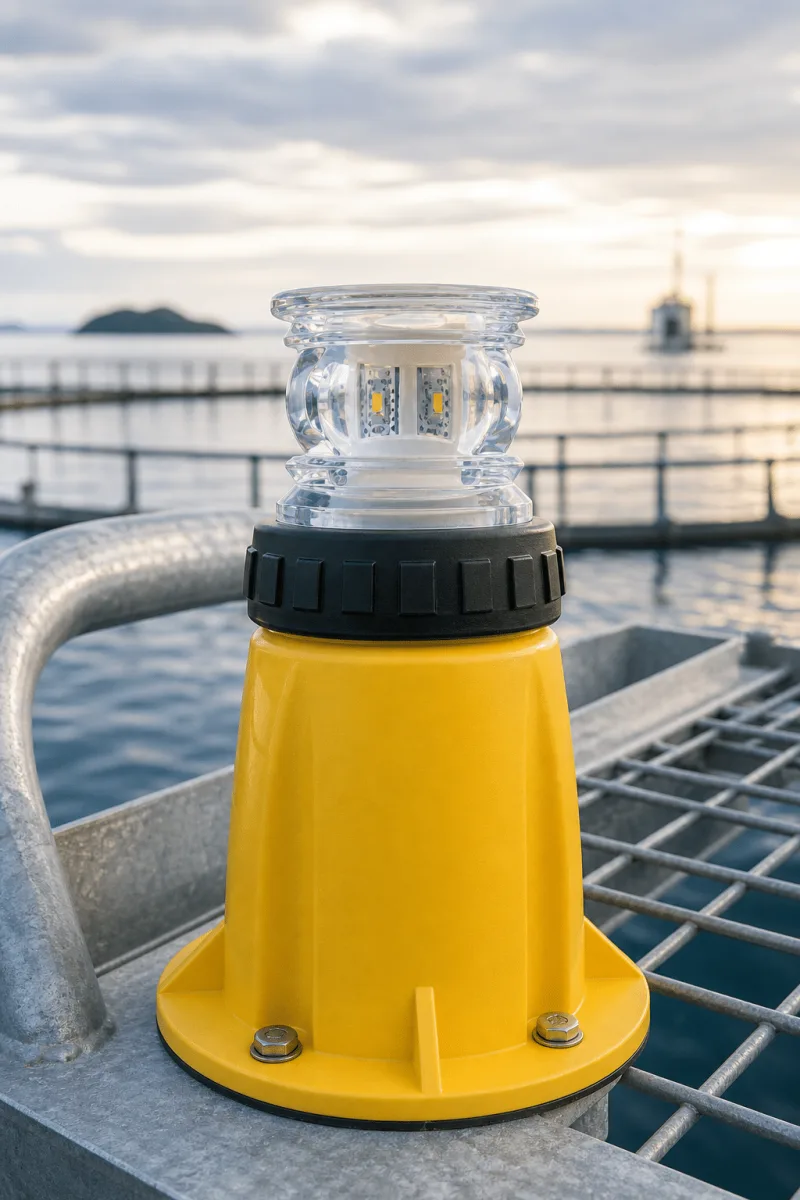
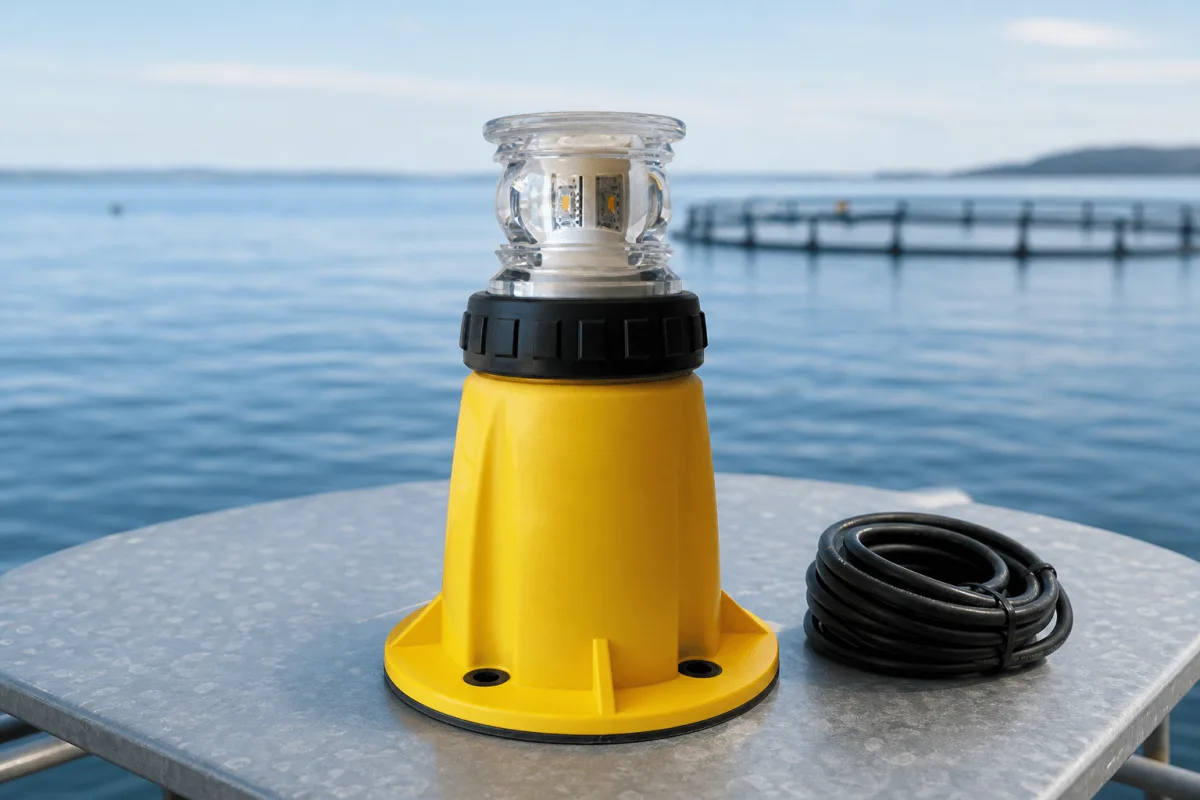
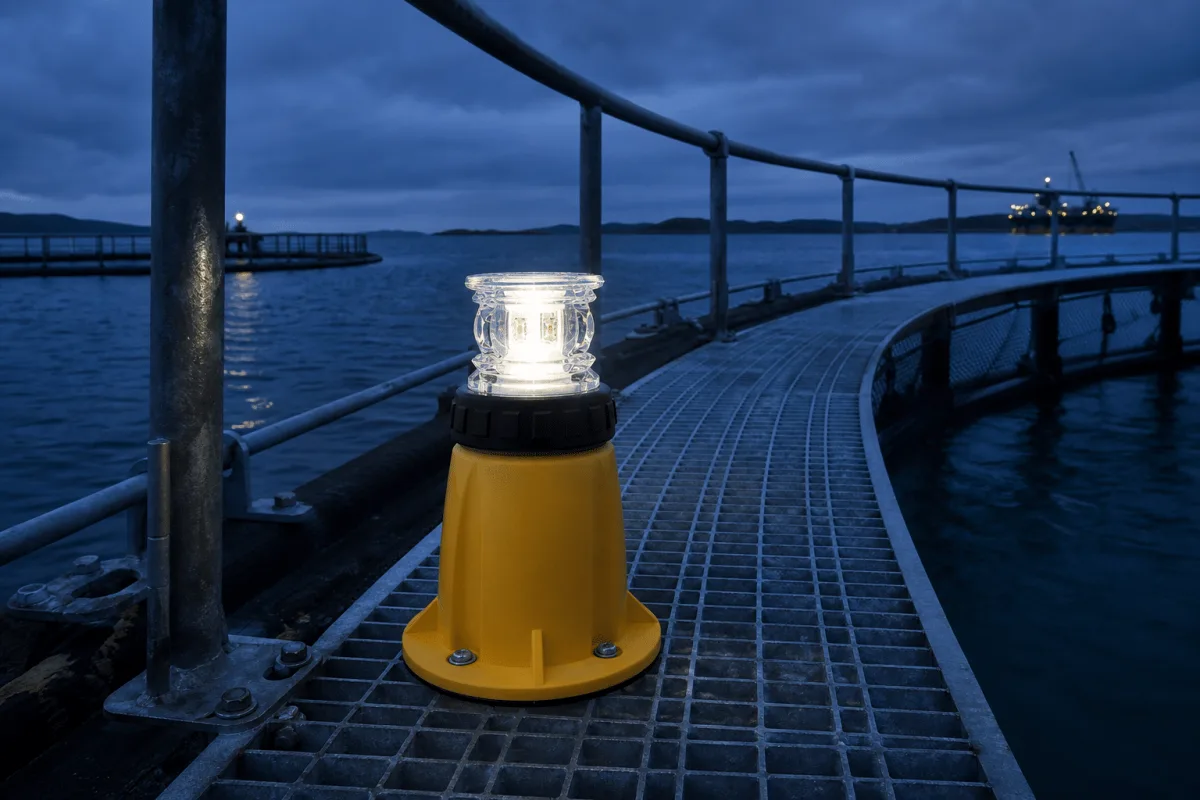
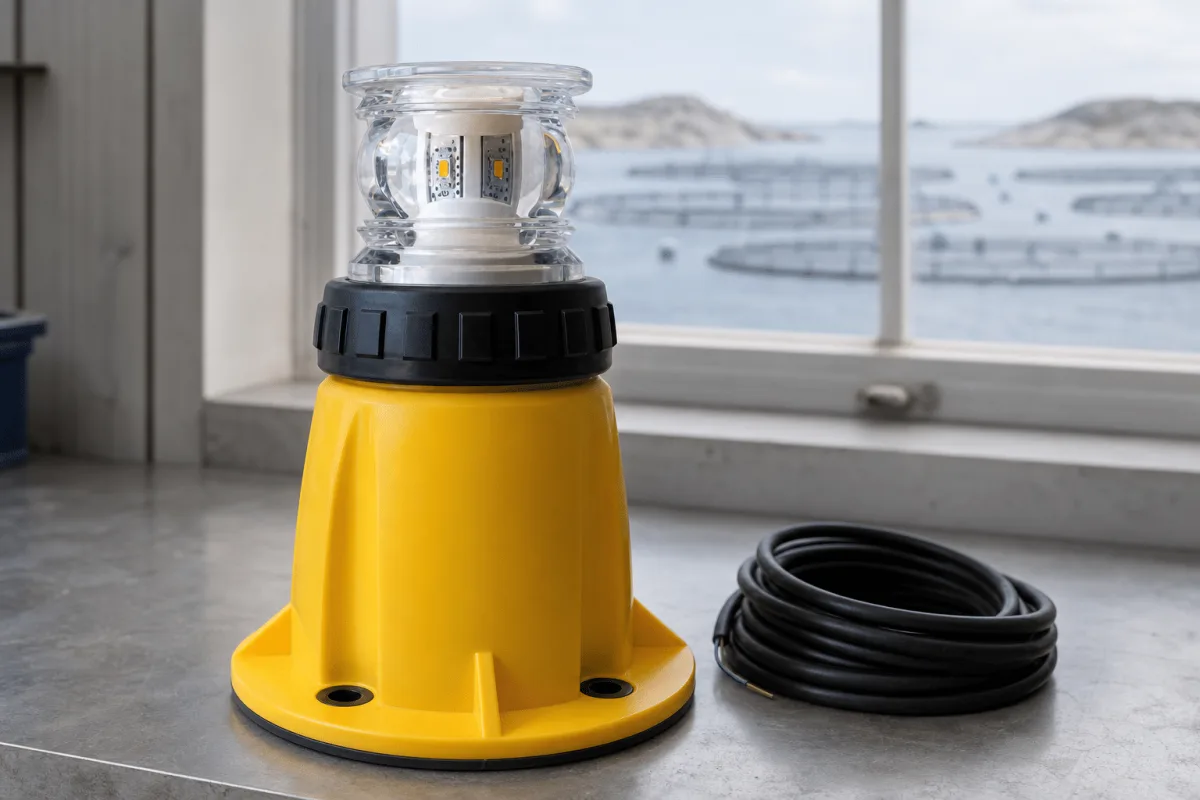
Close low-angle view of the ML 300 marker light showing its clear lens, black collar, yellow body and mounting flange.

The ML series provides specified colour and flash options for equipment marking. The MCL360N has a separate emergency wreck-marking function; its blue and yellow signal is selected by the responsible authority under the new-danger marking plan.

ML 100 uses three alkaline D cells at 4.5 VDC; ML 200 uses a 4.5 VDC battery pack. ML 300 requires 10–27 VDC external supply, while MCL360N is a self-contained solar lantern; autonomy is confirmed for the selected operating character.

  • The project establishes the marking function, position and operating requirements.

  • Vikingegaarden confirms the equipment configuration and installation requirements.

  • The installation scope includes mounting, power and supported monitoring interfaces.

  • Commissioning verifies the specified functions and records the settings.

Models

Equipment configurations

Model selection is confirmed against the project requirements. The following values identify the published configuration data.

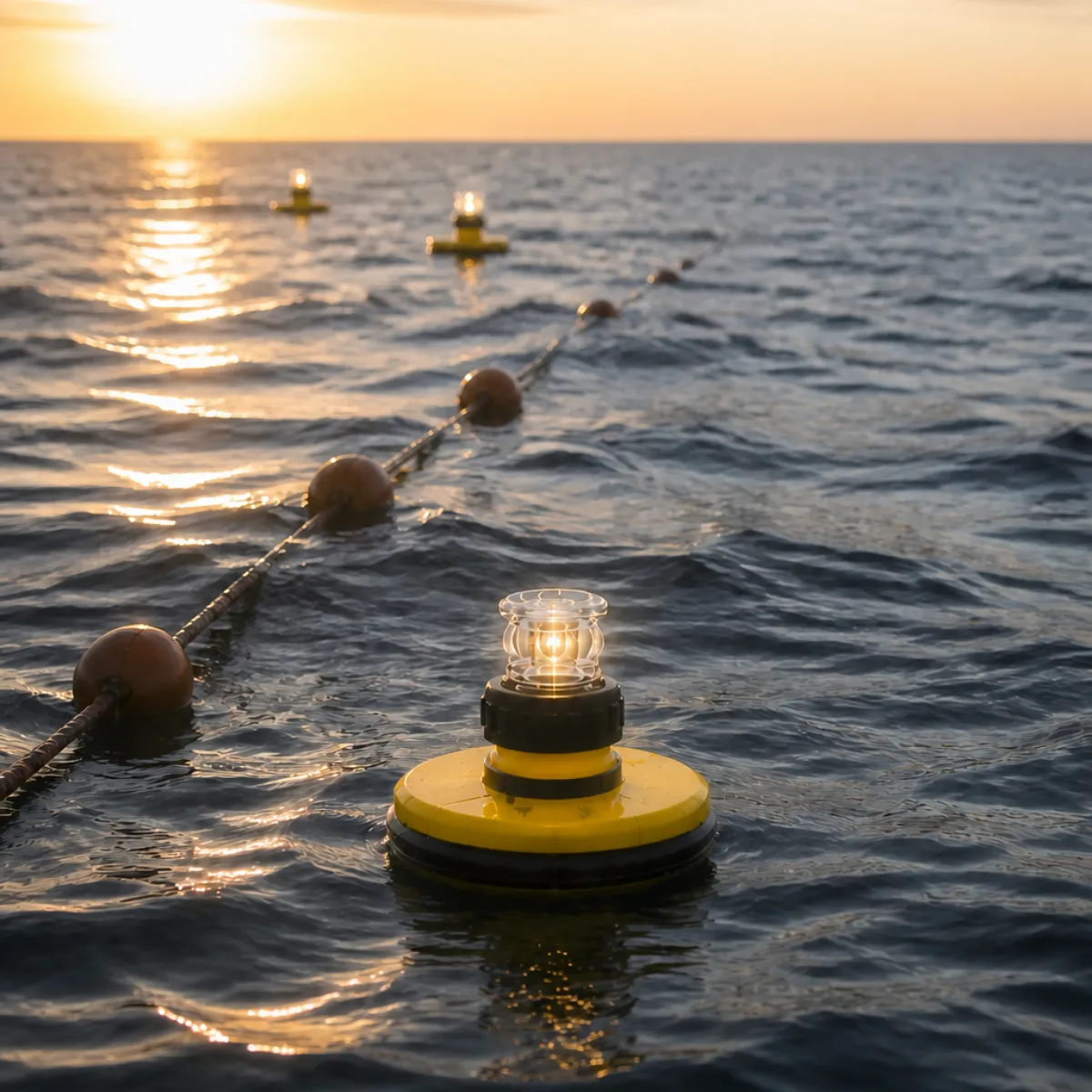
ML 100 marker light floating at sunset: yellow float disc, black collar and lit lantern above the water, tube submerged.

Daniamant ML 100

ML 100 is a compact battery-powered marker light, 335 mm long. Daniamant specifies waterproofing to 500 m, a magnet or reed switch and a daylight sensor.

  • Minimum 5 or 15 cd; published range 2 or 3 NM
  • 4.5 VDC; three alkaline D cells
  • Flash rate: 25 flashes/min
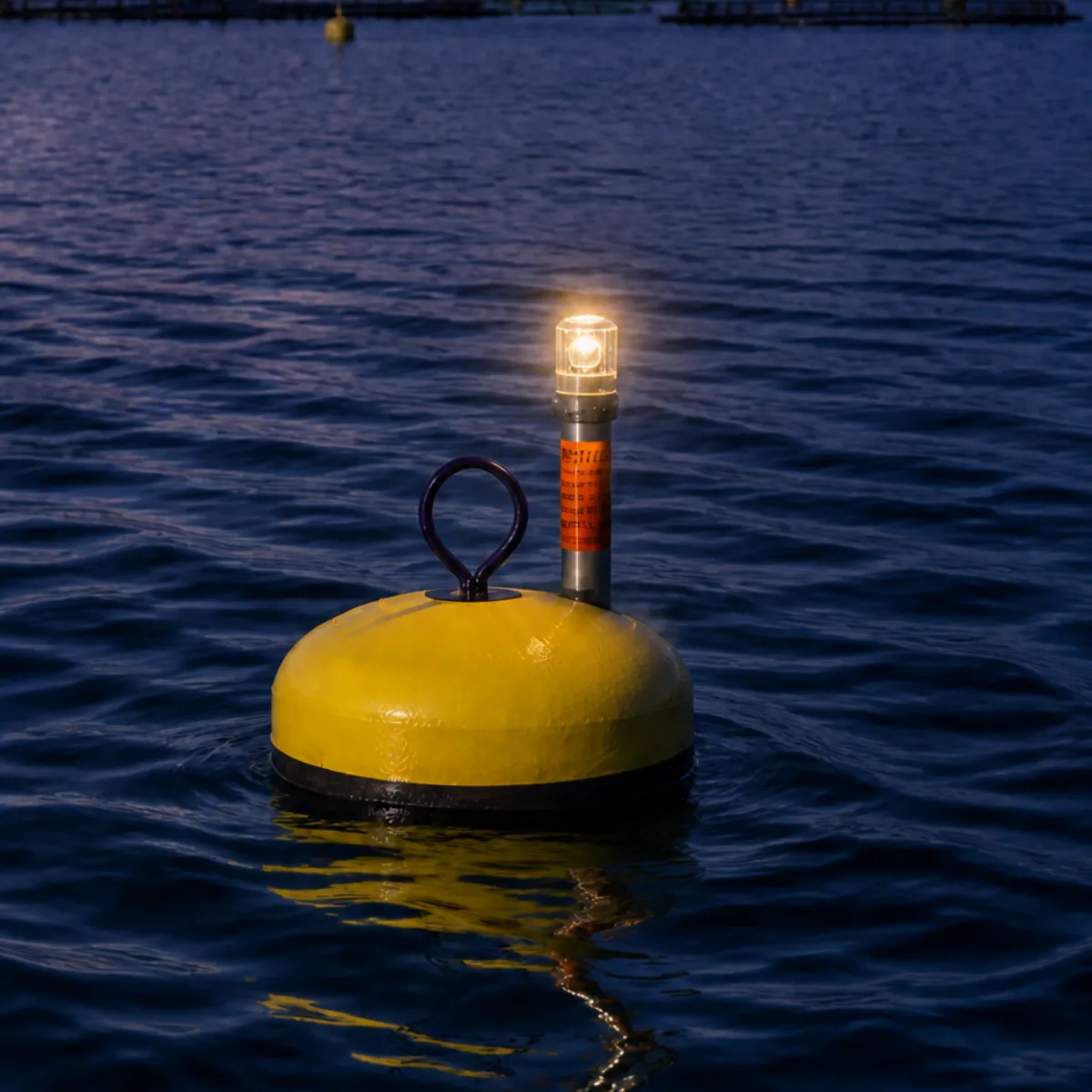
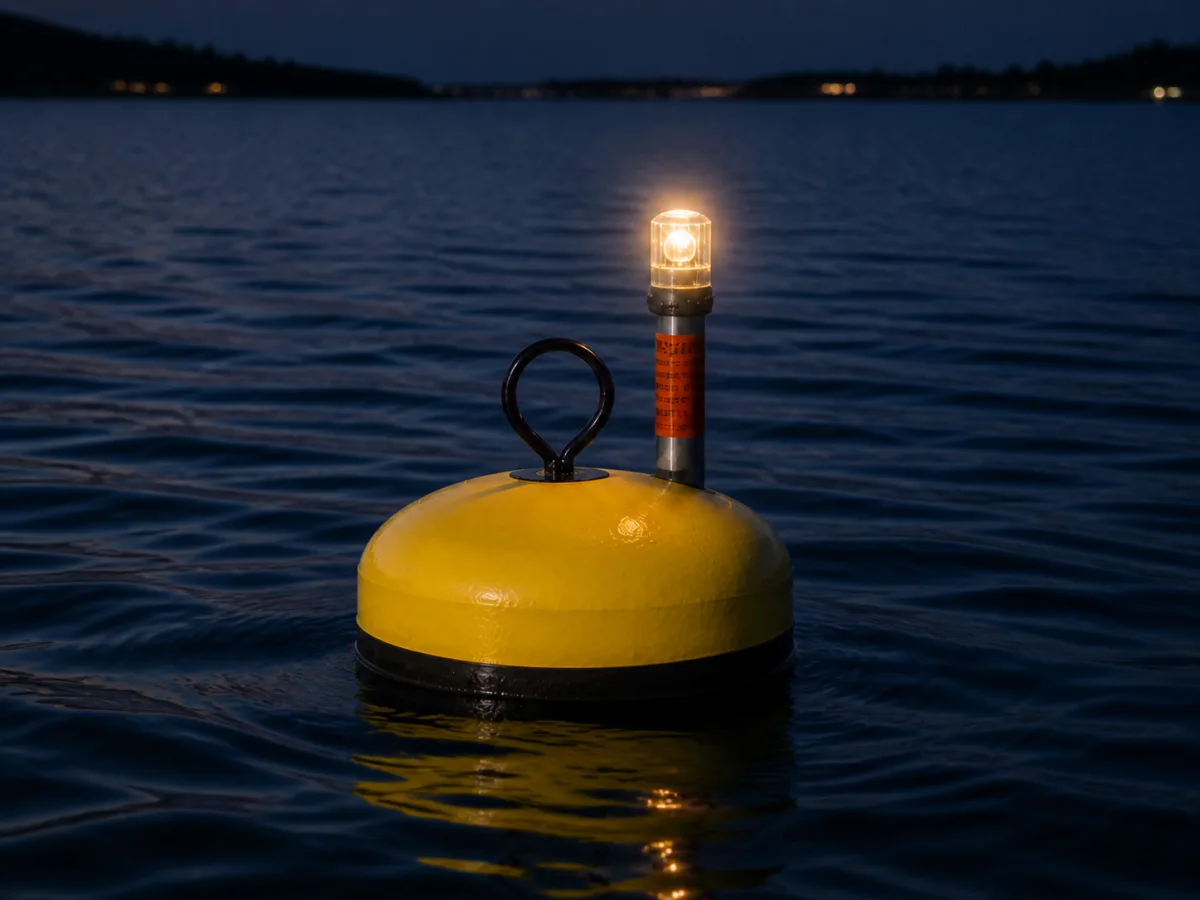
ML 200 marker light on its yellow dome buoy with black lifting loop, lantern lit on dark water.

Daniamant ML 200

ML 200 is an aluminium spar marker with an internal battery pack. Daniamant specifies a length of 1615 mm and waterproofing to 100 m.

  • Minimum 5 or 15 cd; published range 2 or 3 NM
  • 4.5 VDC battery pack
  • 25 flashes/min or Oc Y 2s; daylight sensor
ML 300 marker light with clear optic, black locking collar, yellow flange base and coiled power cable.

Daniamant ML 300

ML 300 is a flange-mounted marker light for an external supply. Daniamant specifies a length of 155 mm and IP68 protection at 5 m for one hour.

  • Minimum 5 or 15 cd; published range 2 or 3 NM
  • 10–27 VDC external supply
  • 25 flashes/min, Oc Y 2s or fixed light
Vikingegaarden logo card for MCL360N wreck marking lantern, AtoN House Nordic.

MSM MCL360N

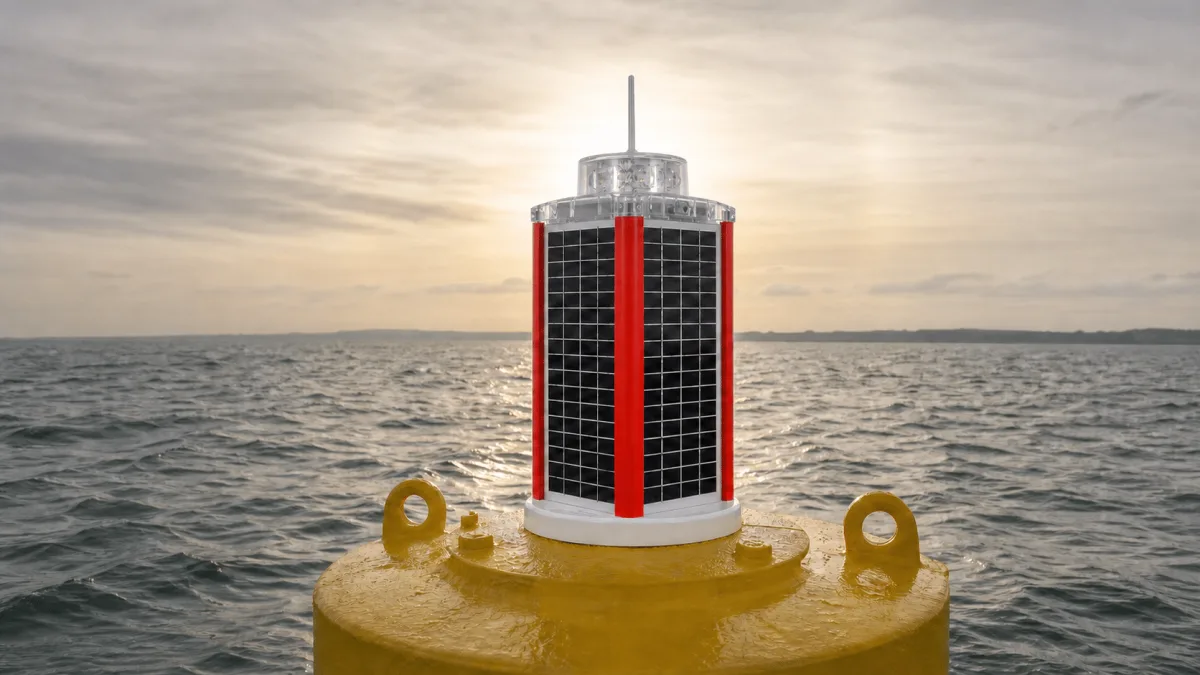
The MCL360N is a self-contained solar lantern for emergency wreck marking. MSM publishes alternating blue and yellow operation, range up to 6 NM and sizes M and L.

  • Alternating blue and yellow; IALA R1001
  • Published range: up to 6 NM
  • Solar supply; sizes M and L
Request configuration details

Ecosystem

Specification, installation and support

Vikingegaarden specifies, supplies, installs and commissions the equipment. Technical support and service are coordinated from Denmark.

The project specification records the equipment configuration, power supply, mounting and acceptance checks. Emiko monitoring is included where the selected equipment and interfaces support it.

  • Equipment selection and documentation
  • Installation and commissioning
  • Service and technical support from Denmark
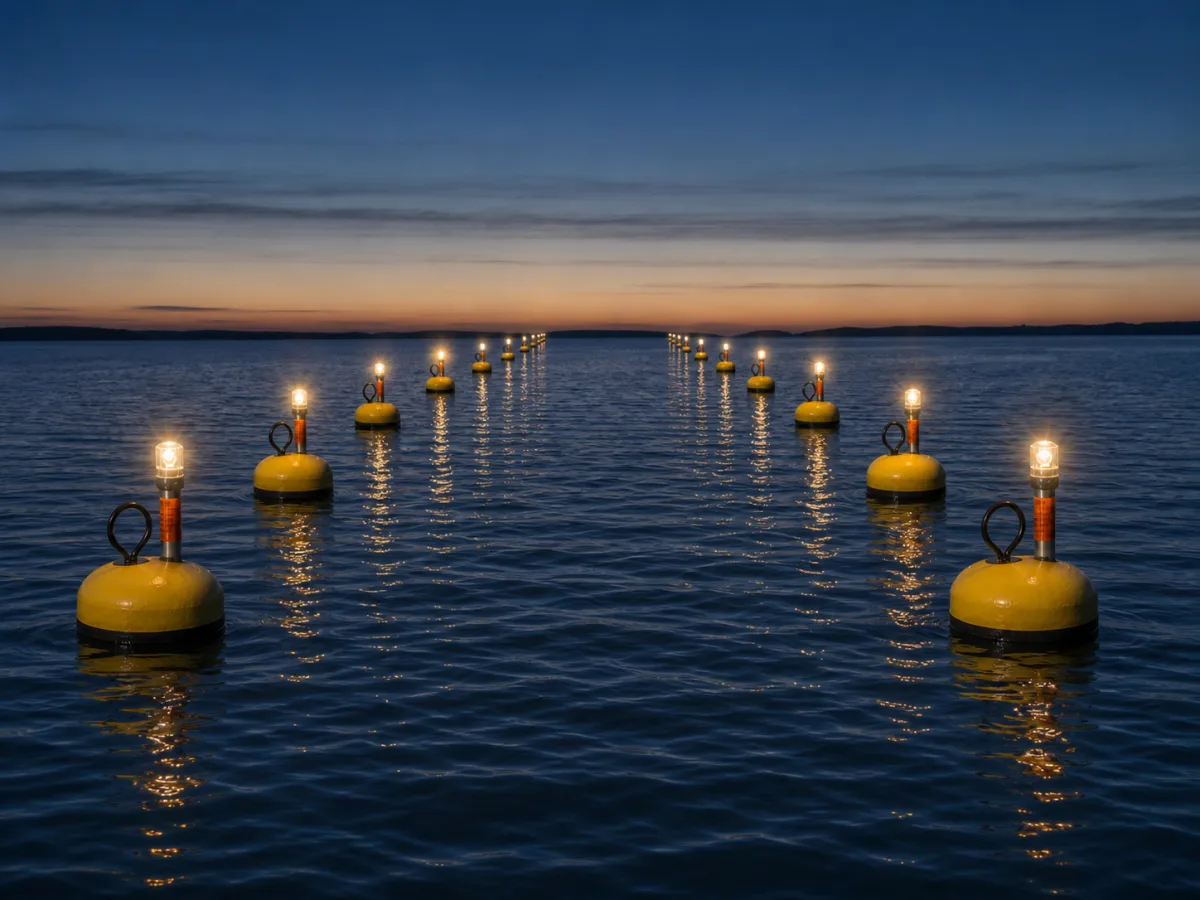
ML 100 lights floating along a fish-farm net line with an ML 300 mounted on the cage walkway railing at dusk.

Technical details

Technical specification

Values apply to the stated model and configuration. Unspecified figures and project approval documents are available on request.

Ask about a specification
Marker light configuration data
ParameterML 100ML 200ML 300MCL360N
ManufacturerDaniamantDaniamantDaniamantMSM
Published range2 or 3 NM2 or 3 NM2 or 3 NMUp to 6 NM
Minimum luminous intensity5 or 15 cd5 or 15 cd5 or 15 cdNot published
Supply4.5 VDC; D cells4.5 VDC battery pack10–27 VDCIntegrated solar modules and battery
Length335 mm1615 mm155 mmOn request by size
Immersion rating500 m100 mIP68; 5 m for 1 hourOn request

Product guide

Project information

The quotation requires the site layout and operating requirements. Vikingegaarden confirms equipment, installation and service scope from this information.

Installation requirements

Selection accounts for mounting arrangement, exposure and required visibility. ML 100, ML 200 and ML 300 differ in body dimensions, immersion rating and supply arrangement; the published intensity classes are the same across the series.

Electrical specification

ML 100 uses three alkaline D cells at 4.5 VDC; ML 200 uses a 4.5 VDC battery pack. ML 300 requires 10–27 VDC external supply, while MCL360N is a self-contained solar lantern; autonomy is confirmed for the selected operating character.

Technical questions

Specification questions

What determines the installation configuration?

Selection accounts for mounting arrangement, exposure and required visibility. ML 100, ML 200 and ML 300 differ in body dimensions, immersion rating and supply arrangement; the published intensity classes are the same across the series.

How is the power budget specified?

ML 100 uses three alkaline D cells at 4.5 VDC; ML 200 uses a 4.5 VDC battery pack. ML 300 requires 10–27 VDC external supply, while MCL360N is a self-contained solar lantern; autonomy is confirmed for the selected operating character.

Which approval documents are supplied?

Documentation is confirmed for the selected equipment and application. Vikingegaarden identifies the available manufacturer documents and the requirements stated by the responsible authority.

What is required for a quotation?

The enquiry should include the marking plan, site coordinates, required performance, available power and mounting details. Monitoring, access and maintenance requirements should also be stated.

Which colours and flash characters are available?

Daniamant colour and character options are confirmed for the selected ML variant. ML 200 offers 25 flashes/min or Oc Y 2s; ML 300 also offers fixed light. MCL360N provides the alternating blue and yellow wreck-marking signal.

Technical enquiries and project specifications

Contact Vikingegaarden

Project specification

Technical enquiry and quotation

The quotation is based on the marking plan, site conditions and required equipment configuration. Vikingegaarden confirms the specification, installation scope and supporting documentation.

Contact Vikingegaarden

Project enquiry

Marker lights

The enquiry should include the application, site conditions and required configuration.

Your contact details and project

Contact details are used to respond to the enquiry. Privacy policy

Telephone and email +45 7580 3960
sales@vikingegaarden.com