Lighting arrangement
The project establishes lamp positions, coverage, colour and operating character. The selected arrangement is documented against the requirements supplied for the structure.
AtoN House Nordic
LED obstacle lighting for bridges, masts and tall structures
Aviation warning lights provide visual marking of structures for aircraft. Vikingegaarden specifies and supplies LED lighting, control and monitoring for bridges, masts, wind turbines and buildings, with the configuration based on the project requirements.
Key features
Structure geometry, location and the applicable authority requirements define the lighting arrangement. Model selection and documentation are confirmed for the project.
The project establishes lamp positions, coverage, colour and operating character. The selected arrangement is documented against the requirements supplied for the structure.
Luminous intensity and beam coverage are specified for the selected light. Numerical ratings and manufacturer approval documents are available on request.
Coastal, offshore and industrial exposure are assessed during equipment selection. Temperature, enclosure protection and corrosion resistance are confirmed for the supplied model.
Emiko can receive status and alarms where supported by the equipment interface. Remote control and automatic night activation are included only where specified and supported.
Installation
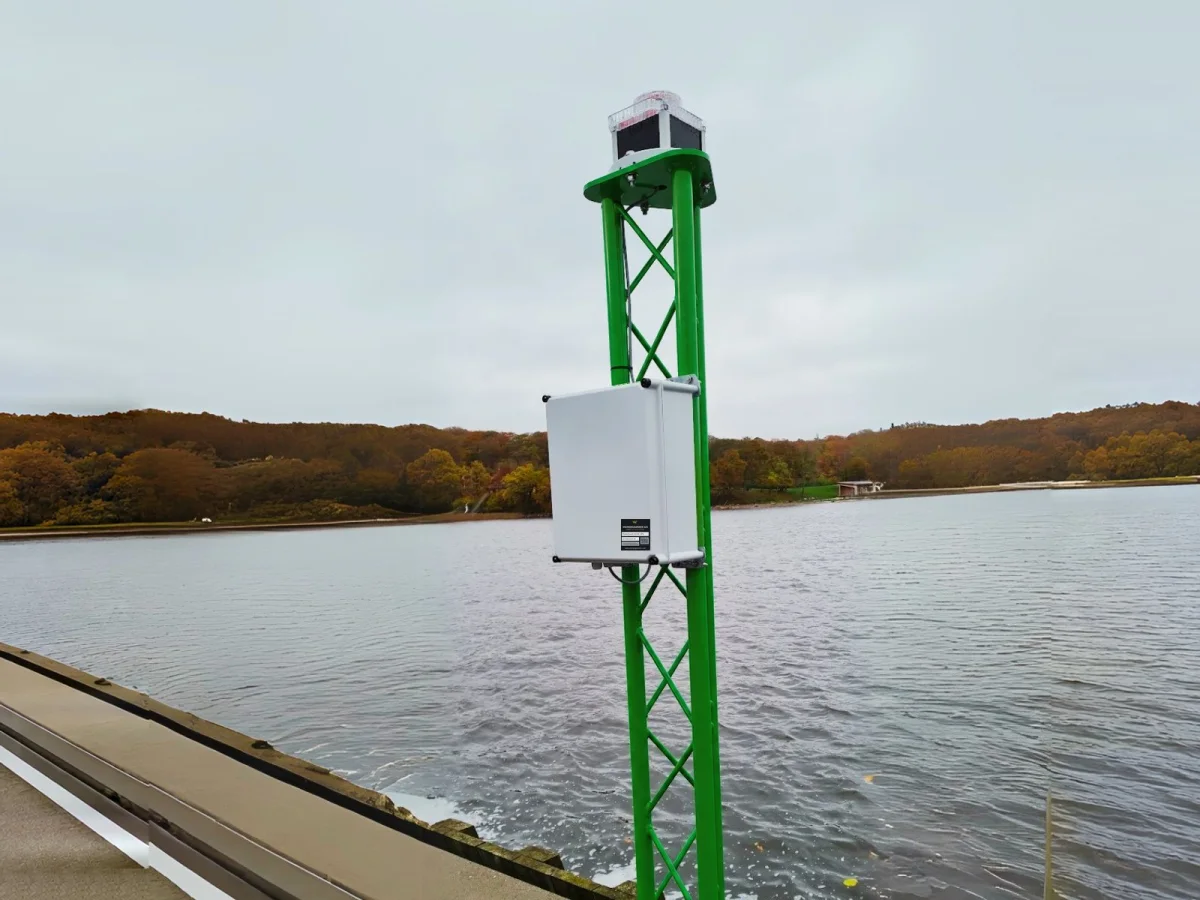
An installation comprises the specified lights, their mounting and the electrical and control equipment. Vikingegaarden coordinates supply, installation, commissioning and support from Denmark.
The quotation requires structure height and coordinates, the required lighting arrangement and available power. The power calculation includes operating mode, connected load and any backup autonomy; commissioning records operation, alarm signals and control settings.
The project records the structure geometry and lighting requirements.
The selected model is checked for intensity, colour and coverage.
Power, mounting and monitoring interfaces are specified.
Commissioning verifies operation and documents the installed settings.
Technical questions
Manufacturer, model, luminous intensity and electrical ratings are confirmed on request. No standard configuration is assigned without the project lighting requirements.
The required documents are identified from the application and authority requirements. Compliance is confirmed for the selected model and installed arrangement.
Emiko can receive status and alarms where supported by the equipment interface. Remote control and automatic night activation are included only where specified and supported.
The quotation requires structure height and coordinates, the required lighting arrangement and available power. The power calculation includes operating mode, connected load and any backup autonomy; commissioning records operation, alarm signals and control settings.
Technical enquiries and project specifications
Contact VikingegaardenExplore
Tinnetvej 70, 7173 Vonge, Denmark