Wind for spray and field work
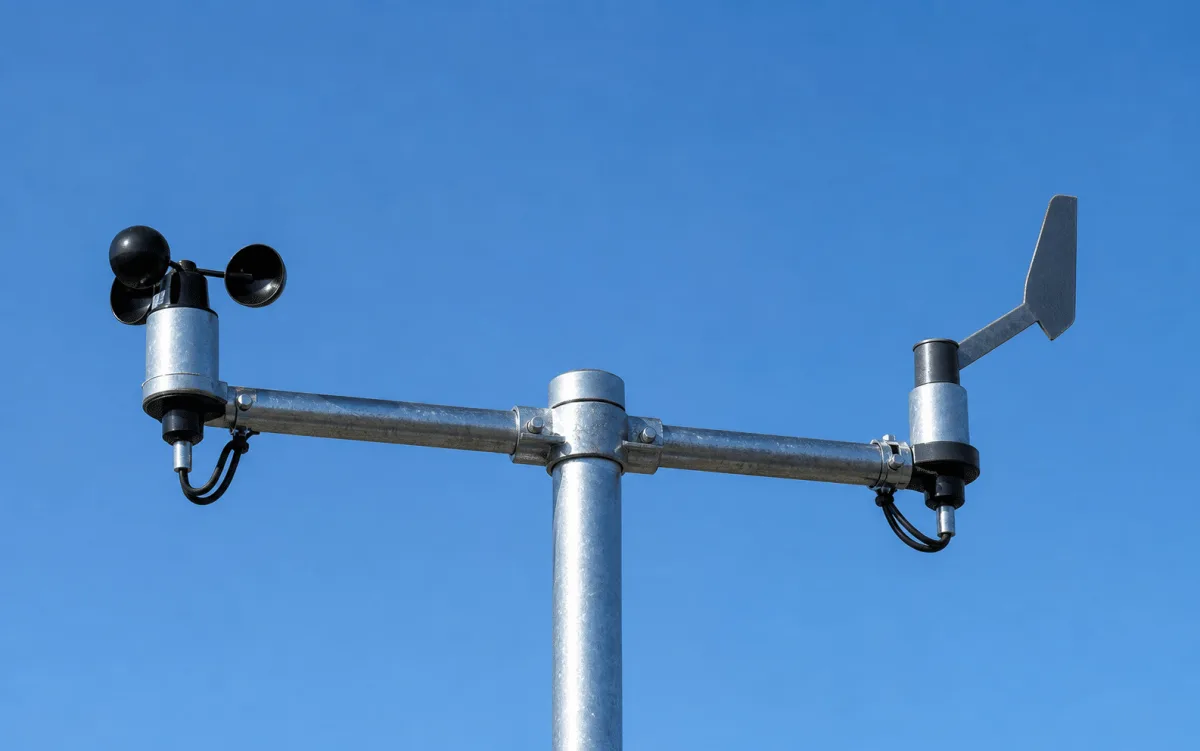
Track wind speed, gust and direction at field level when planning spraying and other weather-sensitive work.
Cumulus Systems · Weather stations
Local field data for irrigation and crop planning.
Cumulus WeatherStation measures conditions at your farm and brings them into the Emiko platform. Use rainfall, wind, air and soil temperature, evapotranspiration information and frost warnings when planning irrigation and field work.
Key features
The agricultural configuration turns local wind, rain, temperature and soil conditions into practical timing information for field work.
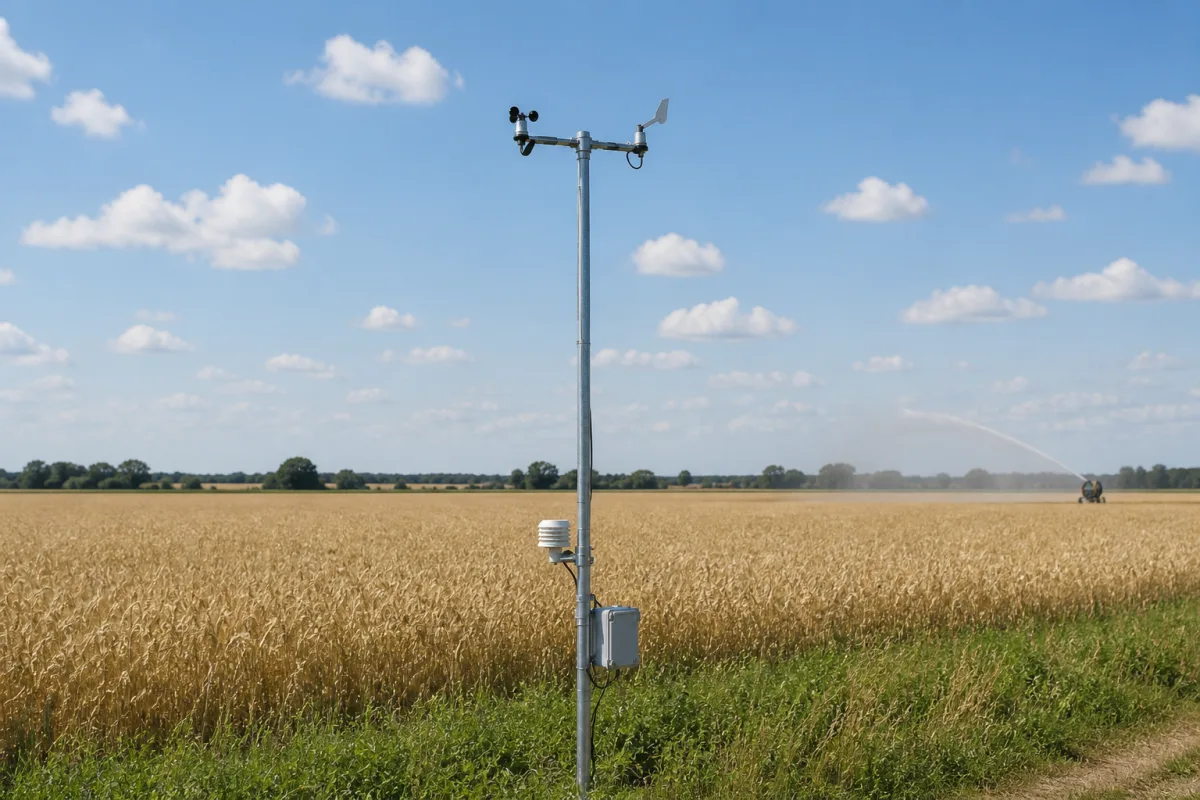
Track wind speed, gust and direction at field level when planning spraying and other weather-sensitive work.
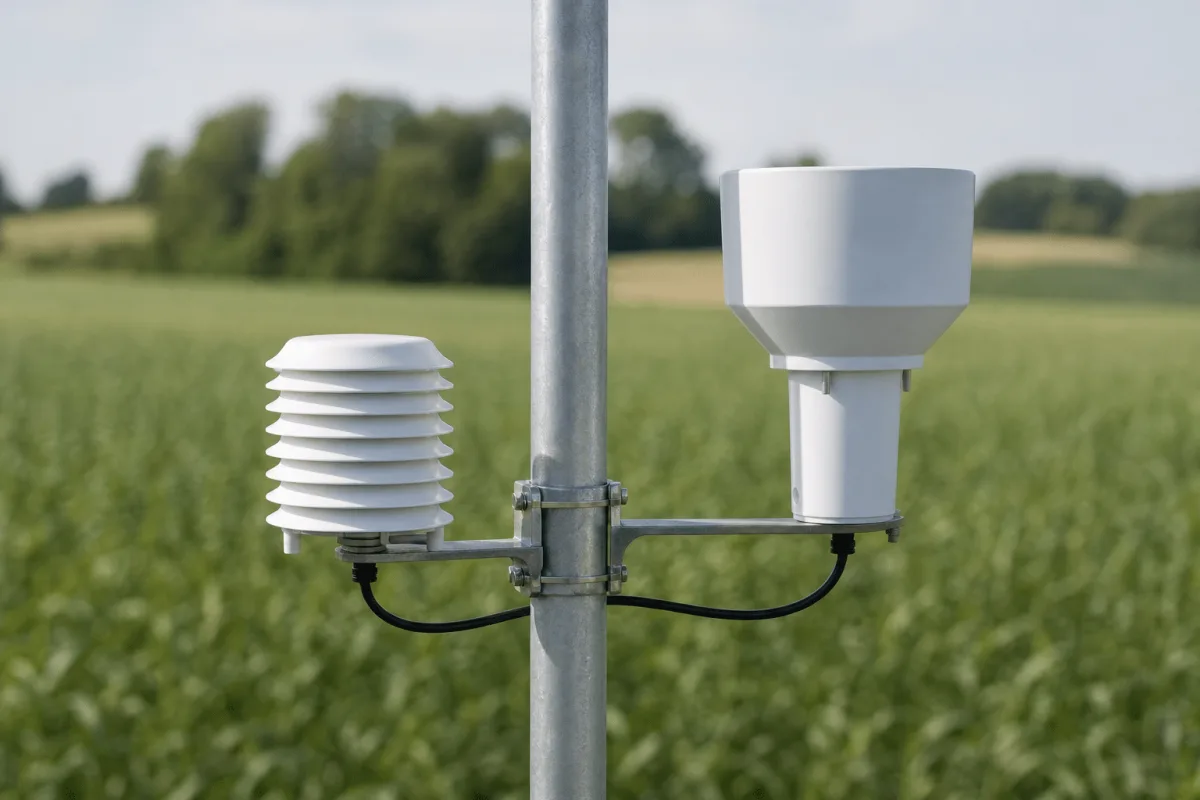
Measure air temperature, humidity, dew point and soil temperature at the farm rather than at a distant station.
Use rain detection, rainfall, UV and solar radiation in irrigation and crop-condition records.
Add the parameters required by the crop, irrigation system or local reporting workflow.
Use the measured weather data in the configured calculation and forecast workflow for irrigation planning.
Set notifications for frost, high wind, storms or other agreed thresholds.
Give selected readings and forecasts to colleagues, advisers or contractors through EasyShare.
Install one mast with 230 V power where available or select a solar configuration for an off-grid field.
Applications
Weather data supports the daily decisions on irrigation, planting, spraying and harvest.
Evapotranspiration insight shows how much water the crop is losing, so irrigation gives the right amount at the right time and waste is minimised.
Track the conditions that favour pests and diseases and take timely action to prevent or limit outbreaks.
Use historical weather data to plan crop rotations, predict yields and optimise planting and harvest schedules.
Share station data with colleagues, teams or partners with EasyShare, or embed it in a website with a few clicks.
How it works
The station records the conditions at the farm and sends them to Emiko for warnings, sharing, forecasts and historical comparison.
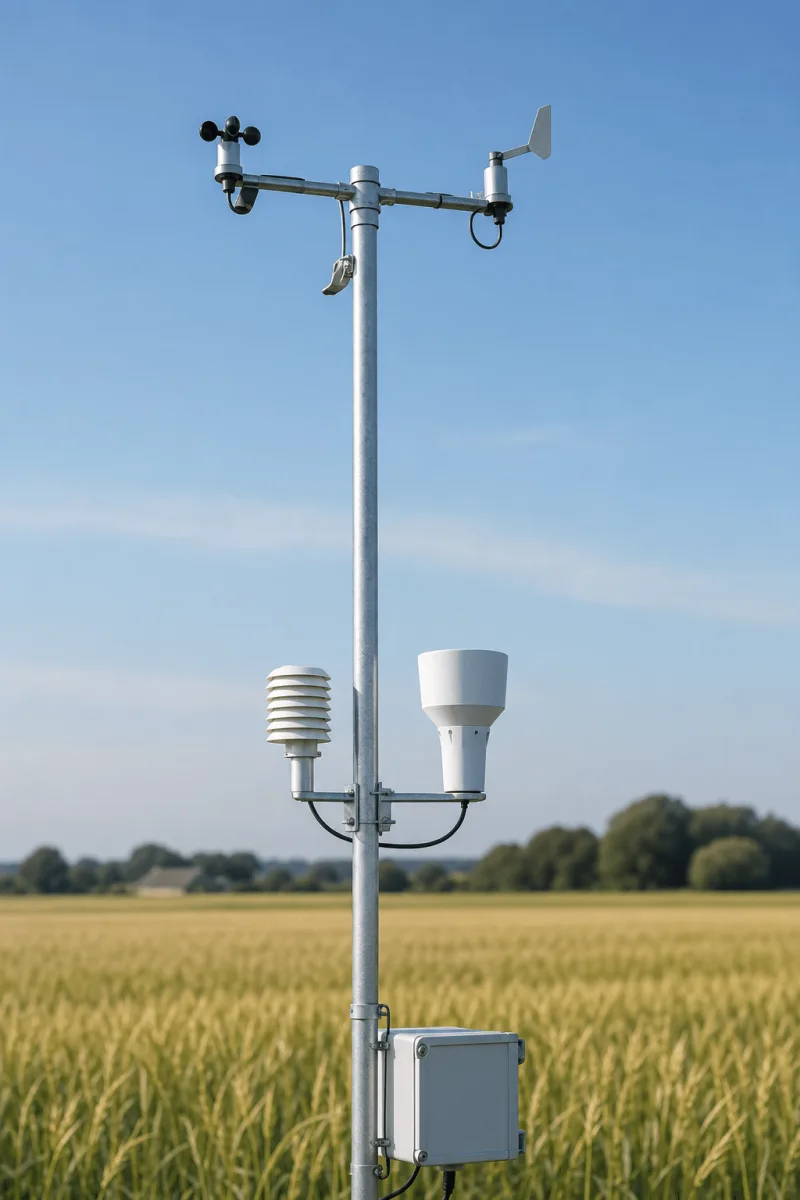
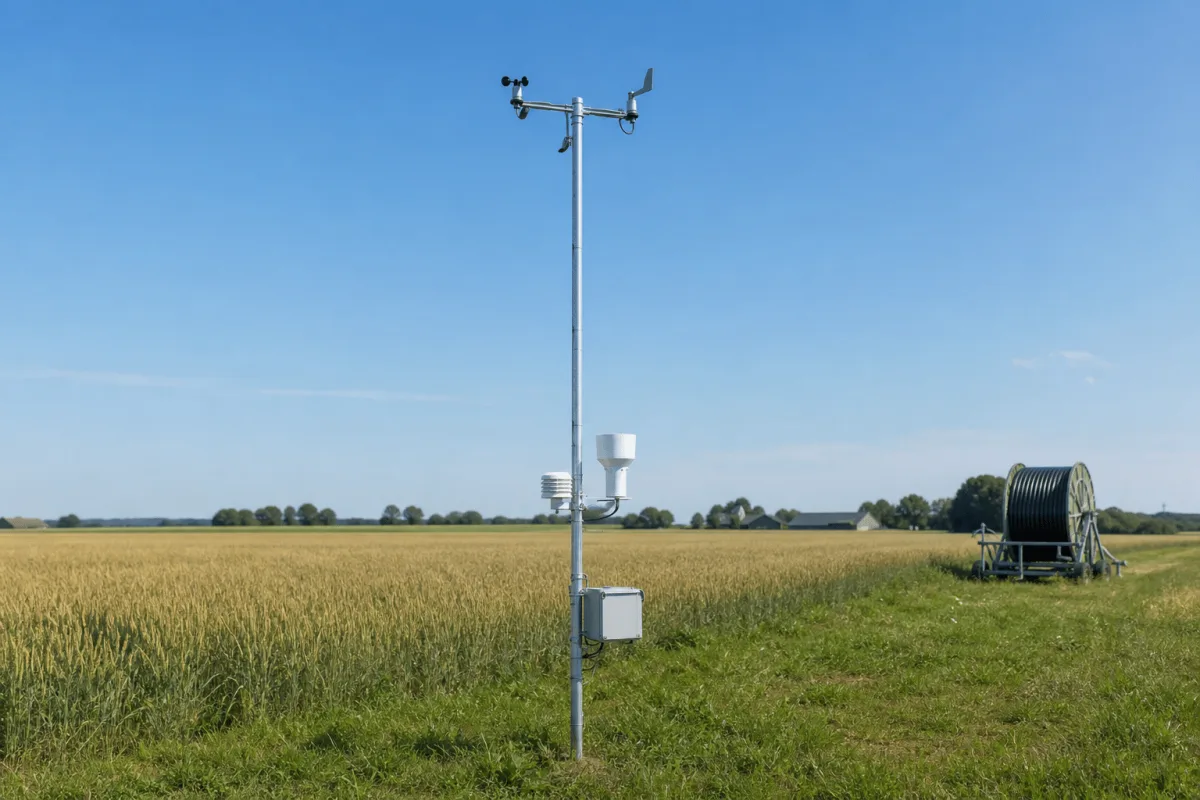
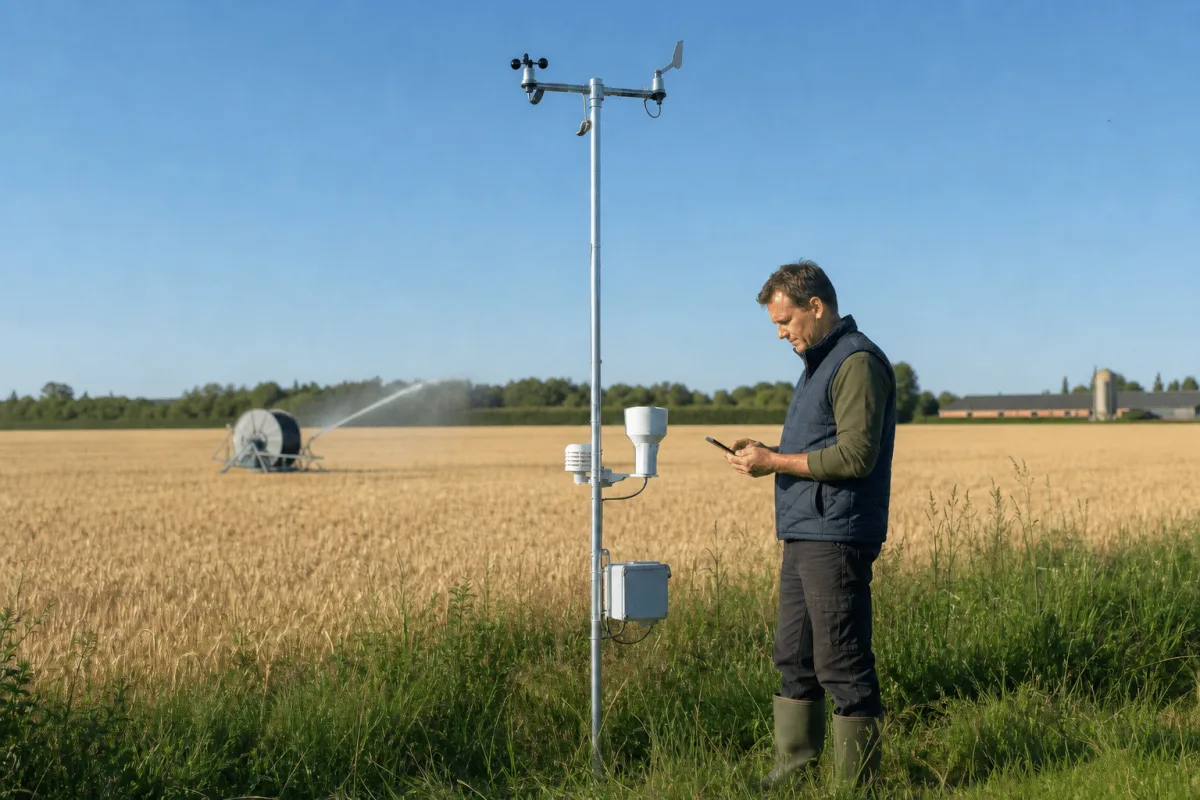
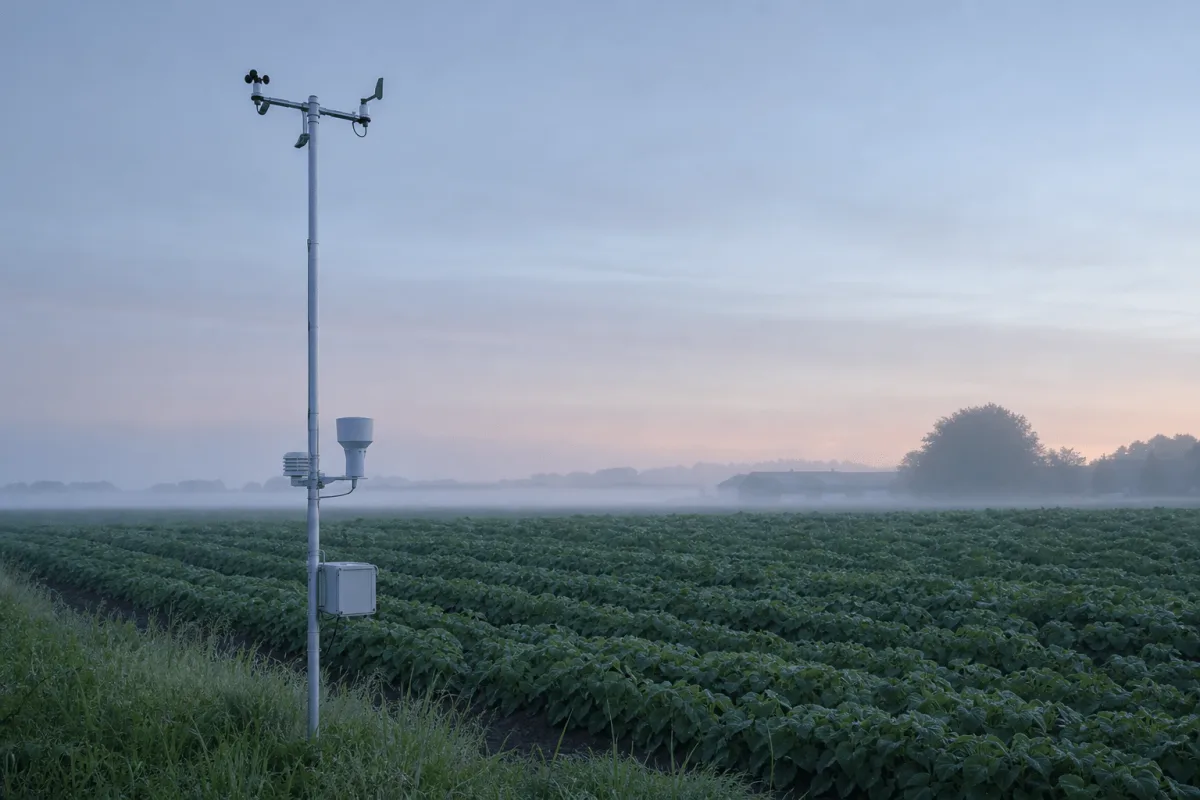
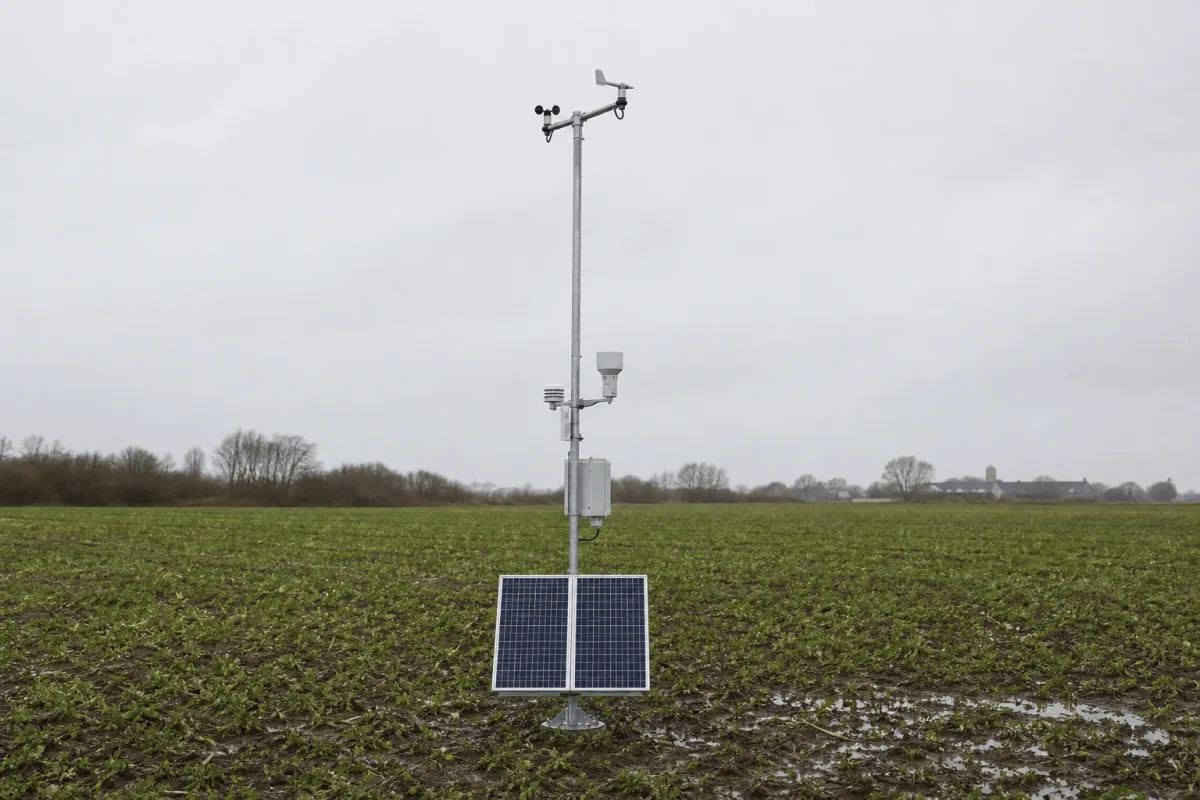
For a farm, the mast is positioned in an open, representative area rather than beside buildings or shelterbelts that distort the readings. Wind sensors sit on the crossarm, protected temperature and humidity measurement is lower on the mast, and the logger sends data without a complex field-wiring network. Sites without convenient mains power can be assessed for a solar configuration.
The resulting local record supports evapotranspiration calculations, frost warnings, irrigation decisions and comparisons between seasons. Placement and sensor choice are agreed around the crops and the area the station must represent.
Place the mast where buildings and trees do not distort the required measurements
Configure the standard sensors and any crop or soil options
View live field conditions in Emiko from the office or phone
Use warnings for frost, high wind or other operating thresholds
Use rainfall, solar and evapotranspiration information when planning irrigation
Retain history for crop, season and field comparisons
Ecosystem
Live measurements, alerts and history are available in the same platform used for connected pumps and field equipment.
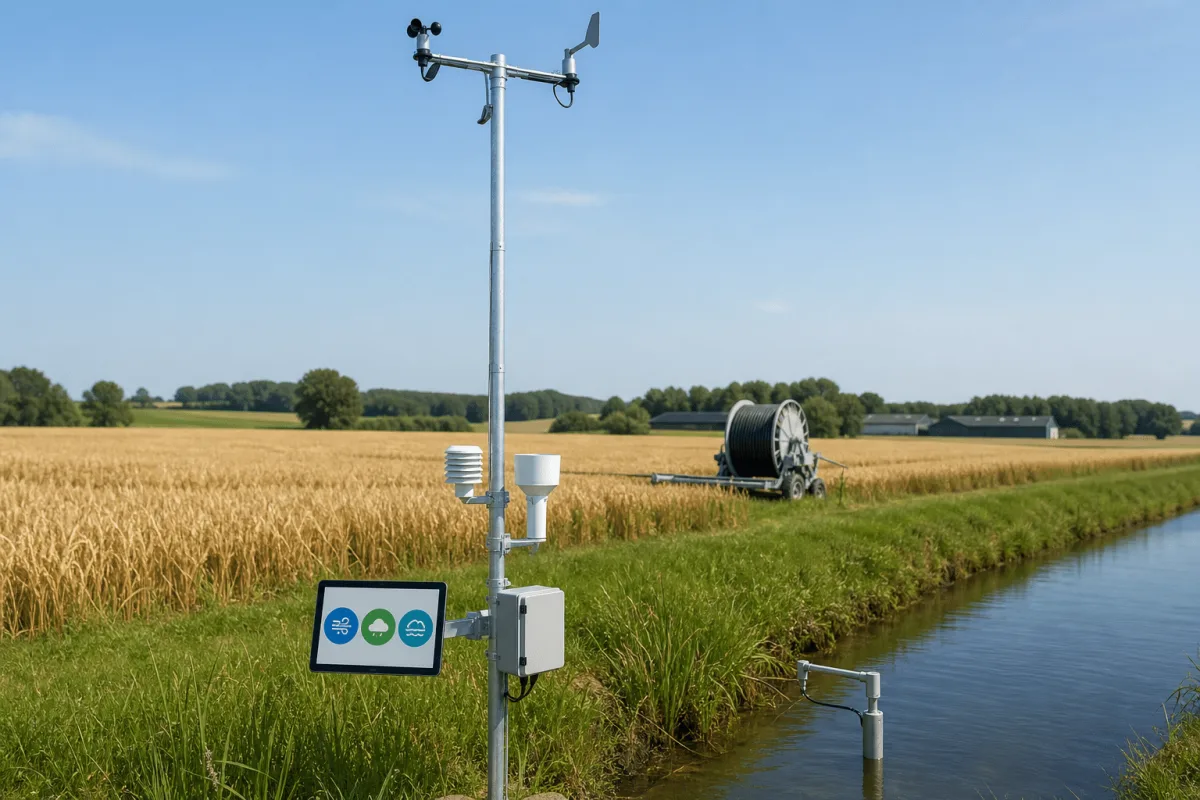
Farm measurements flow into Emiko for live access and historical comparison. Thresholds can warn about frost, wind or rain, while forecasting supports irrigation and field-work planning. EasyShare lets the farm expose only the readings needed by advisers, employees or external partners.
Technical details
The sensor package is selected for the crops, irrigation method and decisions the farm needs to support.
Ask about a specification| Spec | WeatherStation |
|---|---|
| Core parameters | Wind speed, gust and direction, air pressure, temperature, humidity, dew point, soil temperature |
| Also standard | Rain detection, rain gauge, UV radiation, solar radiation |
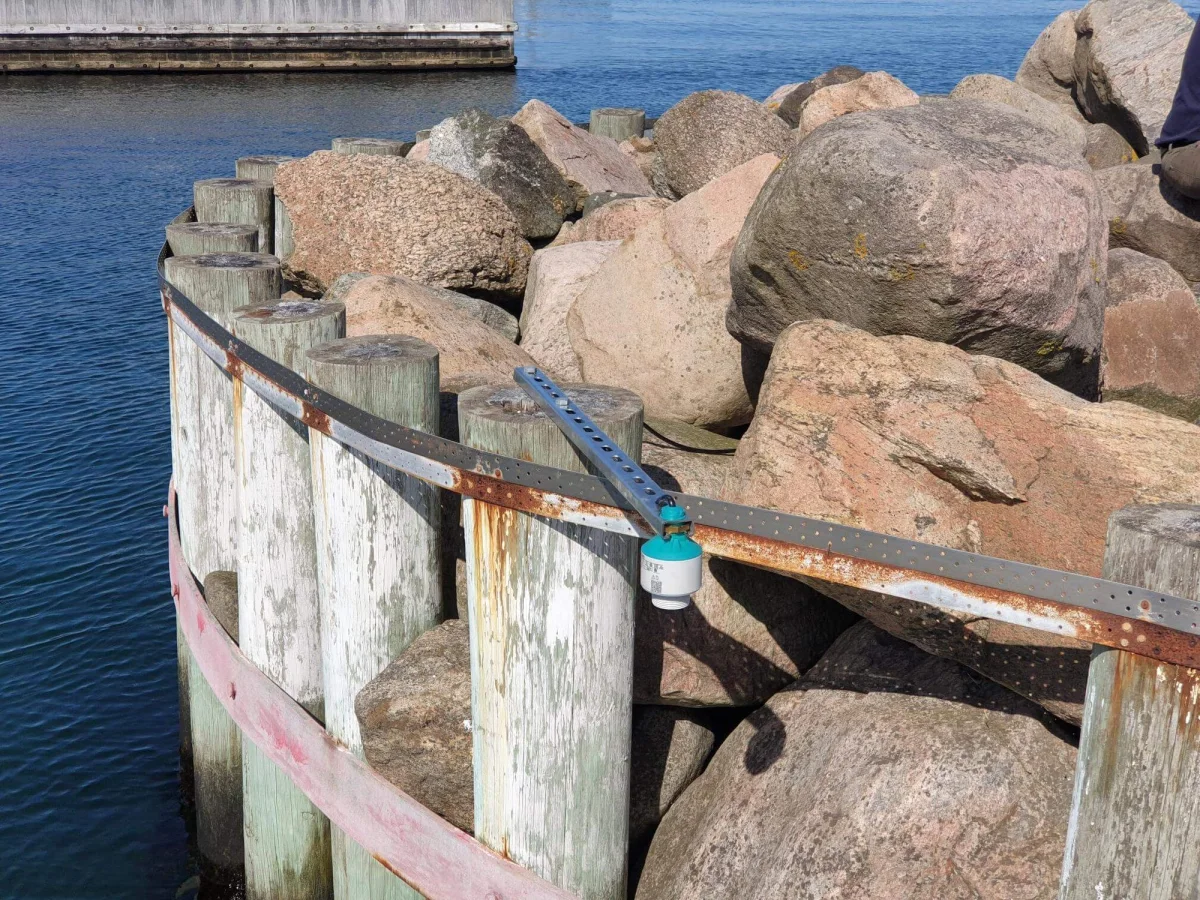
| Optional sensors | Precipitation gauge, ice detection, CO2, water level, current, cloud altimeter, visibility meter |
| Derived values | Evapotranspiration for irrigation planning |
| Power | 230 V mains, or solar for off grid installations |
| Platform | Emiko: live app readings, EasyShare data sharing, Warning alarms, Forecast module |
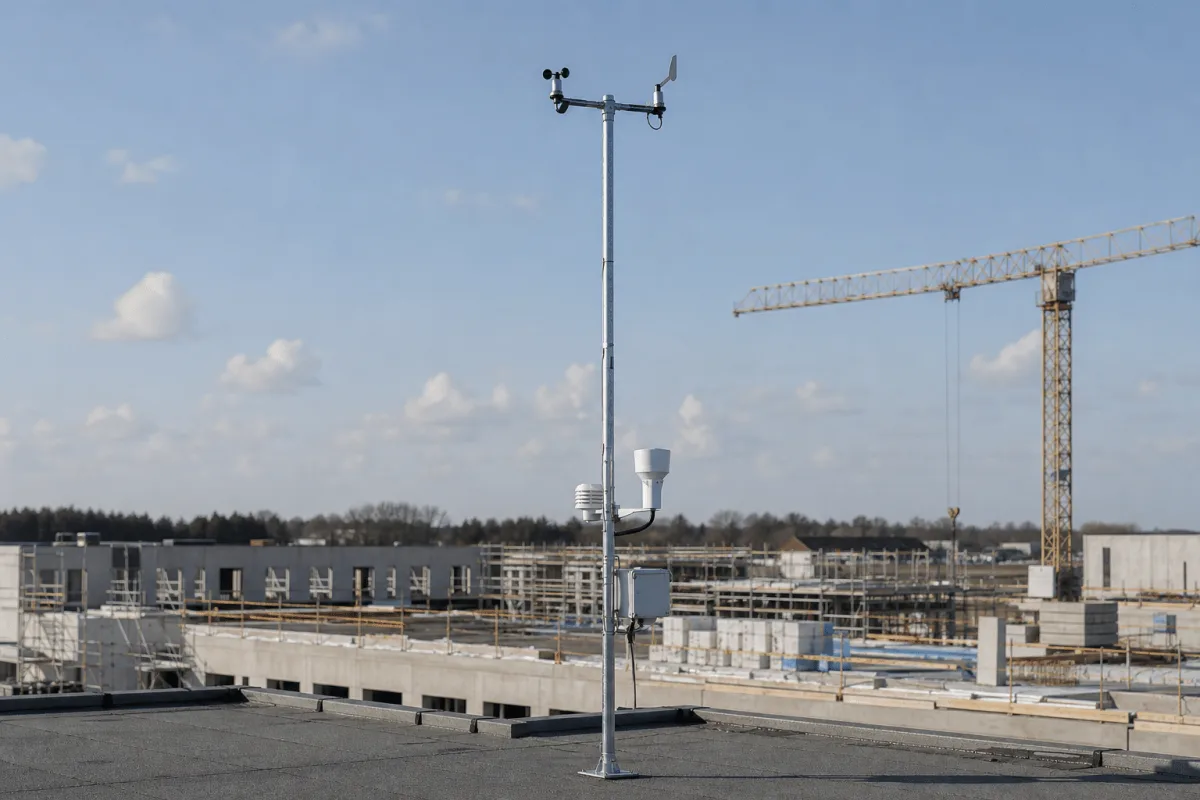
| Mounting | Single galvanised steel mast on a pier, rooftop or open field |
Product guide
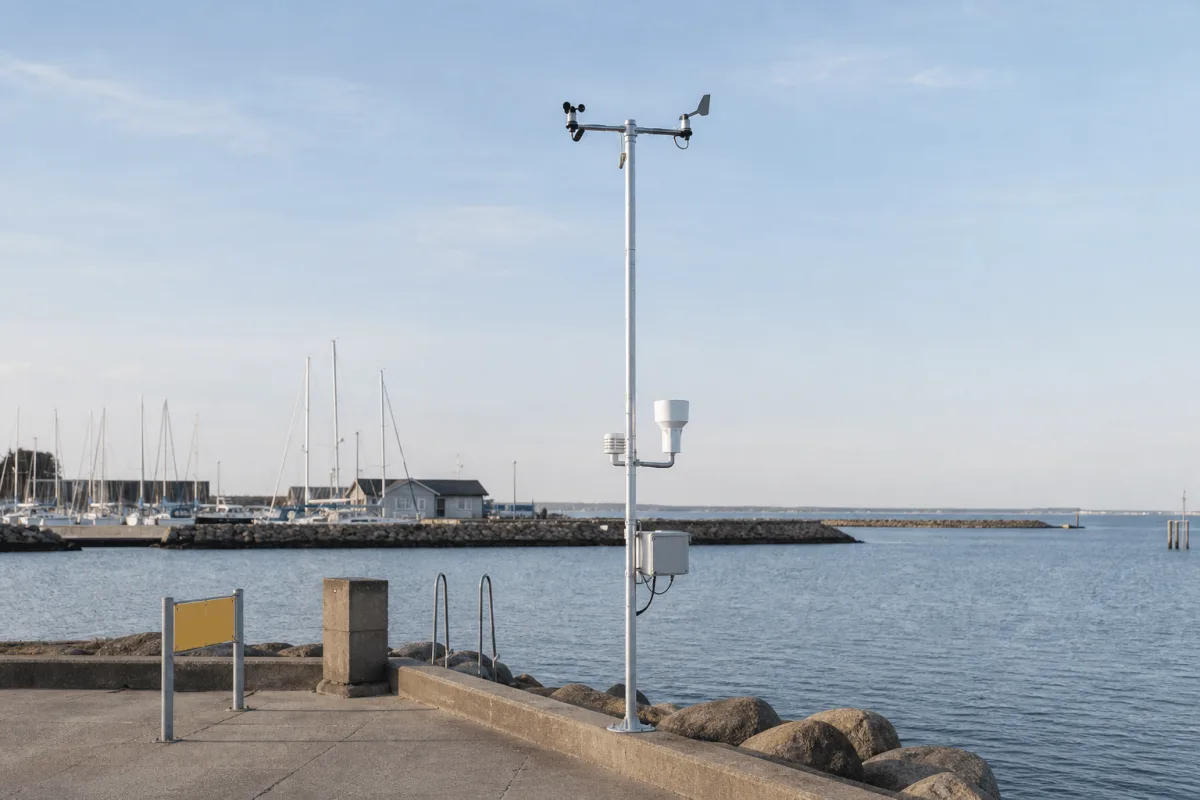
Local weather data helps a farm plan irrigation and field work around the conditions it actually records. The agricultural configuration uses the same Cumulus WeatherStation family as the port and industrial versions, with a field-specific sensor and data-sharing setup.
The Cumulus weather station is adaptable to various agricultural operations, from a single field to a geographic overview of conditions across the whole farm area. It suits farmers who want their decisions on irrigation, planting and harvesting based on measured local data rather than a regional forecast, and agronomists or advisors who follow several sites through shared data.
The hardware is the same professional Cumulus platform used in ports and on industrial sites, developed with a meteorologist and built to stand outside year round. What changes for agriculture is the way the data is used: climate monitoring for the crop, water for the irrigation plan, and history for the planning calendar.
Among the values the station delivers, evapotranspiration is the one built for irrigation. ET is calculated from the station's own readings and shows how much water the crop and soil are actually losing, so irrigation gives the right amount of water at the right time. The result is efficient water use, minimised waste and better conditions for maximum yield.
Around the ET figure sit the supporting parameters: rain detection and a rain gauge for what has already fallen, soil temperature for what is happening below the surface, and humidity and dew point for the mornings when spraying is on the plan.
Pests and diseases follow the weather. By tracking the conditions conducive to outbreaks, temperature, humidity and rainfall in combination, the station lets you act early and limit the damage instead of reacting after the symptoms appear in the field.
Historical data carries the longer decisions. The station retains its readings for trend analysis, and farmers use that record to analyse long term climate trends, plan crop rotations, predict yield outcomes and optimise planting and harvest schedules.
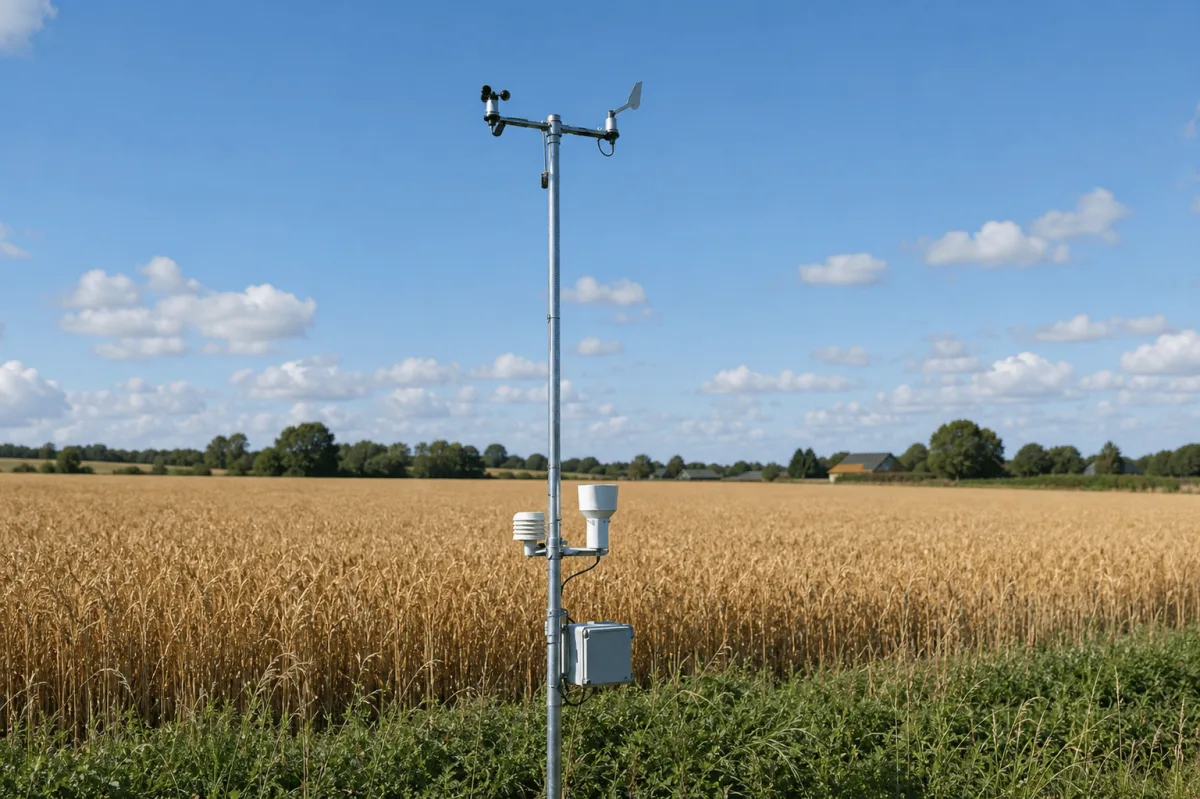
The station uses a galvanised steel mast carrying wind, temperature, humidity, rain and other selected instruments, with a compact logger enclosure. The mounting location should represent the fields and measurements the farm needs. Power is provided by 230 V mains or the selected solar configuration.
Vikingegaarden supports specification, setup and ongoing assistance. Confirm mounting, sensor access and the connection to Emiko before installation, including who will use the readings and receive warnings.
Specify the crops and fields the station will represent, the required measurements, the available power and who will use the records. Cumulus offers 230 V mains power or a solar configuration. Confirm the sensor specification and mounting position for the farm rather than assuming that any open location provides equivalent observations.
For pump switching and irrigation alarms, compare FlexVander LX. The optional EnergyLogger can add electricity consumption records to a connected irrigation installation. Shared data access and weather history are managed through the Emiko platform.
A closer look
Good to know
Yes. The Cumulus weather station is adaptable to various agricultural needs and provides essential weather data to optimise production across different farming environments, from a single field to a geographic overview of the whole farm area.
The station provides evapotranspiration (ET) values calculated from its readings. This helps you optimise irrigation practice, giving crops the right amount of water at the right time, using water efficiently and minimising waste.
Temperature, humidity and other local observations help growers assess conditions associated with crop disease or pests. The station provides weather data for that assessment; crop-specific models and treatment decisions depend on the farm's agronomic approach.
The farm station can record wind, gusts and direction, pressure, temperature, humidity, dew point, soil temperature, rain, UV and solar radiation. These readings also support derived values such as evapotranspiration.
Optional instruments are selected for the crop and location and can cover ice, CO2, visibility, additional precipitation and water-related measurements.
Yes. EasyShare can provide selected live readings and forecasts to farm staff, advisers or project partners and can publish a dashboard when broader access is useful. The farm controls what is shared.
The station measures weather and supplies data for irrigation planning, including evapotranspiration information. Pump switching is a separate control function. FlexVander LX provides remote irrigation pump control and can use weather inputs in its configured scheduling functions.
The station combines its sensors and compact logger on a galvanised mast. The site needs a suitable mounting arrangement and either 230 V mains or the selected solar power equipment. Vikingegaarden helps specify the position, sensors, power and setup for the farm.
The station retains historical data for trend analysis. Farmers use it to analyse long term climate trends, plan crop rotations, predict potential yields and optimise planting and harvest schedules for better productivity and profitability.
Have a question about your project?
Talk to our teamExplore
Let’s talk about your project
Tell us about your farm, the fields you want covered and whether grid power is available. We help with sensor selection, setup and ongoing support.
Tinnetvej 70, 7173 Vonge, Denmark