Wind records for exposed work
Measure wind speed, gust and direction at the site for lifting, access and other weather-dependent procedures.
Cumulus Systems · Weather stations
Local weather observations for site planning and records.
Monitor wind, rain and temperature at construction sites, roads and industrial facilities. Cumulus WeatherStation sends observations to the Emiko platform for remote access, threshold warnings and historical records.
Key features
The industrial configuration documents local conditions, supports threshold-based work rules and provides a remote view of an active site.
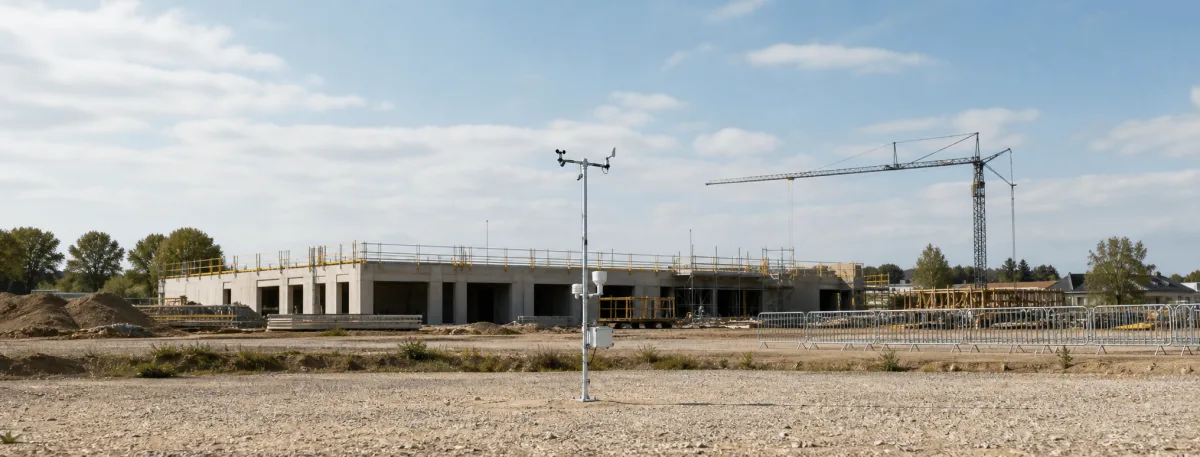
Measure wind speed, gust and direction at the site for lifting, access and other weather-dependent procedures.
Keep local temperature, humidity, dew point and pressure data with the site record.
Record rain, UV and solar radiation, with optional ice or visibility measurement where specified.
Add CO2, precipitation, ice, visibility or other documented sensors needed by the project.
Share selected live readings and forecasts with supervisors, contractors or operations staff.
Notify the agreed recipients when wind, frost, storms or another measured value crosses its threshold.
Retain a weather record for planning, incident review, compliance evidence or discussions with insurers.
Mount the station on a building or dedicated mast, powered by 230 V or a solar option where required.
Applications
Safety, scheduling, compliance and resource management from one set of readings.
Real time updates and alerts for severe weather let supervisors address hazards and suspend or evacuate operations in time.
Accurate weather data and forecasts help managers plan tasks and preventive maintenance, minimising delays and weather related damage.
Documented weather data supports safety standards, project reporting and insurance claims for weather related delays or damage.
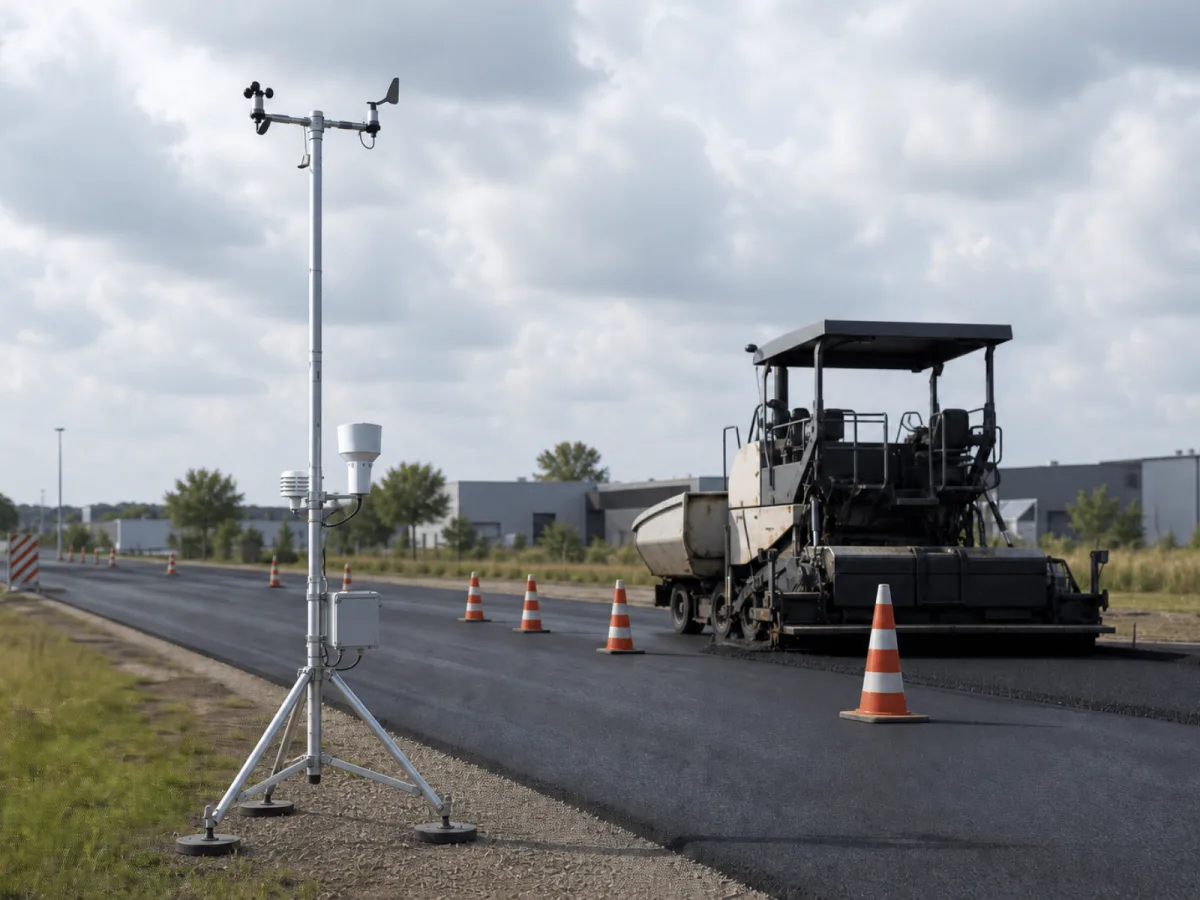
Road maintenance teams schedule repairs in optimal weather; site teams adjust material storage and equipment use to the conditions.
How it works
Sensors at the site feed Emiko continuously, where the operator sets access, alerts and the period of historical data needed for the project.
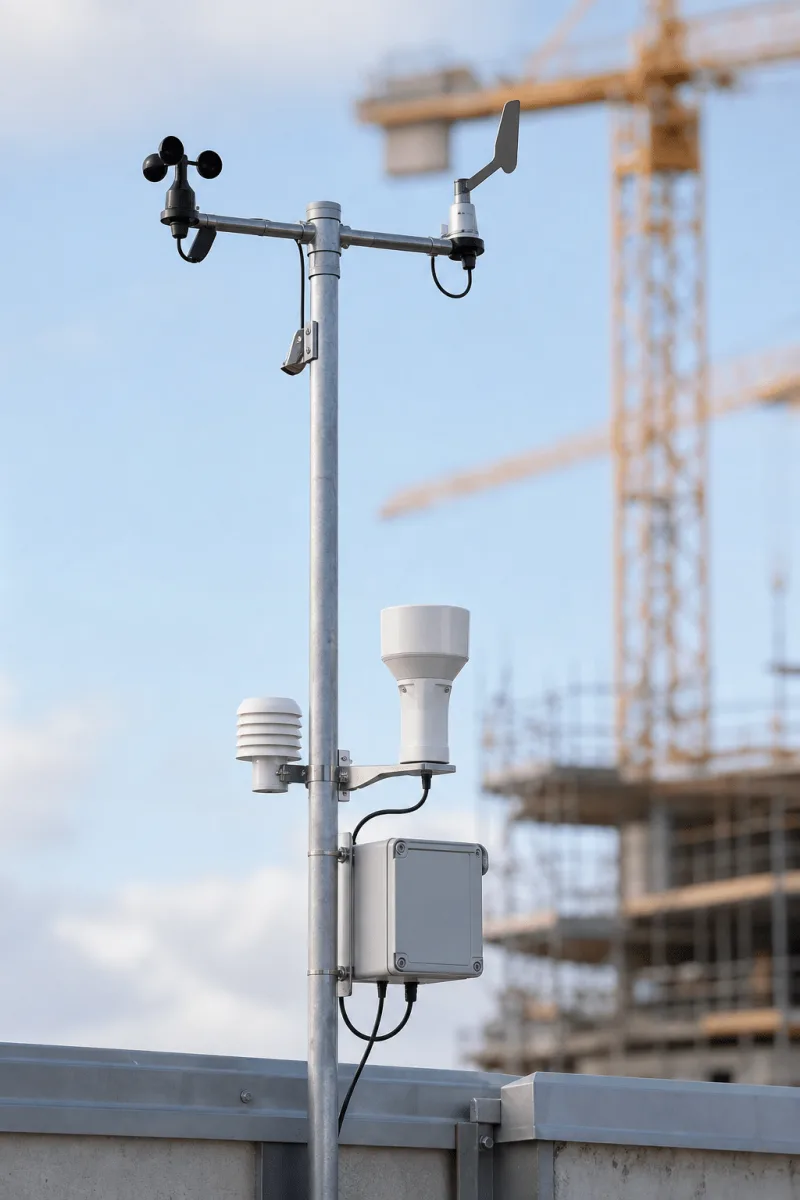
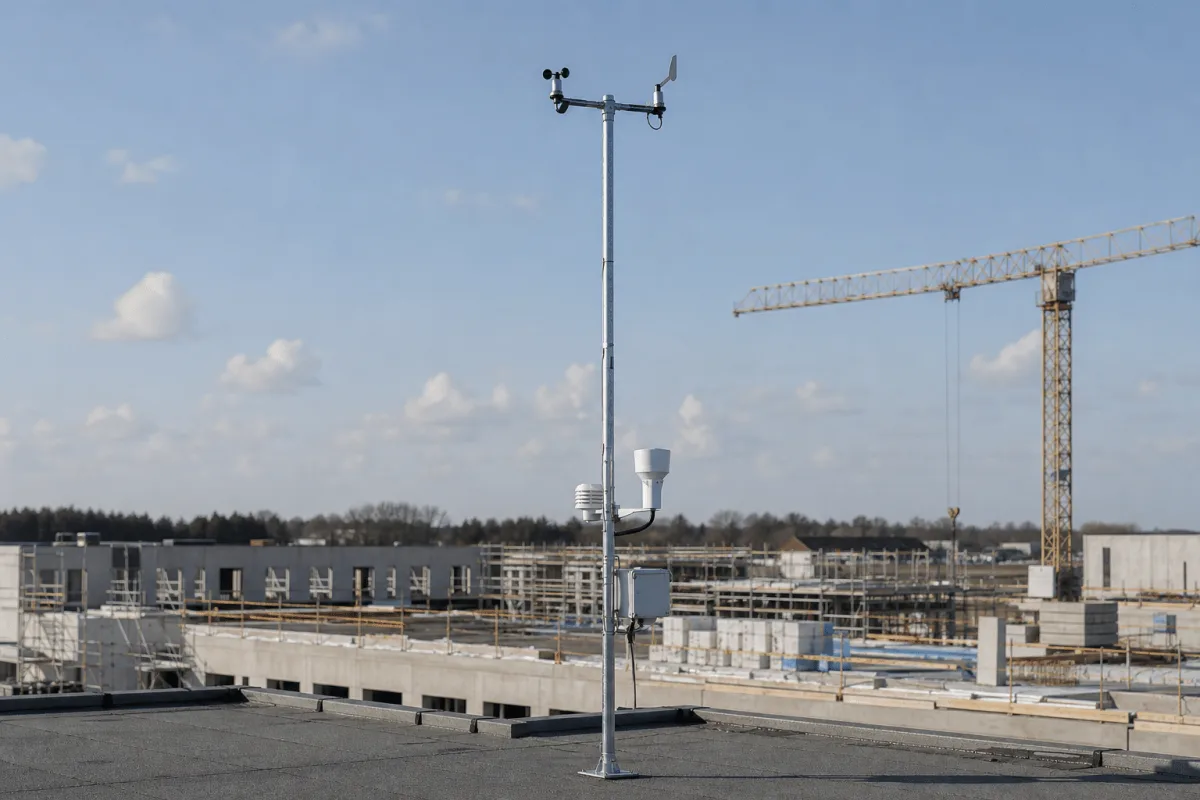
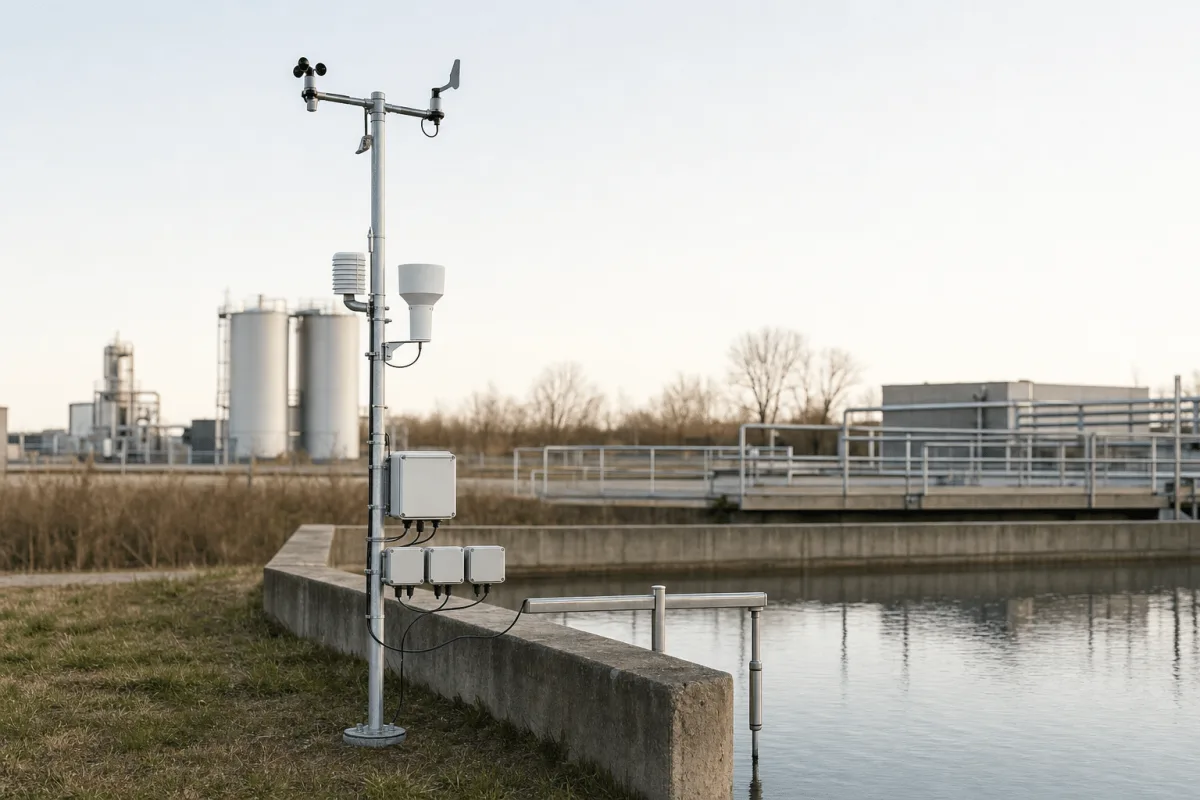
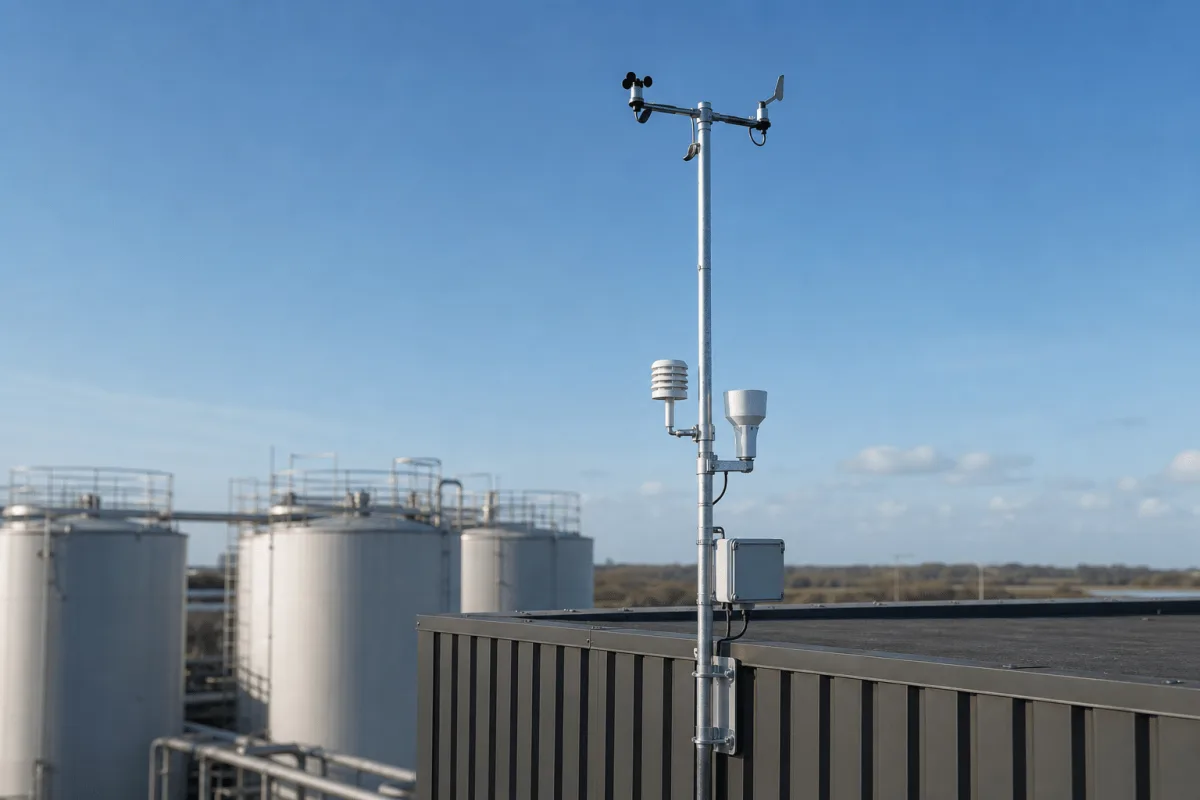
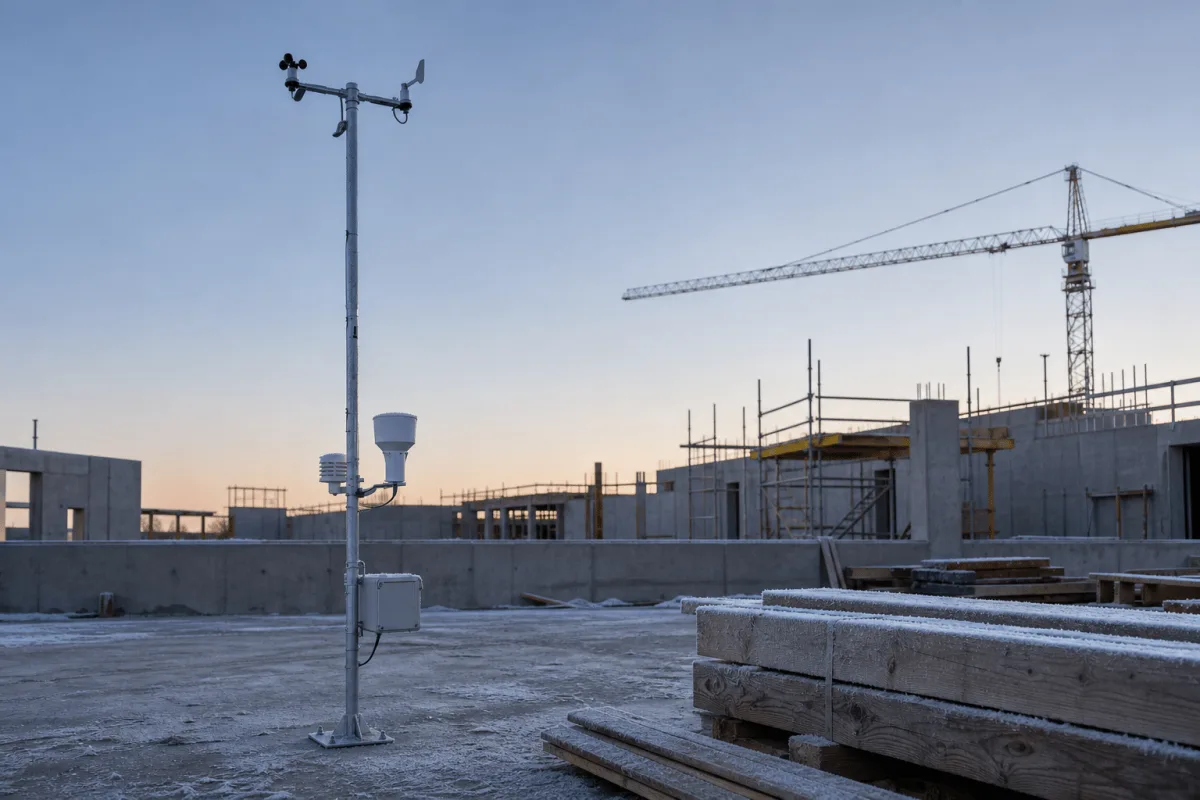
At an industrial or construction site, the sensor mast is positioned to represent the work zone without unsafe obstruction from cranes, roofs or temporary structures. Wind, temperature, humidity and precipitation equipment feed a protected logger and communications unit. A 230 V supply is standard, with solar power considered for remote locations.
Supervisors use the readings and configured thresholds for lifting, scaffold, road and maintenance decisions. Historical records preserve the conditions measured at the site for operational review; they do not by themselves establish regulatory or insurance compliance.
Define which work activities depend on wind, rain, temperature, ice or visibility
Choose a location that represents the active work area
Install the standard station and any project-specific sensors
Set threshold alerts to match documented operating procedures
Give remote access to the site team and selected contractors
Export or review the historical record when documenting an event or work delay
Ecosystem
Emiko combines live conditions, controlled sharing, warnings and retained data for one or several sites.
Industrial-site data is sent to Emiko for remote display, alarms and retained history. Warning thresholds can reflect the limits used in the site's own operating procedures, and forecasting supports task scheduling. EasyShare can feed an internal dashboard or provide selected information to contractors and project partners.
Technical details
The base station is configured with the parameters, power source and reporting modules required by the site procedure.
Ask about a specification| Spec | WeatherStation |
|---|---|
| Core parameters | Wind speed, gust and direction, air pressure, temperature, humidity, dew point, soil temperature |
| Also standard | Rain detection, rain gauge, UV radiation, solar radiation |
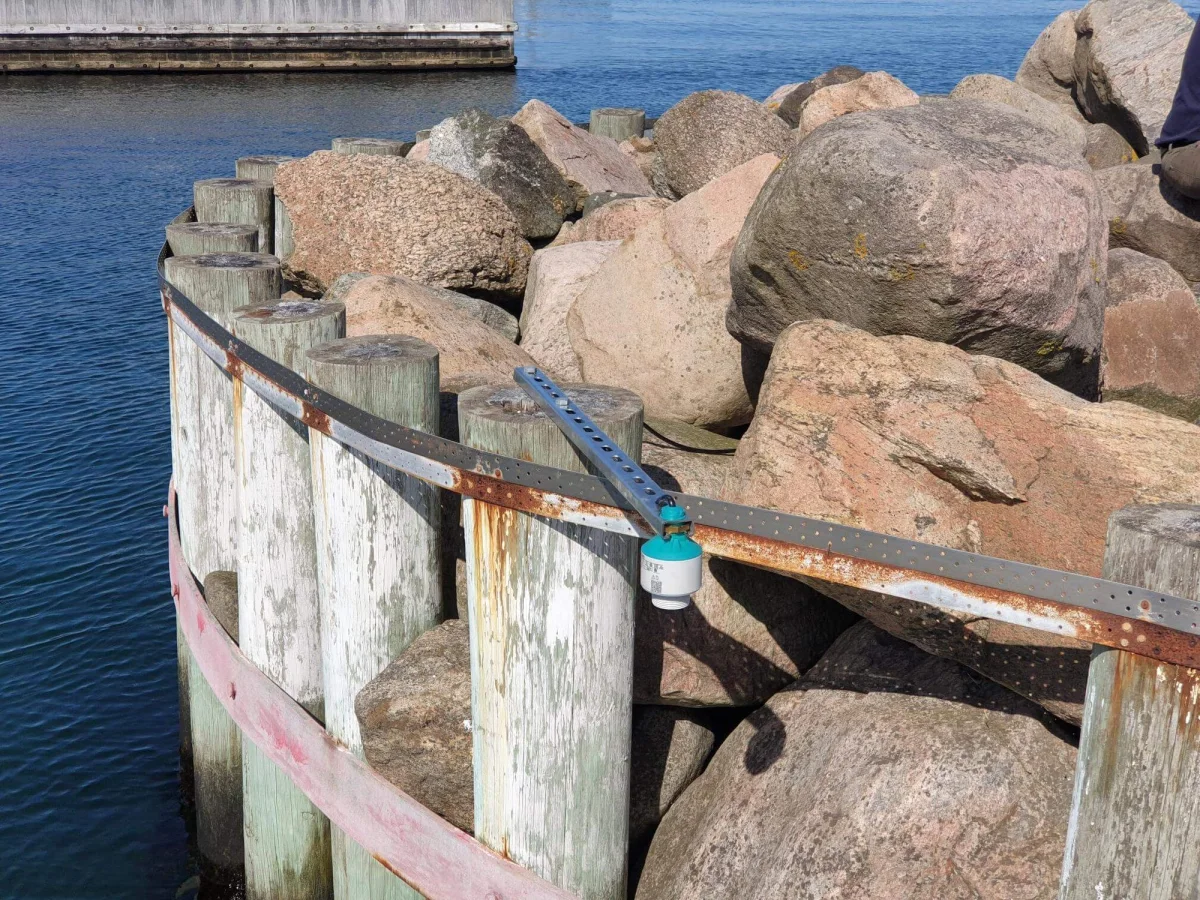
| Optional sensors | Precipitation gauge, ice detection, CO2, water level, current, cloud altimeter, visibility meter |
| Derived values | Evapotranspiration for irrigation planning |
| Power | 230 V mains, or solar for off grid installations |
| Platform | Emiko: live app readings, EasyShare data sharing, Warning alarms, Forecast module |
| Mounting | Single galvanised steel mast on a pier, rooftop or open field |
Product guide
For construction and industrial sites, the useful weather record is the one that reflects local operating conditions. Configure the Cumulus WeatherStation around exposed work, maintenance planning, warnings and the records the project team needs.
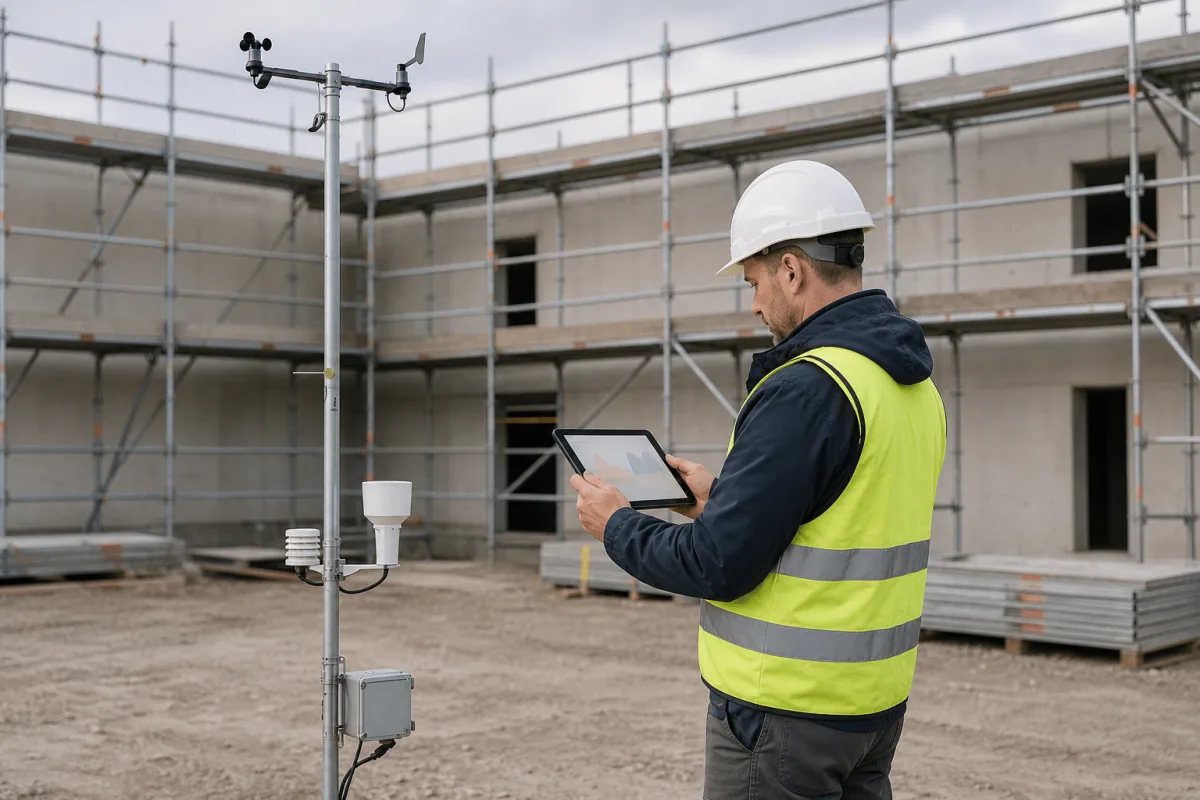
The typical users are construction managers, road maintenance teams and operators of industrial areas. On a building site, real time updates on heavy rain, strong wind and extreme temperatures let workers and supervisors anticipate hazards, and early warnings for severe weather allow timely suspension or evacuation of operations before people or property are at risk.
Road maintenance teams use the same data differently: by tracking weather patterns they schedule repairs during optimal conditions, which reduces downtime and improves road safety. Industrial areas use the readings to adjust material storage conditions and equipment use, so resources are managed around the weather instead of damaged by it.
The standard station measures twelve parameters, including wind speed, wind gust and direction for crane and scaffold decisions, temperature, humidity and dew point, air pressure, rain detection and a rain gauge, plus UV and solar radiation. For most sites that standard set covers the daily safety and scheduling questions.
Optional sensors extend it where the site demands: ice detection for winter operations, a visibility meter, a precipitation gauge, CO2, water level and current conditions, or a cloud altimeter. We help match the configuration to the site and the warnings you need before you buy.
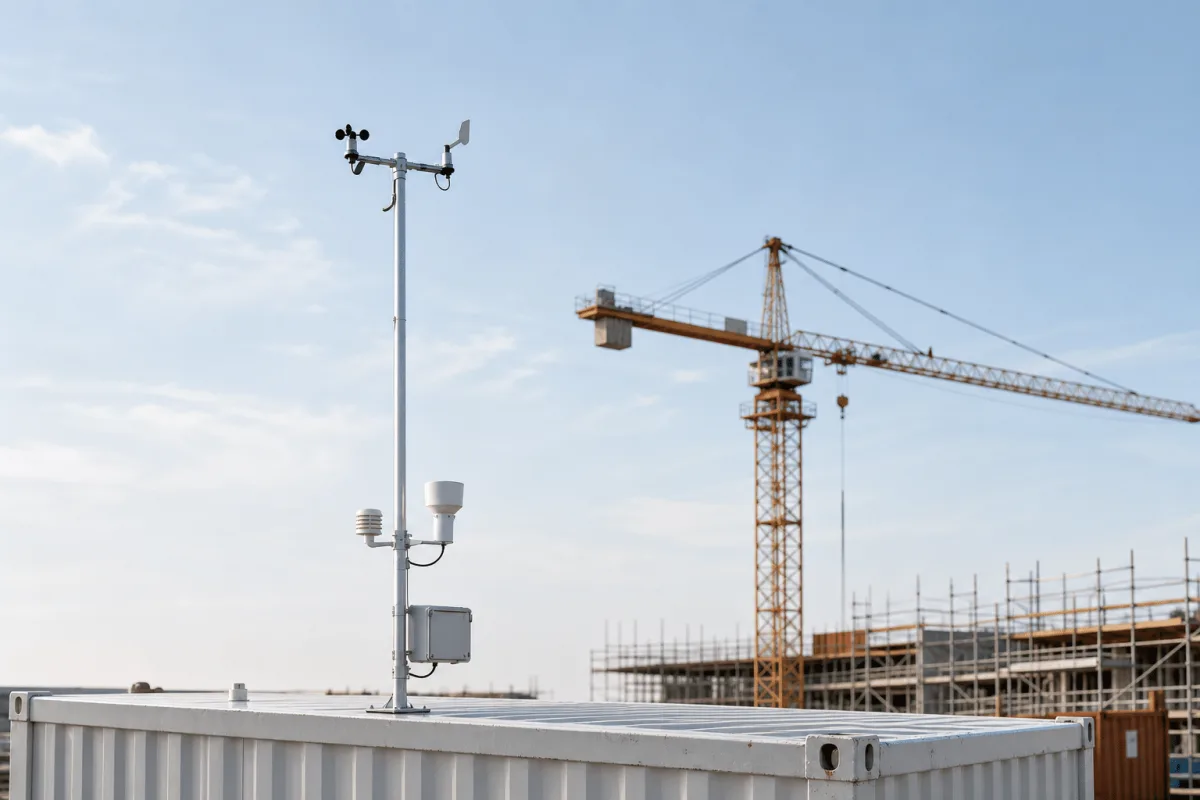
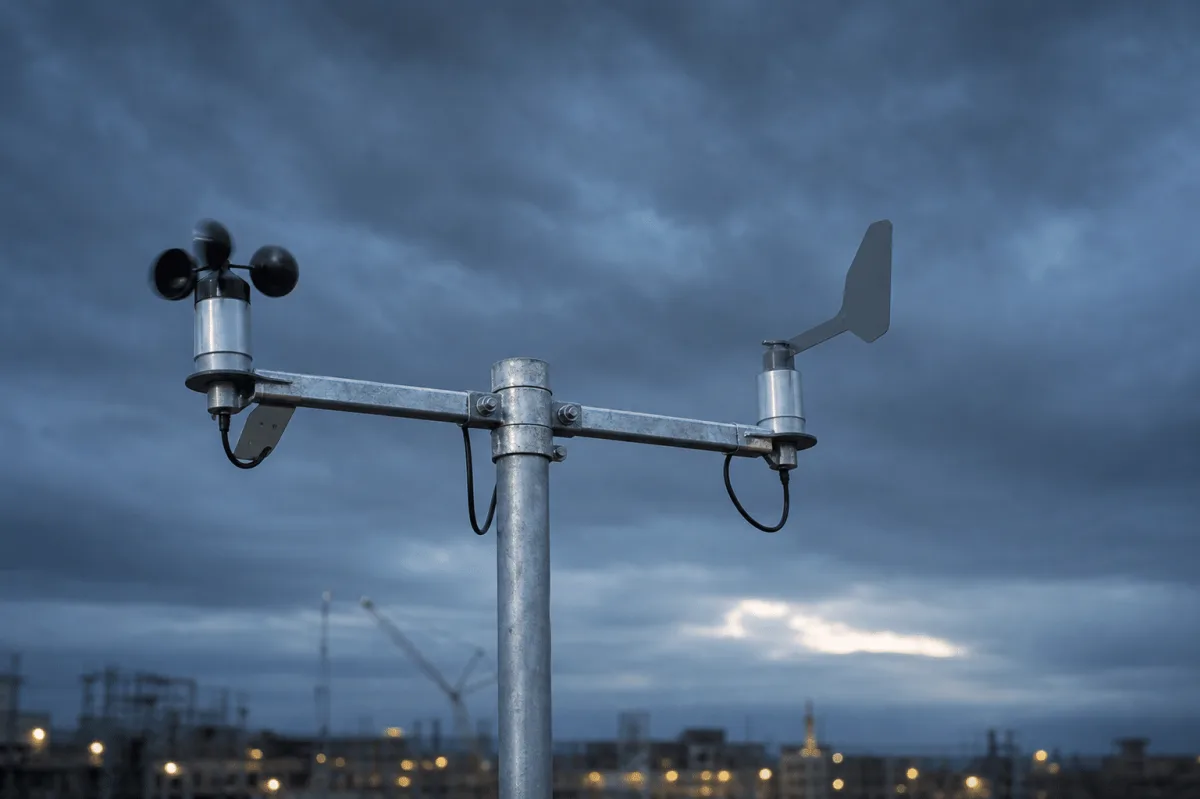
The station uses a single galvanised mast with the selected sensors and a compact logger enclosure. The mounting arrangement and position are agreed around the work area, access and exposure required for the measurements.
Power comes from 230 V mains where available, with a solar option for remote sites. Confirm the sensor and power configuration as part of the project specification.
The Emiko platform receives local readings for display and history. The Warning module provides notifications when configured thresholds are crossed. The Forecast module adds planning information alongside the observations.
Project managers can access the data remotely. EasyShare provides selected readings to dashboards or defined audiences such as contractors and project partners, with public publication configured separately. The team agrees who receives each warning and how it is used in the site procedure.
List the work areas, measurements and reporting needs first. Then agree where the station will be mounted, how it will be powered, who receives alarms and which thresholds reflect the site's procedures. Measurement ranges, accuracy and interface requirements should be confirmed for the specified configuration.
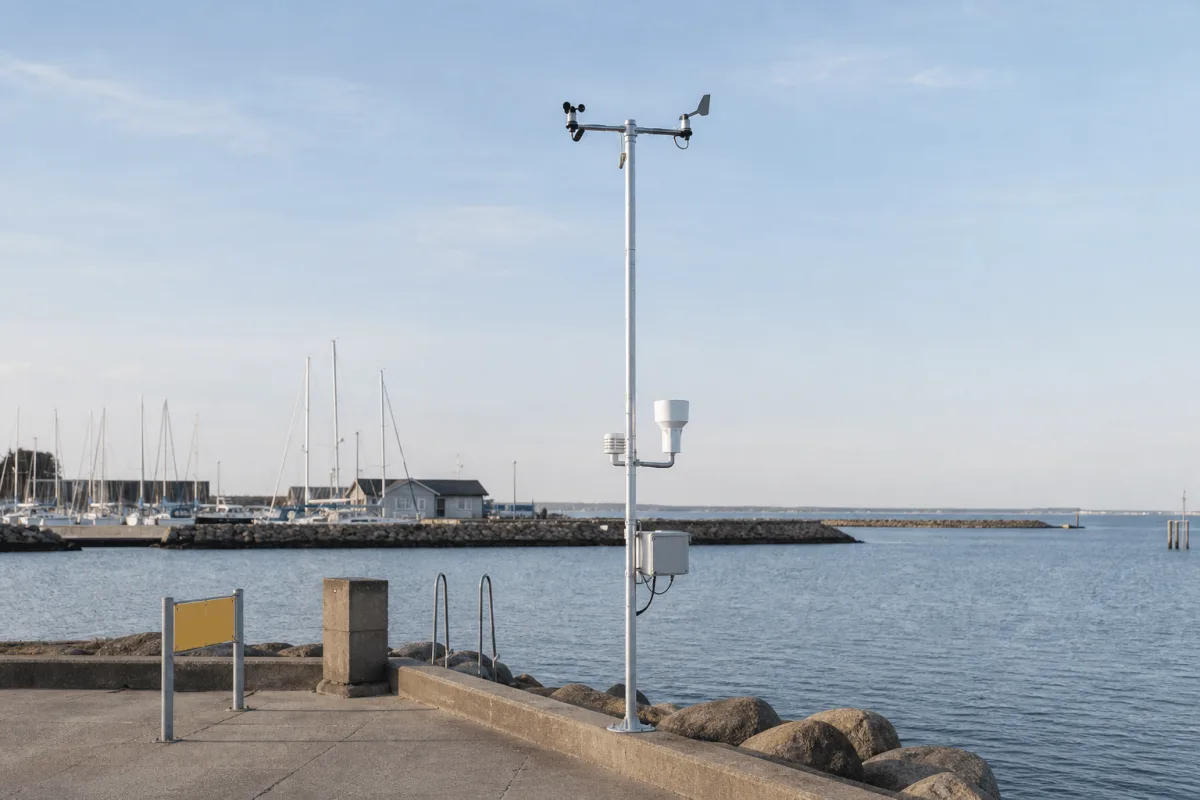
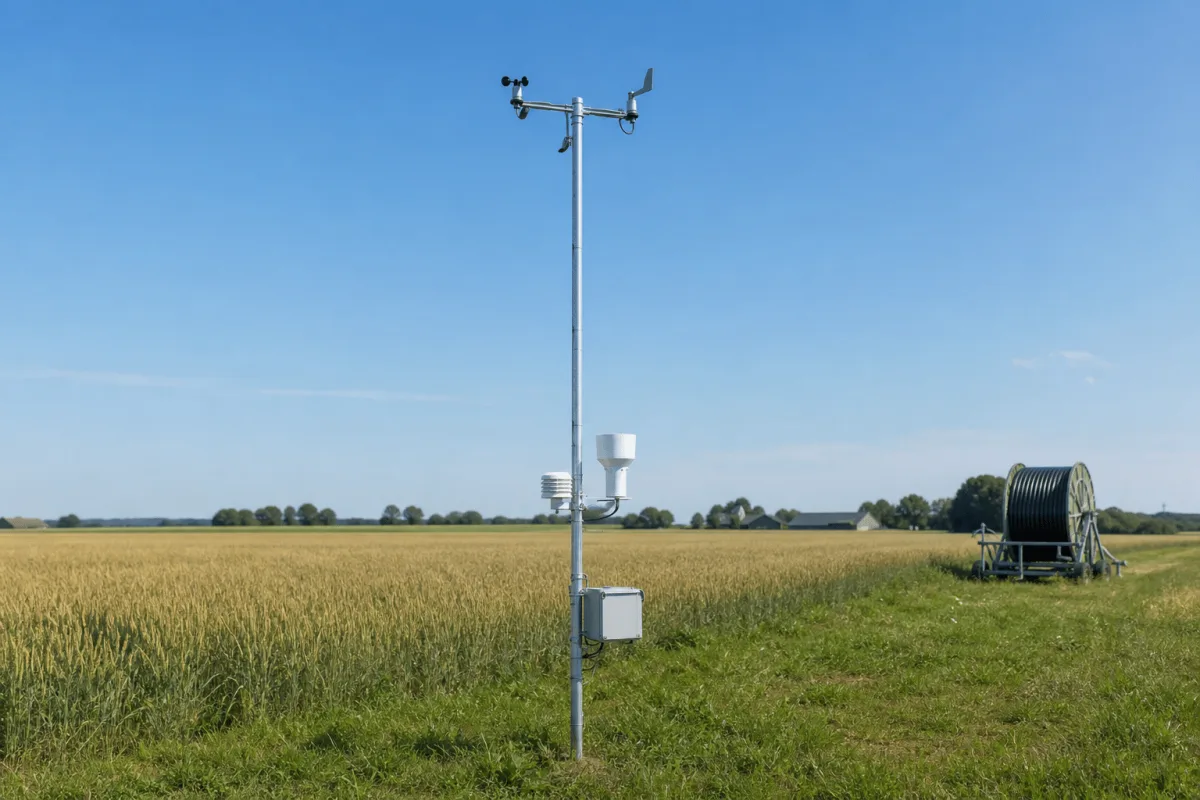
The station is part of the shared Cumulus WeatherStation family. See the port configuration for harbor operations and the agricultural configuration for irrigation planning. The Emiko platform provides remote viewing, history and controlled sharing across the selected setup.
A closer look
Good to know
The station retains local weather observations that can help a project team review weather-related delays or damage. Records can support project documentation and an insurance assessment; the station itself does not determine whether a claim will be accepted.
Yes. By tracking weather patterns, road maintenance teams can schedule repairs during optimal weather conditions, reducing downtime and improving road safety.
Project teams can review local wind, rain and temperature, receive warnings at configured thresholds and use historical records when reviewing work. This supports task and maintenance planning. The project team defines the operating limits and the actions associated with each warning.
The standard industrial configuration covers wind speed, gust and direction, pressure, temperature, humidity, dew point, soil temperature, rain, UV and solar radiation.
Depending on the risk assessment, it can be extended with instruments for ice, visibility, precipitation, CO2, cloud height or water conditions. Sensor suitability and siting are confirmed for each project.
Yes. EasyShare can send selected readings and forecasts to an internal dashboard or controlled audience such as supervisors, contractors and project partners. Public or third-party publication is configured separately.
System specification can include advice from the Cumulus developer, whose professional meteorology experience spans more than 40 years and includes DMI and DR. Site rules and decision thresholds remain the operator's responsibility.
Yes. Remote monitoring lets project managers access real time weather data from anywhere, so decisions about hazards, scheduling and resources can be made proactively even when off site. Live readings from the station are available in the Emiko app.
It uses 230 V mains power where available, with a solar option for remote locations. Confirm the power equipment, selected sensors and installation requirements for the site before ordering.
Have a question about your project?
Talk to our teamExplore
Let’s talk about your project
Tell us about your site, where the station can be mounted and which warnings and reports you need. We help with sensors, thresholds and setup.
Tinnetvej 70, 7173 Vonge, Denmark