
Complete solution · AtoN House Nordic
Bridge and structure marking
Bridge marking combines navigation lights, obstacle lights and racon identification as specified for the structure.
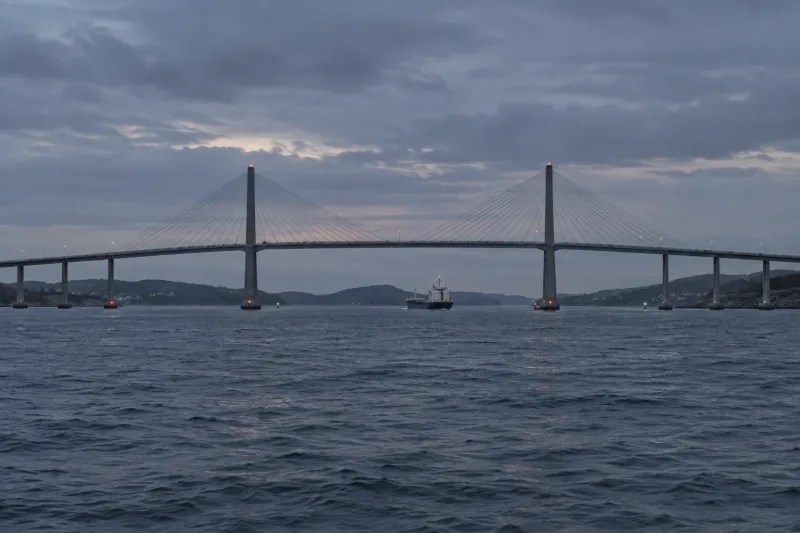
Commissioning verifies the status, alarms and controls supported by each connected instrument.
The components
Equipment
and interfaces
6 components with specified functions.
The labels identify their Emiko integration.
- 01No telemetry
Aviation warning lights
Aviation warning lights
Provide the specified obstacle signal from the site supply; model approval is confirmed, with no telemetry included.
Product page - 02Monitored through NaviGuard
LED marine lanterns
Tideland Nova-65 with Halo2
Provides externally powered marking; the Nova-65 and Halo2 profile connects through the included NaviGuard.
Product page - 03No telemetry
Radar beacons
AMG HEKLEO 2 XS racon
Provides X- and S-band racon identification from an external supply; no racon telemetry is included.
Product page - 04Monitored through NaviGuard
Beacons
MSM MDL directional beacon
Provides the specified approach beam where required; PowerMonitor monitors current through NaviGuard.
Product page - 05Full Emiko integration
PowerGuard
PowerGuard supply
Supplies the calculated load from battery and optional solar charging; reports its own status and alarms to Emiko.
Product page - 06Full Emiko integration
NaviGuard
NaviGuard controller
Connects the specified serial profile or PowerMonitor current sensing to Emiko.
Product page
How it works
From the plan to the
commissioned installation
The structure and authority requirements define the marking arrangement. Installation and acceptance cover each specified function.
- 01
Confirm requirements
The project records the marine marking and aviation lighting requirements for the structure.
- 02
Locate lights
Specify structure brackets, cable routes, power protection and backup supplies for the selected light positions.
- 03
Specify racon
The racon specification establishes antenna position, bands, identifier and required radar coverage.
- 04
Install equipment
Installation is coordinated with the structure owner, including access and operational restrictions.
- 05
Test interfaces
Check marine and aviation signals and racon response on site; test lantern monitoring and independent supply alarms.
Where it is used
Bridges and coastal structures
Bridge owners, transport authorities and port operators responsible for structures near navigable water.
- 01
A fixed bridge with a designated navigable span
- 02
A bridge pier requiring marine lights and racon identification
- 03
A coastal structure requiring both marine and aviation marking
Planning
Delivery scope
and equipment options
Delivered by Vikingegaarden
- Equipment specification from the marking plan, site data and operating requirements
- Component supply with the agreed manufacturer documentation
- Installation and commissioning, or technical support for the appointed contractor
- Emiko configuration and acceptance checks for supported equipment interfaces
- Service scope, inspection requirements and spare parts confirmed in the quotation
Good to know
Before the
quotation
How are the lighting requirements established?
The project records requirements from the responsible marine and aviation authorities. Vikingegaarden confirms the selected equipment and supporting documents against the specified arrangement.
Which signals appear in Emiko?
The specified Nova-65 profile, MDL current monitoring and PowerGuard supply status can be included. Aviation lights and the racon have no assumed telemetry. Any additional integration needs a documented interface and acceptance test.
What is required for a quotation?
The enquiry requires structure drawings, coordinates, elevations, navigable-span details, authority requirements and available power. Access constraints and monitoring requirements should also be stated.
Plan this solution
Project quotation
The specification defines the equipment, installation scope and price.
The enquiry requires a chart, positions, marking requirements, mounting details, available power and required autonomy.