
Complete solution · AtoN House Nordic
Directional passage marking
A directional beacon identifies an approach or passage within a specified angular coverage.
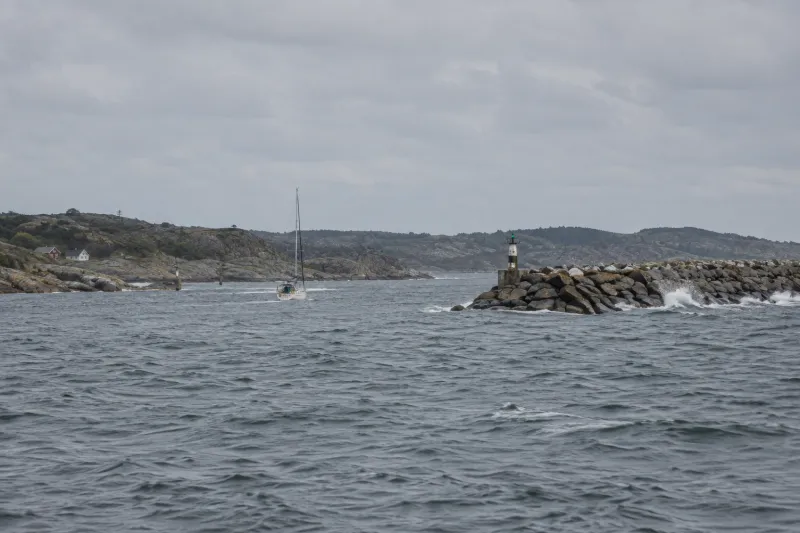
Commissioning verifies the status, alarms and controls supported by each connected instrument.
The components
Equipment
and interfaces
6 components with specified functions.
The labels identify their Emiko integration.
- 01Monitored through NaviGuard
Beacons
MSM MLP2000 beacon
Provides a wide beam up to 120 degrees; the included PowerMonitor monitors current, not optical output.
Product page - 02Monitored through NaviGuard
Beacons
MSM MDL beacon
Provides a 10-degree beam; select instead of MLP2000 for the calculated coverage, with current monitoring.
Product page - 03Monitored through NaviGuard
Beacons
Tideland RLED-200 beacon
Directional alternative with aiming sights; optics are confirmed for the approach, with current monitoring.
Product page - 04Structure
Lattice masts
GMR mast and specified mounting
Supports one selected beacon on a designed foundation; the mounting arrangement allows levelling and alignment.
Product page - 05Full Emiko integration
PowerGuard
PowerGuard supply
Supplies the calculated load from battery and optional solar charging; reports its own status and alarms to Emiko.
Product page - 06Full Emiko integration
NaviGuard
NaviGuard controller
Connects the specified serial profile or PowerMonitor current sensing to Emiko.
Product page
How it works
From the plan to the
commissioned installation
Beam selection follows the approach geometry. Installation verifies bearing, elevation and coverage.
- 01
Define coverage
The marking plan defines the approach bearing, colour, character and required nominal range.
- 02
Select beam
Horizontal and vertical divergence are selected for the approach geometry and mounting height.
- 03
Specify supply
The equipment load, operating character and seasonal conditions determine the supply and battery capacity.
- 04
Aim beacon
The beacon and mounting are installed, levelled and aimed to the specified bearing.
- 05
Verify operation
Verify bearing and coverage on site, then test power-based alarms and the separate PowerGuard supply connection.
Where it is used
Passages with directional guidance
Harbour, marina, bridge and lock operators requiring a directional aid to navigation.
- 01
A breakwater passage with a specified approach bearing
- 02
A pier head marking the approach to a harbour
- 03
A lock or bridge approach requiring directional coverage
Planning
Delivery scope
and equipment options
Delivered by Vikingegaarden
- Equipment specification from the marking plan, site data and operating requirements
- Component supply with the agreed manufacturer documentation
- Installation and commissioning, or technical support for the appointed contractor
- Emiko configuration and acceptance checks for supported equipment interfaces
- Service scope, inspection requirements and spare parts confirmed in the quotation
Good to know
Before the
quotation
How does a directional beacon differ from a lantern?
A directional beacon provides a defined angular beam. An omnidirectional marine lantern provides horizontal coverage around the mark. Selection follows the coverage required by the marking plan.
How is solar capacity calculated?
The calculation includes output setting, flash character, operating hours, communications load and seasonal charging. MSM publishes 36 W for MLP2000 and 27 W maximum for MDL; these are separate model ratings.
What is required for a quotation?
The enquiry requires the approach bearing, angular coverage, colour, character, nominal range, mounting height and power availability. Required autonomy and monitoring functions should also be stated.
Plan this solution
Project quotation
The specification defines the equipment, installation scope and price.
The enquiry requires a chart, positions, marking requirements, mounting details, available power and required autonomy.