Wave mitigation
Designed to absorb and dissipate wave energy, reducing the force and impact of incoming waves before they reach the shore or the moored boats.
Green Harbor Technology · Floating structures
Floating wave protection, designed around your harbor.
Modular floating breakwaters for marina and harbor wave protection. Cellular plastic cores provide buoyancy, while the module layout and mooring arrangement are specified around the site and its wave conditions.
Key features
Plan the barrier around the incoming waves, the sheltered area and the mooring conditions.
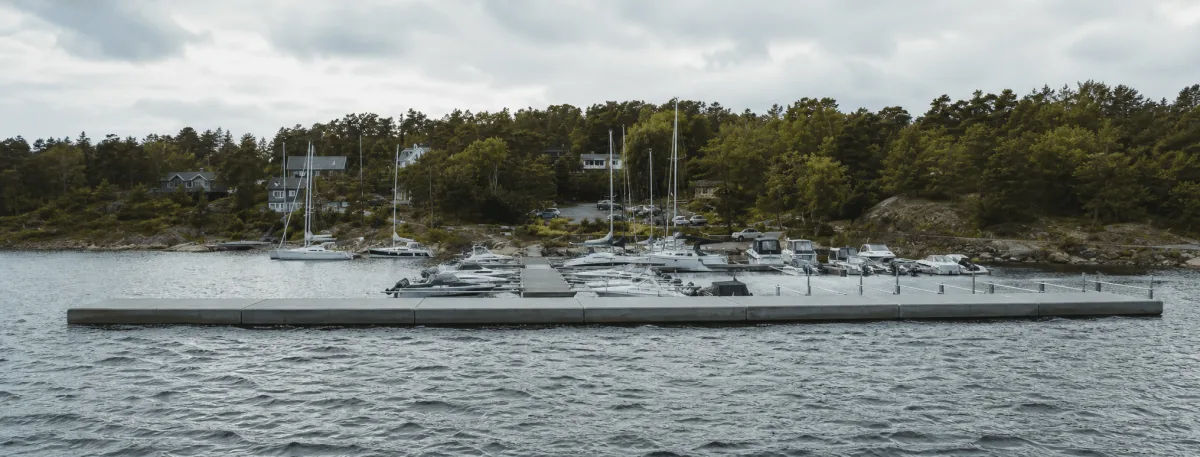
Designed to absorb and dissipate wave energy, reducing the force and impact of incoming waves before they reach the shore or the moored boats.
Wave attenuation can improve conditions within the marina basin. The expected effect is assessed for the waves and layout at the site.
Module size, position and the sheltered area are considered together. Wave protection is specified for the harbor conditions.
The floating sections and their mooring arrangement are specified for the environmental loads at the installation location.
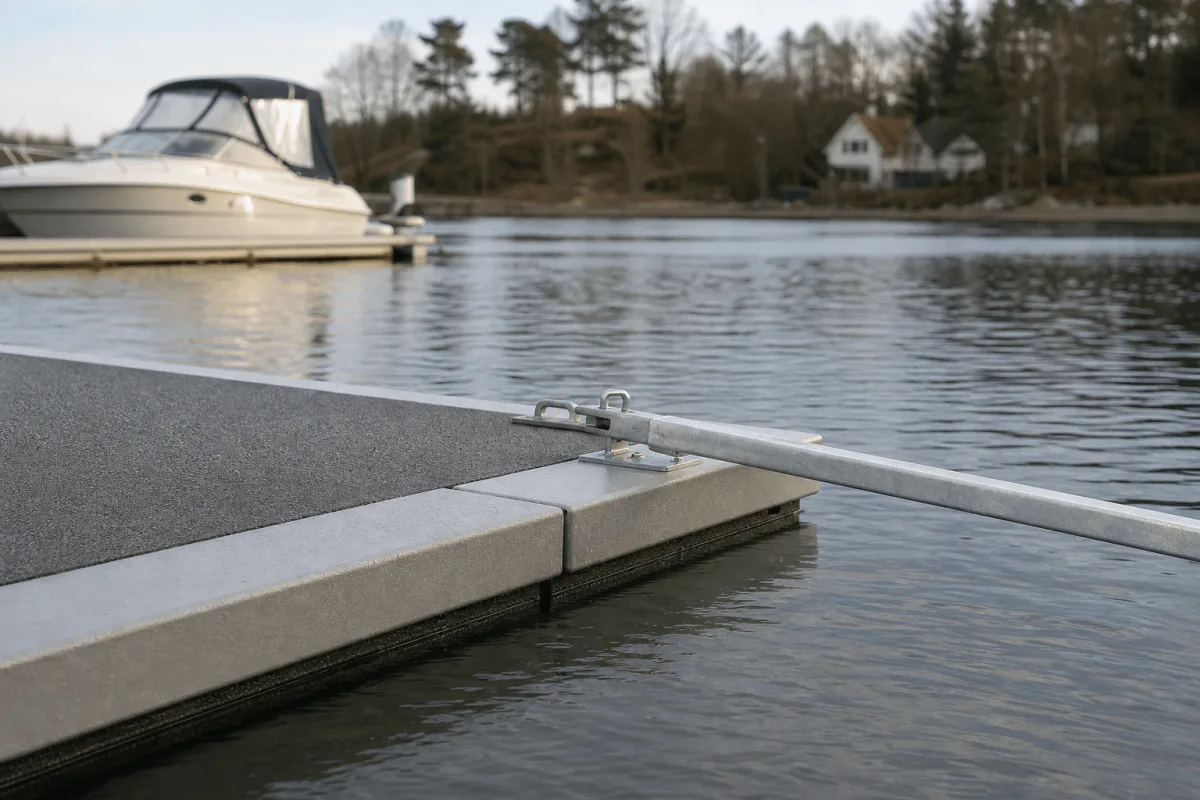
Flexible in design and placement to suit varying coastal needs, and customisable with accessories such as boat booms and electrical installations.
The modules use a cellular plastic core to provide buoyancy. The structure and mooring design are assessed for the intended conditions.
The floating structure rises and falls with water level changes. Loading and wave conditions remain part of the performance assessment.
Sections are joined into the specified layout and moored in place. Later relocation or extension is assessed against the new layout and site conditions.
Applications
Wave protection is assessed around the exposed area and the planned use of the waterfront.
Wave attenuation at the exposed side of the marina or harbor basin.
Wave protection where the site assessment supports a floating structure.
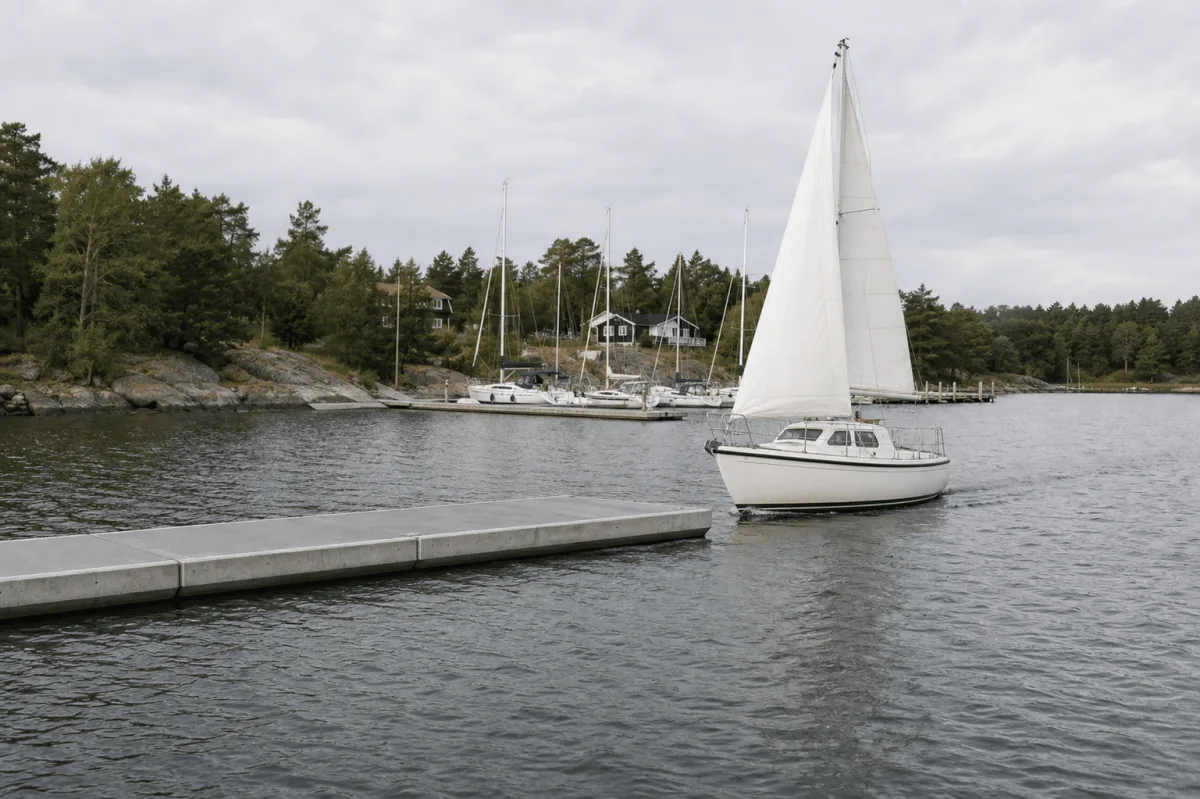
Module placement considered alongside access through the harbor.
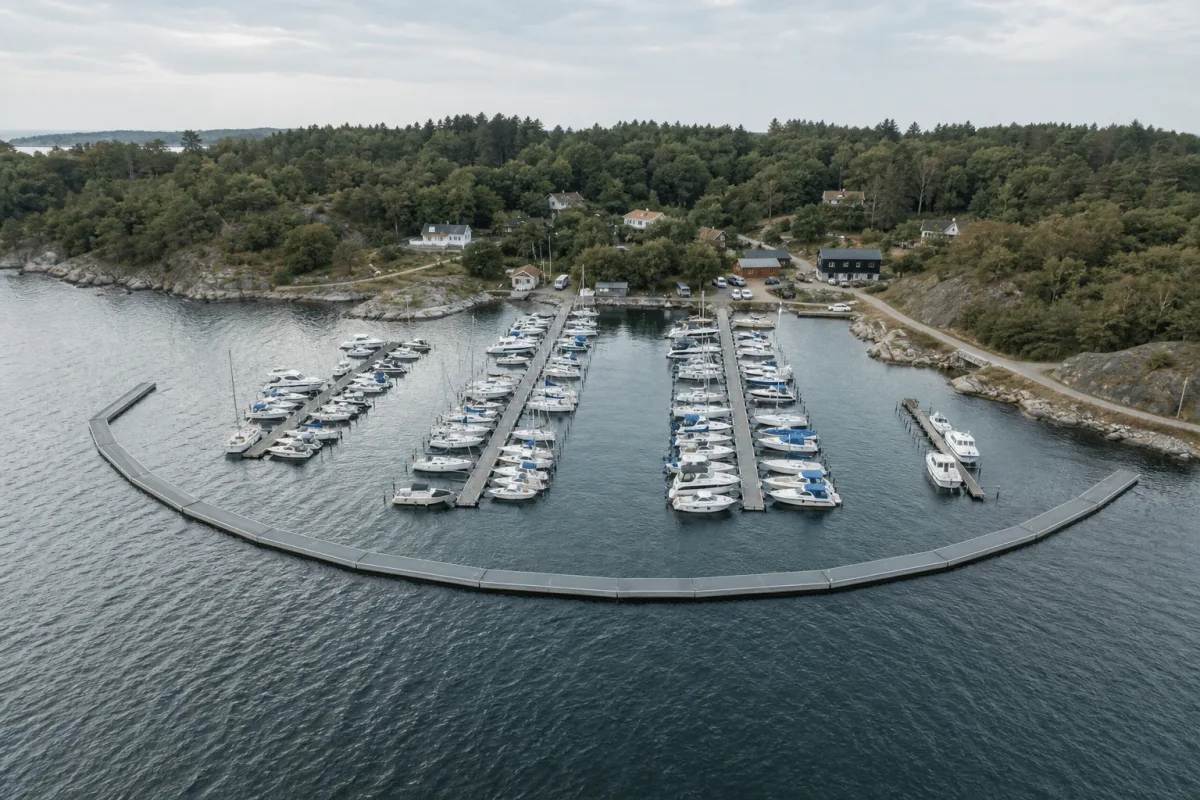
A modular barrier planned with the piers and services in the sheltered area.
How it works
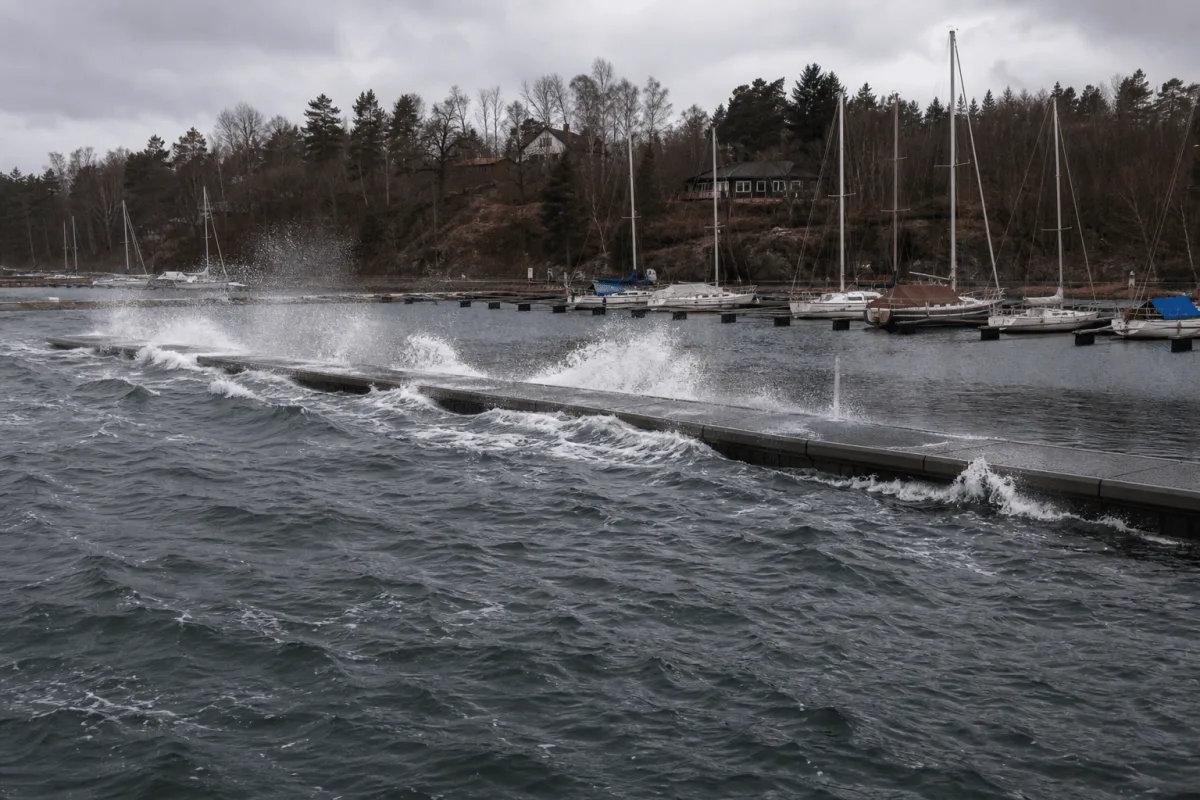
Moored sections absorb and dissipate wave energy before it reaches the sheltered part of the basin.
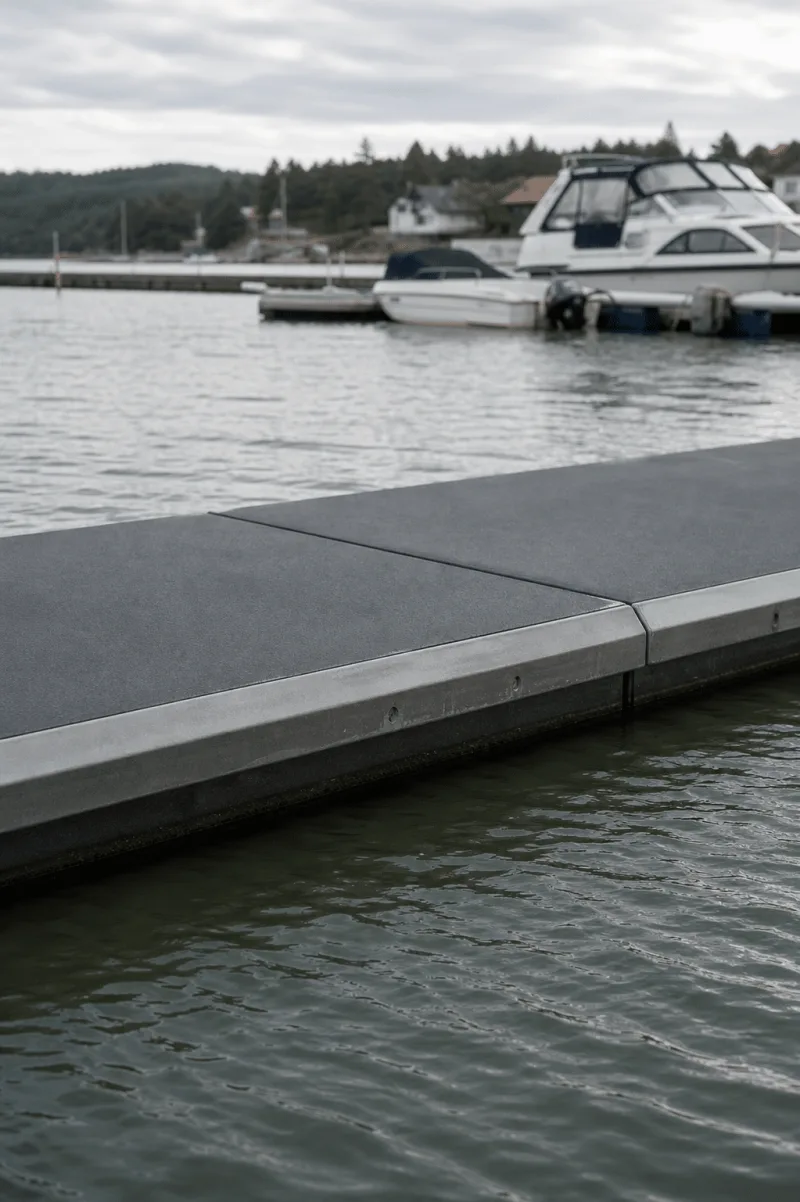
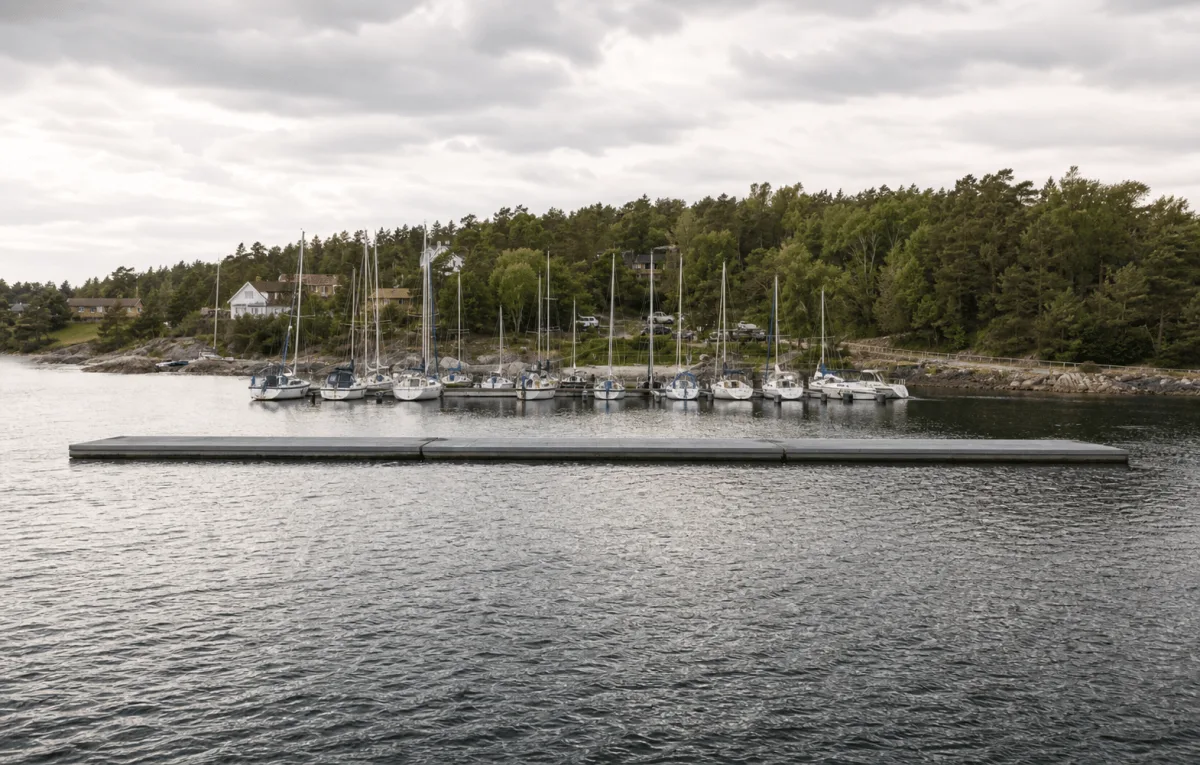
A floating breakwater is moored across an exposed side of a marina or harbor. As waves meet the modules, energy is absorbed and dissipated. The level of attenuation depends on the waves and the selected structure.
The sections use a cellular plastic core for buoyancy and follow changes in water level. Vikingegaarden helps plan the module layout, position and mooring for the site. Boat booms and electrical installations can be included where specified.
Modules are moored across the exposed side of the marina or channel
Waves meet the breakwater and their energy is absorbed and dissipated
The sheltered area and required wave attenuation are assessed for the site
The floating structure follows changes in water level
Accessories such as boat booms and electrical installations are added as needed
Regular inspection, cleaning and repair keep the breakwater effective
Ecosystem
The breakwater shelters the basin. Vikingegaarden also delivers the piers and services inside it.
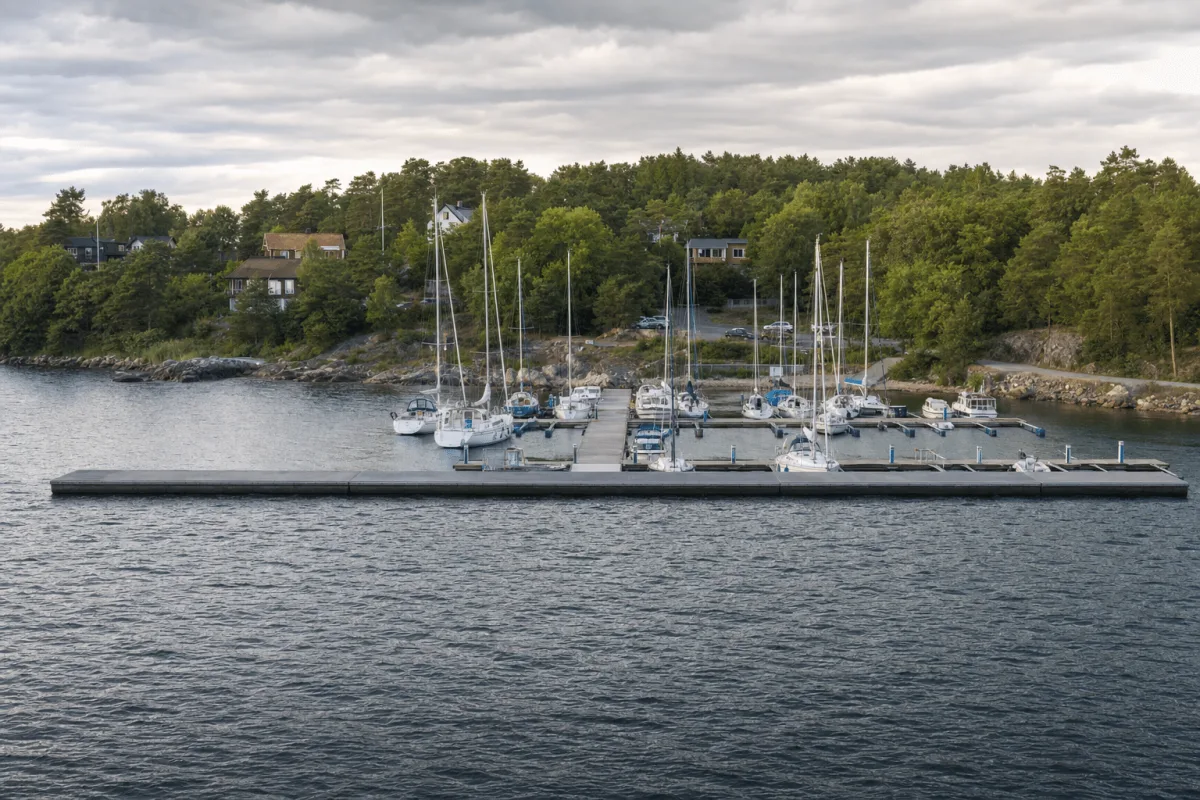
Vikingegaarden plans and delivers floating breakwaters together with concrete pontoons, wooden and concrete floating pontoons and swim docks, so the whole floating layout of a marina comes from one supplier. Breakwater modules can be prepared with electrical installations, and the piers behind them carry our own marina equipment, such as service pedestals for power and water, lighting and access control, with connected service equipment managed on the Emiko platform.
Product guide
A floating breakwater is a site-specific structure. Start with the waves, the area to protect and the mooring conditions before selecting the module layout.
Floating breakwaters are used where a marina or harbor basin is exposed to incoming waves. They are intended to reduce wave energy before it reaches the piers, moored boats or other activities inside the protected area.
The effect must be assessed for the proposed location. A modular barrier is planned around the direction and characteristics of the waves and the required sheltered area.
Module dimensions, layout and mooring depend on the site and intended protection. Vikingegaarden reviews the exposure and area to shelter before specifying the sections.
The modular structure can be joined to the planned length. Any future extension or relocation needs its own check of the wave conditions and mooring arrangement.
The modules use a cellular plastic core for buoyancy. The floating structure follows changes in water level, while the mooring keeps it in its specified position.
Following the water level does not make wave performance constant in every condition. The selected layout and environmental loads determine the expected attenuation.
Sections are joined and moored in the agreed position. Installation planning covers the modules, mooring and any required site work. Boat booms and electrical installations can be included where specified.
Vikingegaarden can plan the sheltered layout with concrete pontoons or timber deck pontoons, together with marina services on the piers.
The service plan includes inspections for damage, cleaning and repair of deteriorated sections. Inspection requirements and expected service life are agreed for the chosen structure and operating environment.
A closer look
Good to know
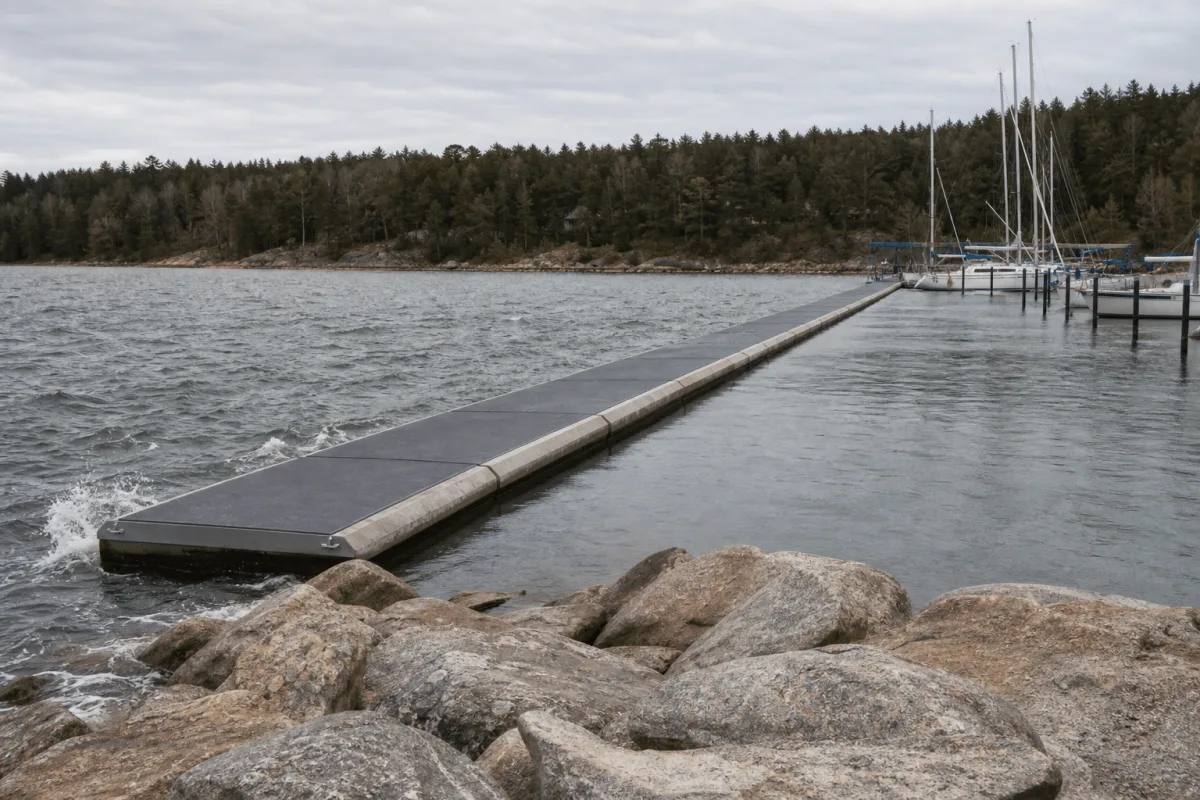
The modular sections use a cellular plastic core. The complete structure, connections and mooring arrangement are specified for the site.
Vikingegaarden assesses the wave conditions, exposed side of the basin and area to protect. Module dimensions, layout and mooring are then specified for that location.
The selected materials, exposure, mooring arrangement and maintenance plan determine the project service-life assumptions. These are agreed for the installation rather than treated as a universal lifetime.
A floating breakwater is specified to attenuate incoming waves. Concrete pontoons can serve as piers, bridges or other floating structures. A pontoon intended for wave protection needs a design assessed for that role.
Regular maintenance typically includes inspections for damage, cleaning and repair of any deteriorated sections to ensure the breakwater's continued effectiveness over its lifetime.
The cost varies widely, from smaller residential or recreational installations to large harbor protections, depending on factors such as size, design, materials and location. Contact us with your site details for a proposal.
Moored sections absorb and dissipate wave energy at the exposed side of the basin. The floating structure follows changing water levels. The degree of protection depends on the wave conditions and selected layout.
Yes. The modules are customisable with accessories such as boat booms and electrical installations, so the sheltered side of the breakwater can double as usable mooring space within the marina layout.
The modular sections allow layout changes. Relocation or extension is planned with a new assessment of the waves, mooring and installation work required.
Have a question about your project?
Talk to our teamExplore
Let’s talk about your project
Tell us about the site, the wave direction and what needs to be sheltered. We help with the length, placement and accessories.
Tinnetvej 70, 7173 Vonge, Denmark