LED output by model
The listed intensity ranges are 5 to 6 cd for ML 100, 5 to 18 cd for ML 200 and 5 to 70 cd for ML 300. Confirm the required colour and configuration when ordering.
AtoN House Nordic · Lights and lanterns
Marine marker lights for nets, buoys and aquaculture
The ML series marks fishing nets, mooring lines, buoys, seismic cables and offshore installations. Compare ML 100, ML 200 and ML 300 by light intensity, power supply and mounting, with advice and support from Denmark.
Key features
Compare intensity, power and mounting for the position or equipment being marked.
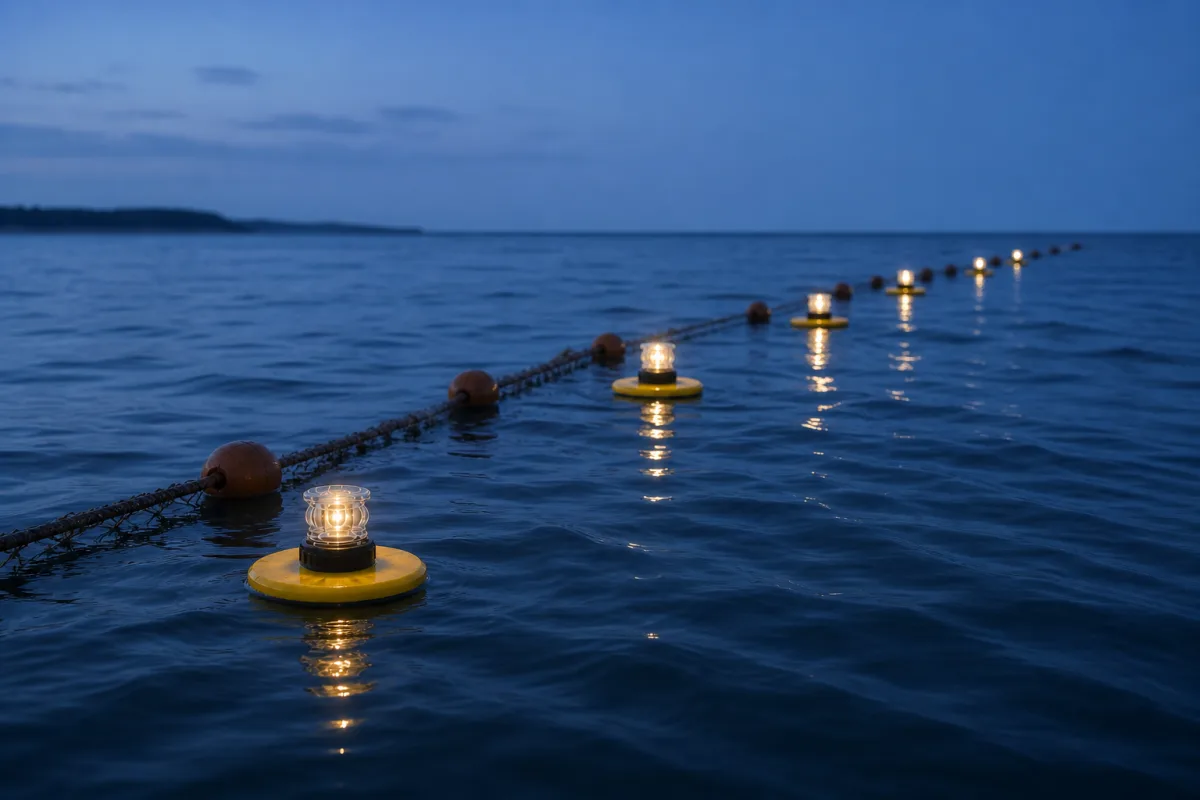
The listed intensity ranges are 5 to 6 cd for ML 100, 5 to 18 cd for ML 200 and 5 to 70 cd for ML 300. Confirm the required colour and configuration when ordering.
Flash rate and character are configurable to meet regulatory and operational requirements. The ML 200 and ML 300 support any IALA flash character.
Each model is available in four colours, including white, yellow and red, so the light matches international maritime marking standards.
The ML 100 runs on three D cells and the ML 200 on a 4.5 VDC battery supply, while the ML 300 is powered from 10 to 27 VDC.
The ML 200 includes daylight sensing for automatic operation. Confirm sensor functions for the selected model and configuration.
Synchronisation coordinates several lights on an installation. Master and slave operation is documented for the ML 200.
The ML series is designed for marine marking. Confirm the model-specific enclosure and immersion rating for the intended installation.
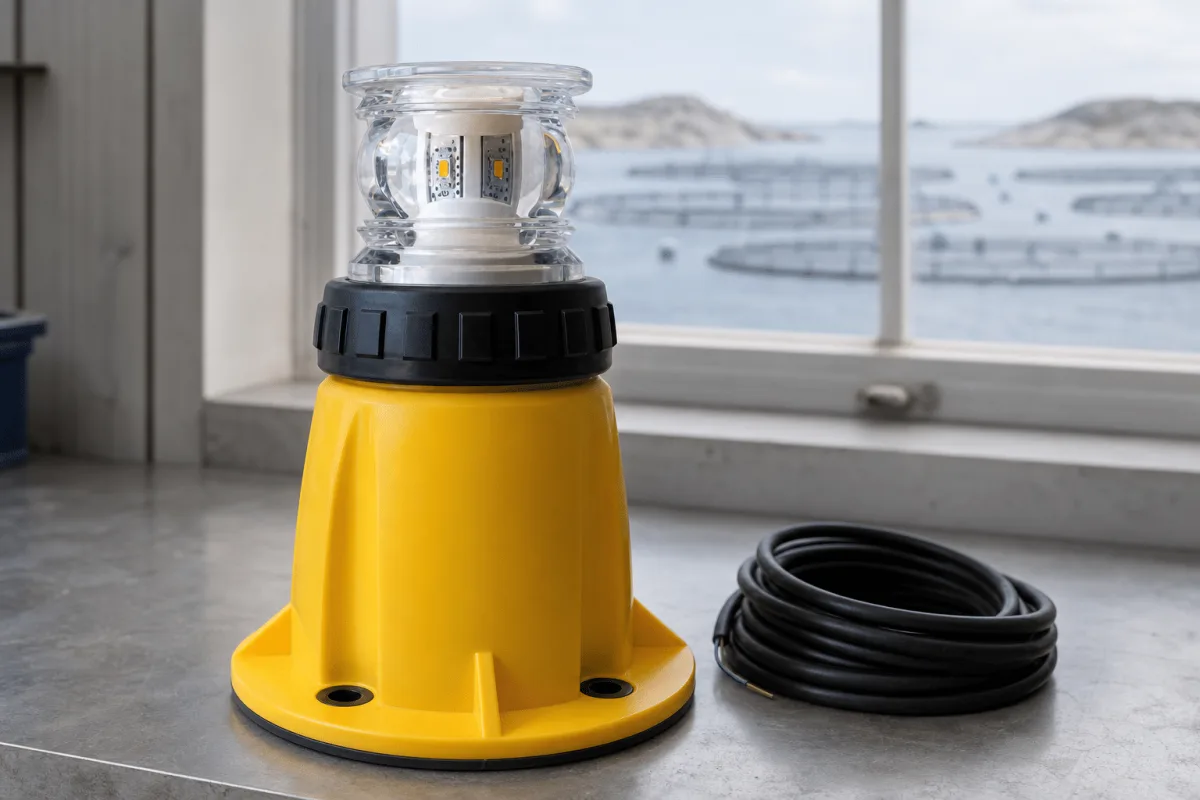
Compact units built for long periods in exposed and remote locations. Modular construction allows quick servicing in the field.
Applications
Anywhere a position, boundary or hazard has to stay visible after dark.
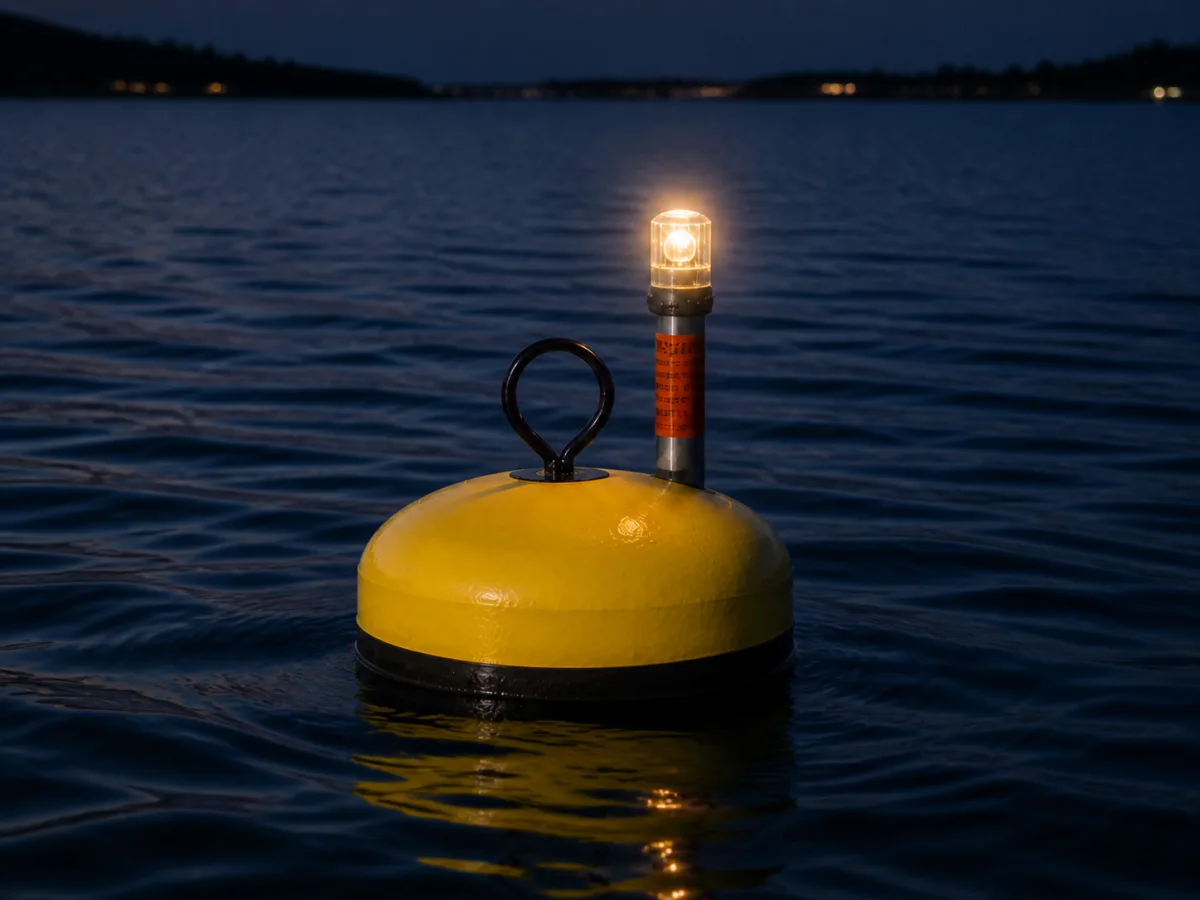
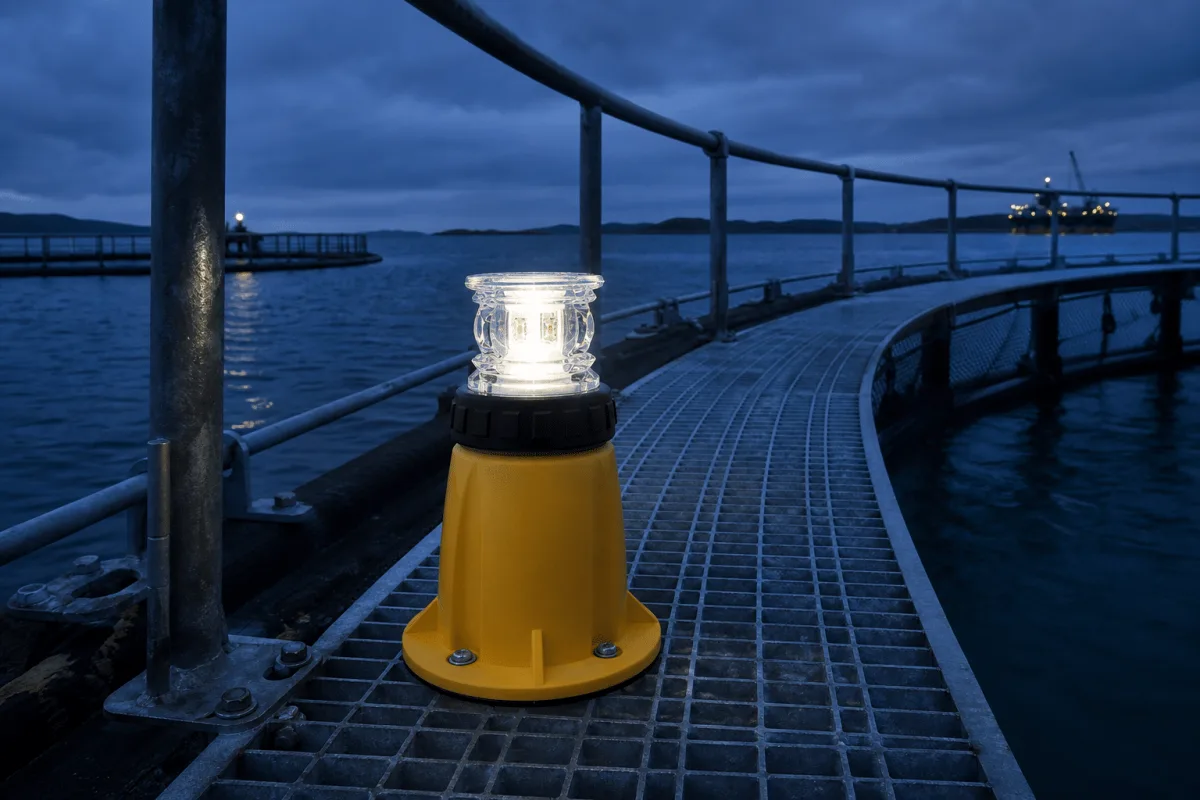
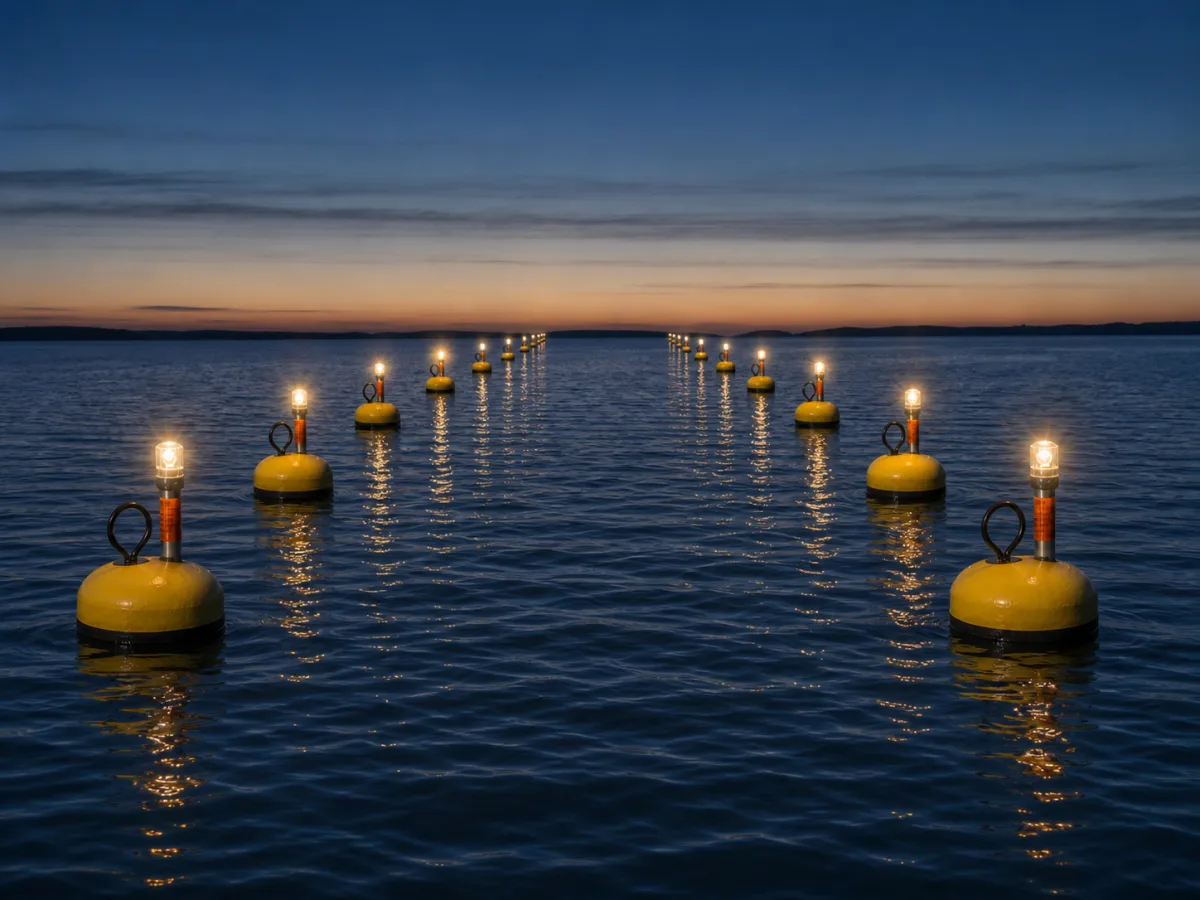
Illuminate floating buoys and fixed mooring points for safe navigation around ports, shipping lanes and aquaculture zones.
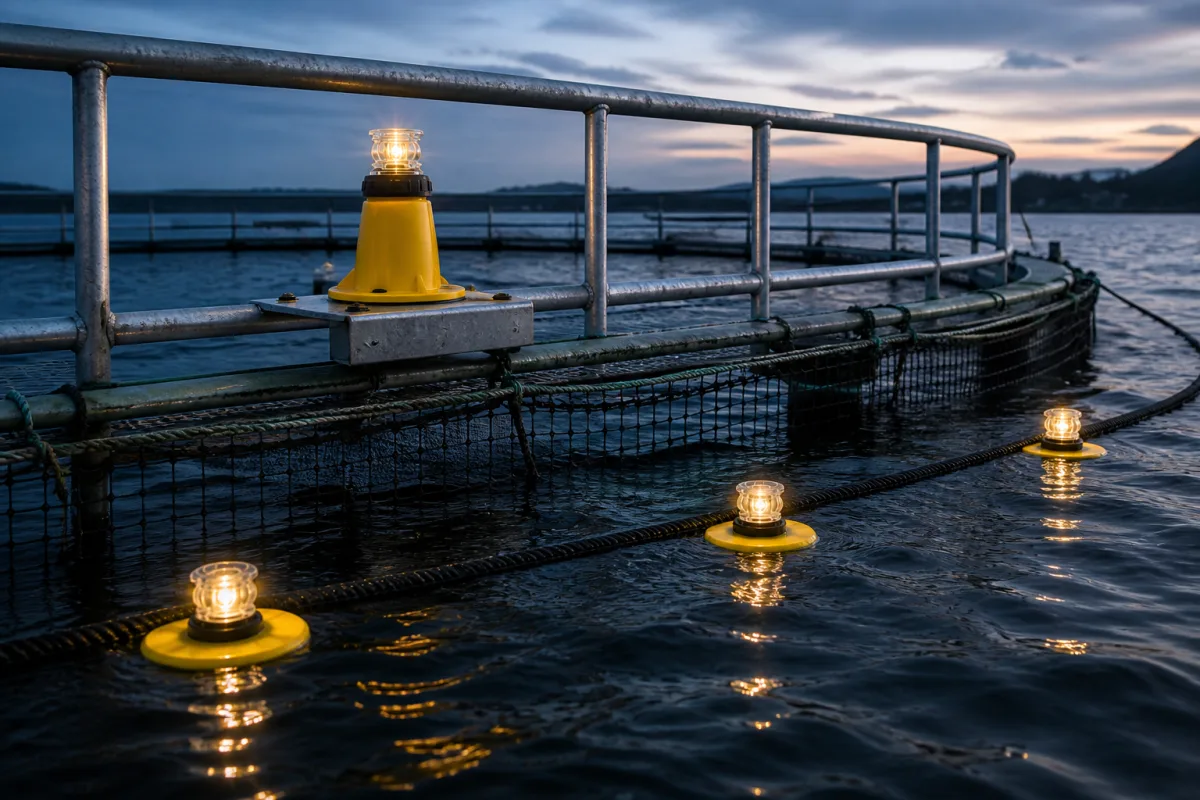
Mark net positions and farming boundaries in coastal and offshore waters, with the model selected for mounting, power and intensity.
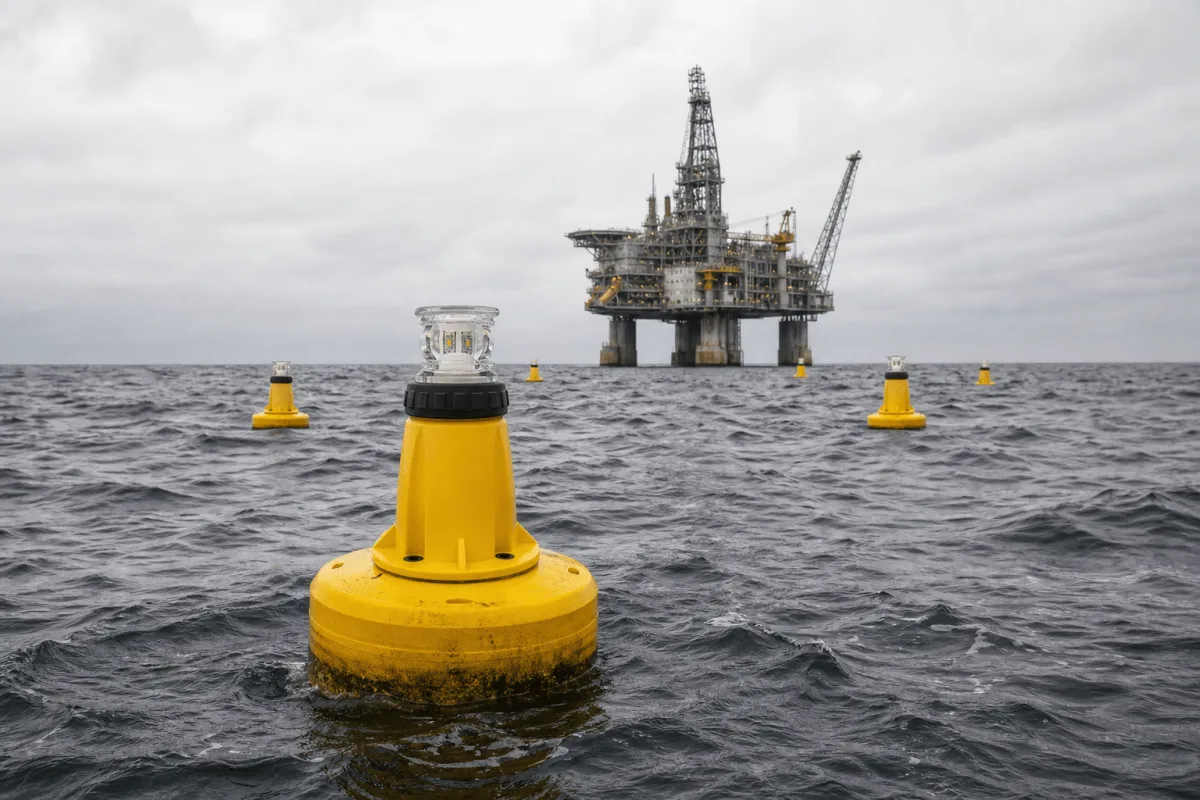
Highlight infrastructure, exclusion zones, seismic cable areas and temporary work sites at night and in poor visibility.
Improve visibility at approach points, floating barriers, containment lines and protected environmental zones.
How it works
Pick the intensity class for the distance and structure, set the flash character and colour, and mount the light on the buoy, line or platform.
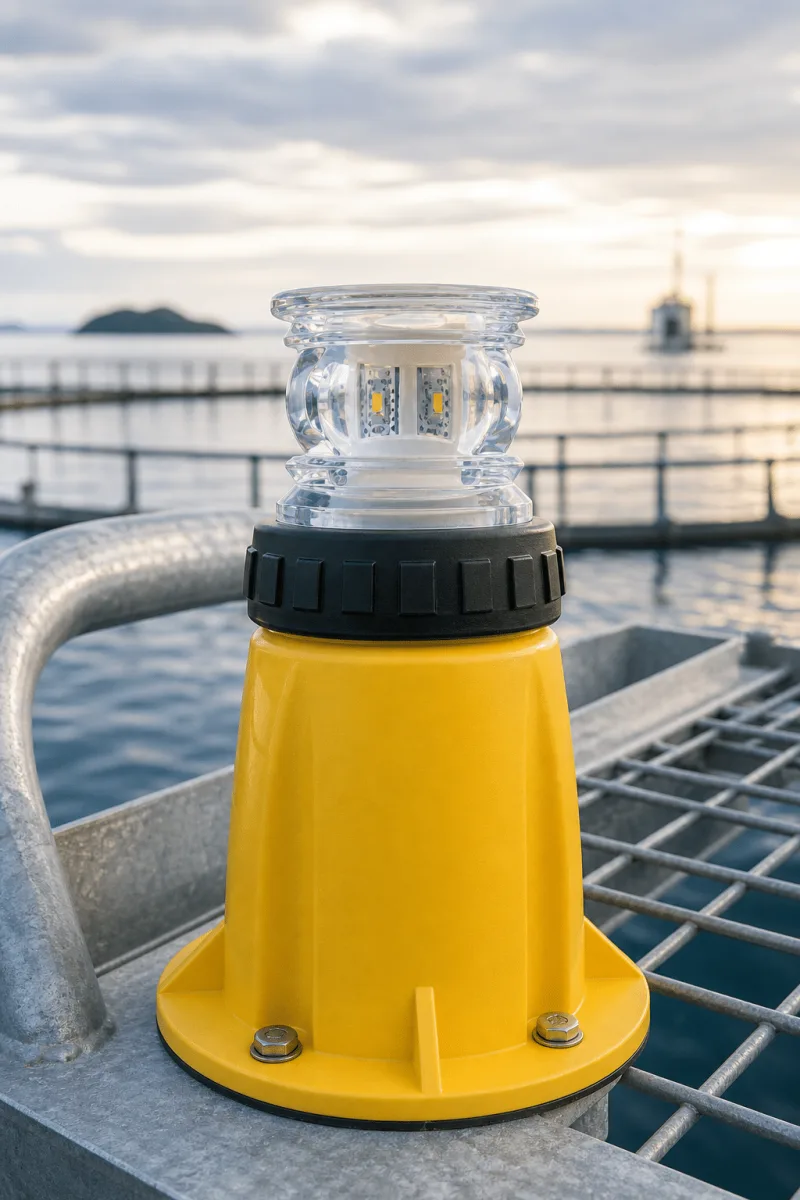
Choose the ML model from the required intensity, mounting and power source. ML 100 is the compact battery powered option for nets and lines. ML 200 adds a programmable light character, synchronisation and daylight sensing. ML 300 uses an external DC supply for aquaculture and offshore installations.
Select the colour and flash character for the marking plan, then confirm the mounting, synchronisation and service requirements for the supplied version.
Choose the model by intensity: ML 100 (5 to 6 cd), ML 200 (5 to 18 cd) or ML 300 (5 to 70 cd)
Select the LED colour and the IALA flash character required for the marking
Mount on buoys, mooring lines, nets, seismic cables or platforms; power by battery or DC supply
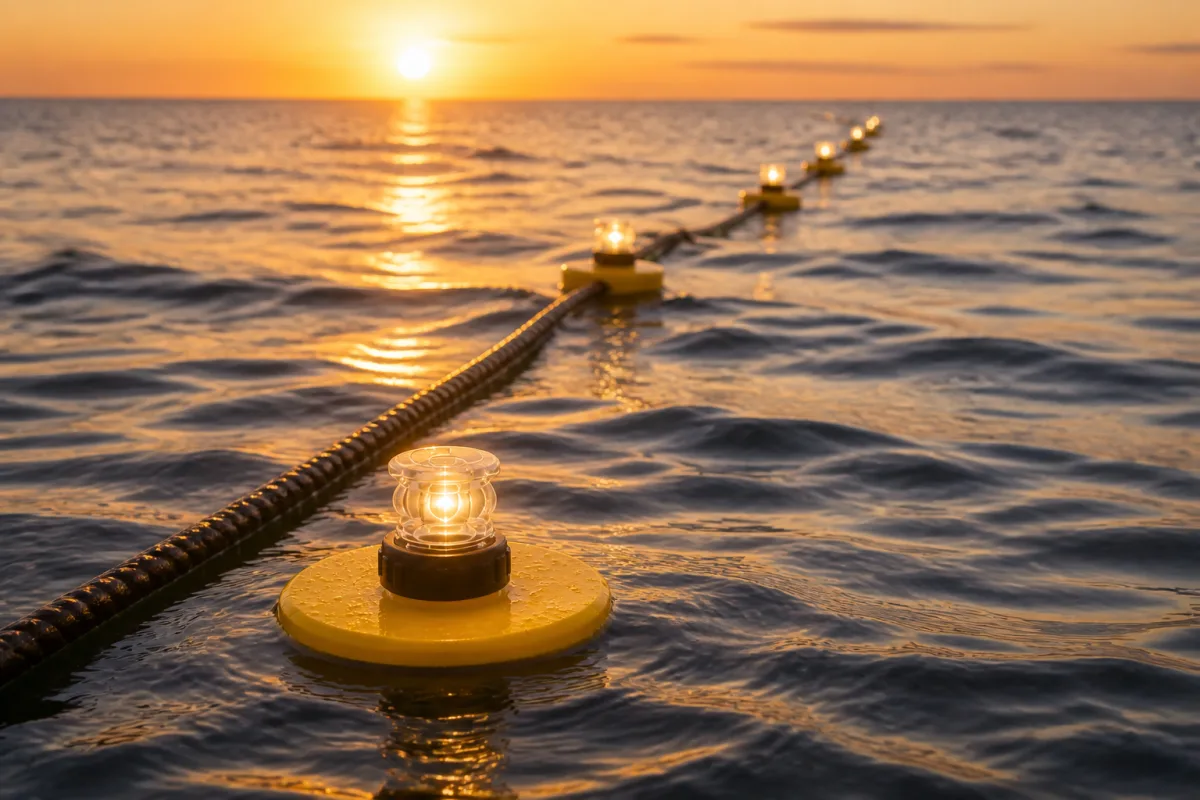
Synchronise several lights so an installation flashes as one signal
Confirm daylight sensing and maintenance requirements for the selected model
Models
Three marker lights ordered by intensity and range, all with four colours and IALA flash support.
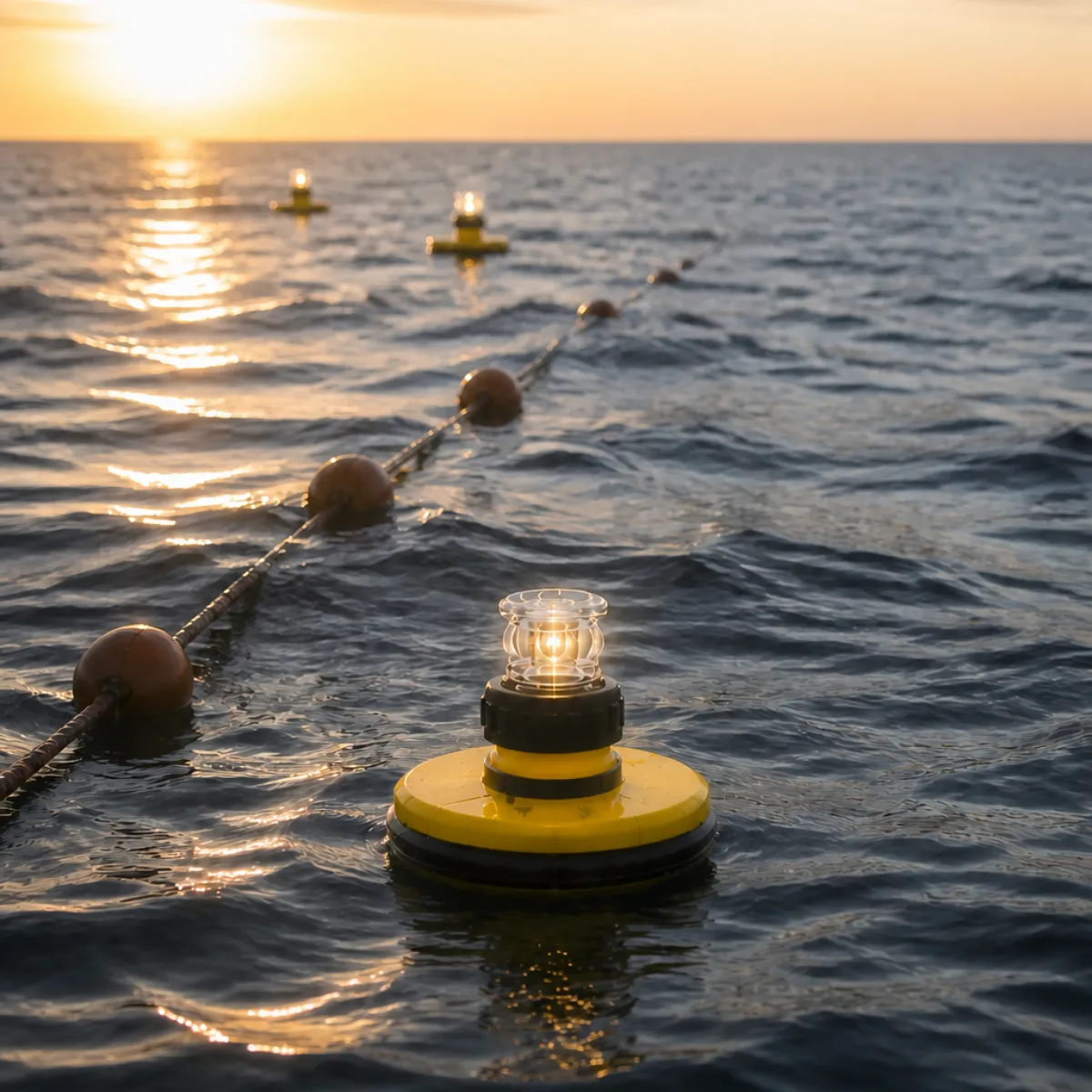
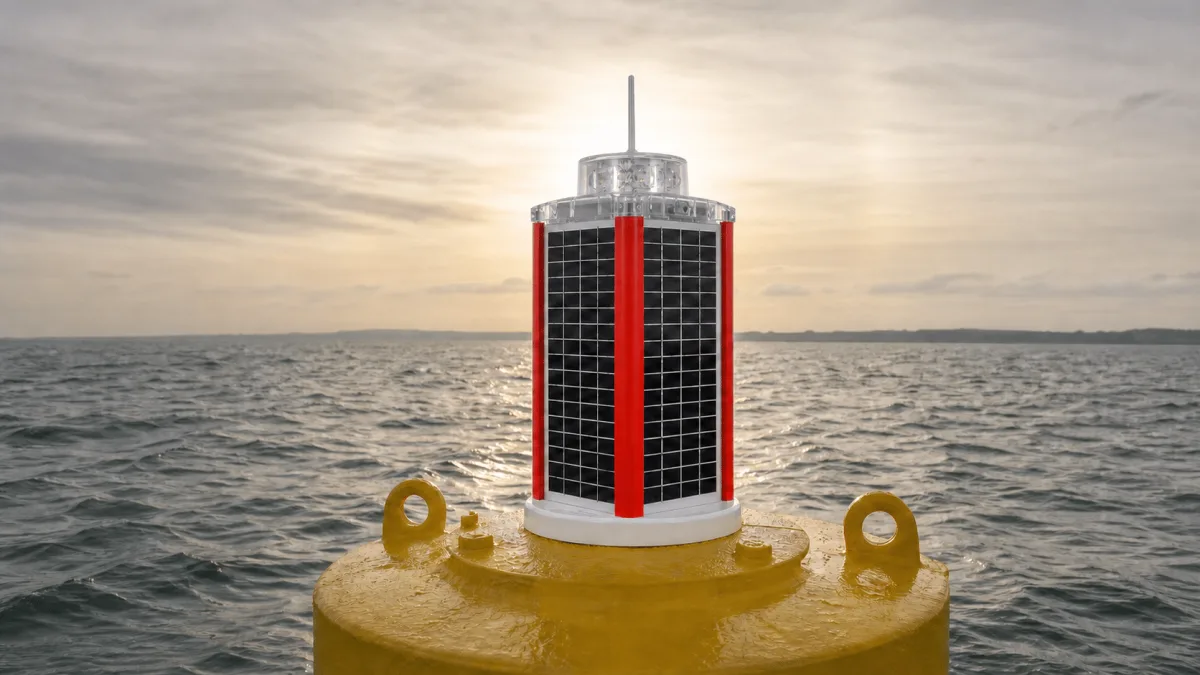
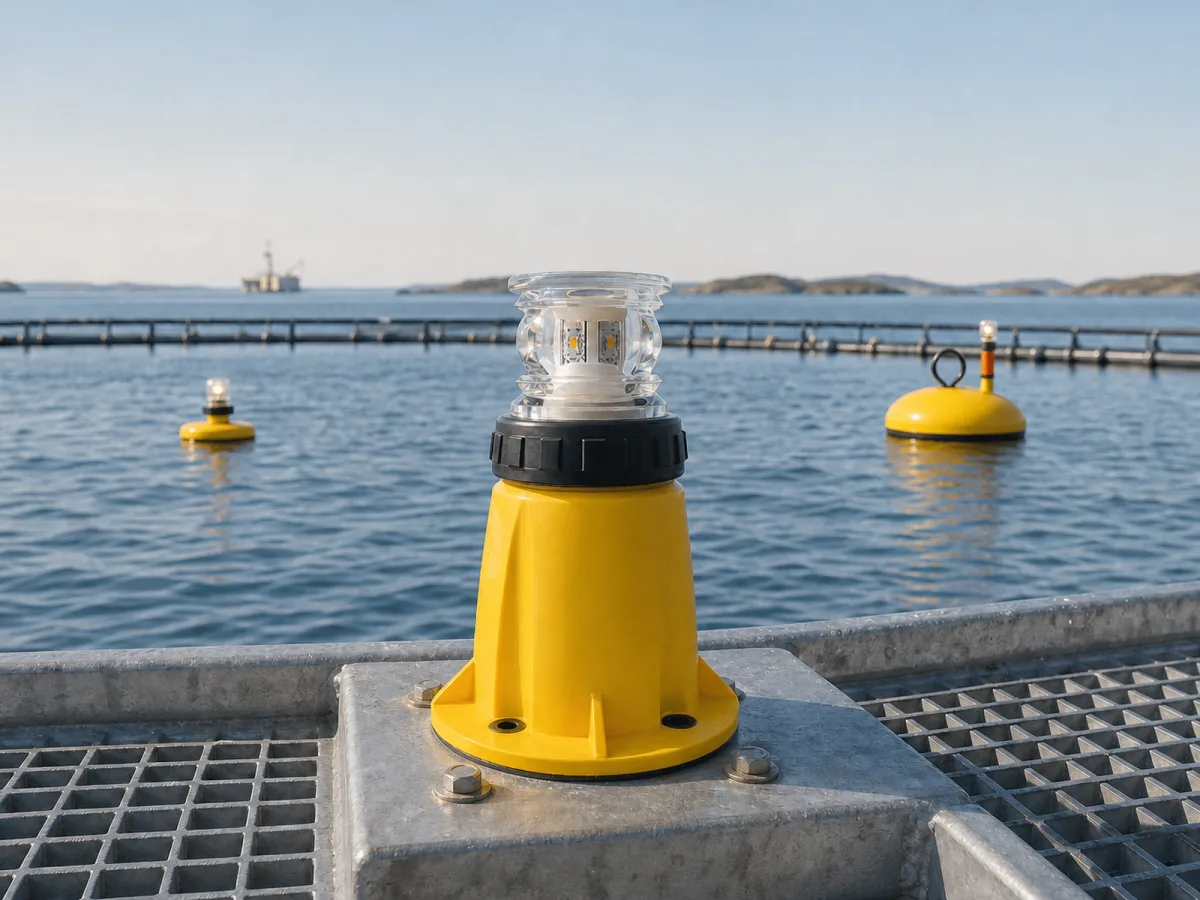
Compact, low intensity marker light for fish nets, moorings, seismic cables and small offshore structures, with an integrated yellow float for inline mounting on a floating line.
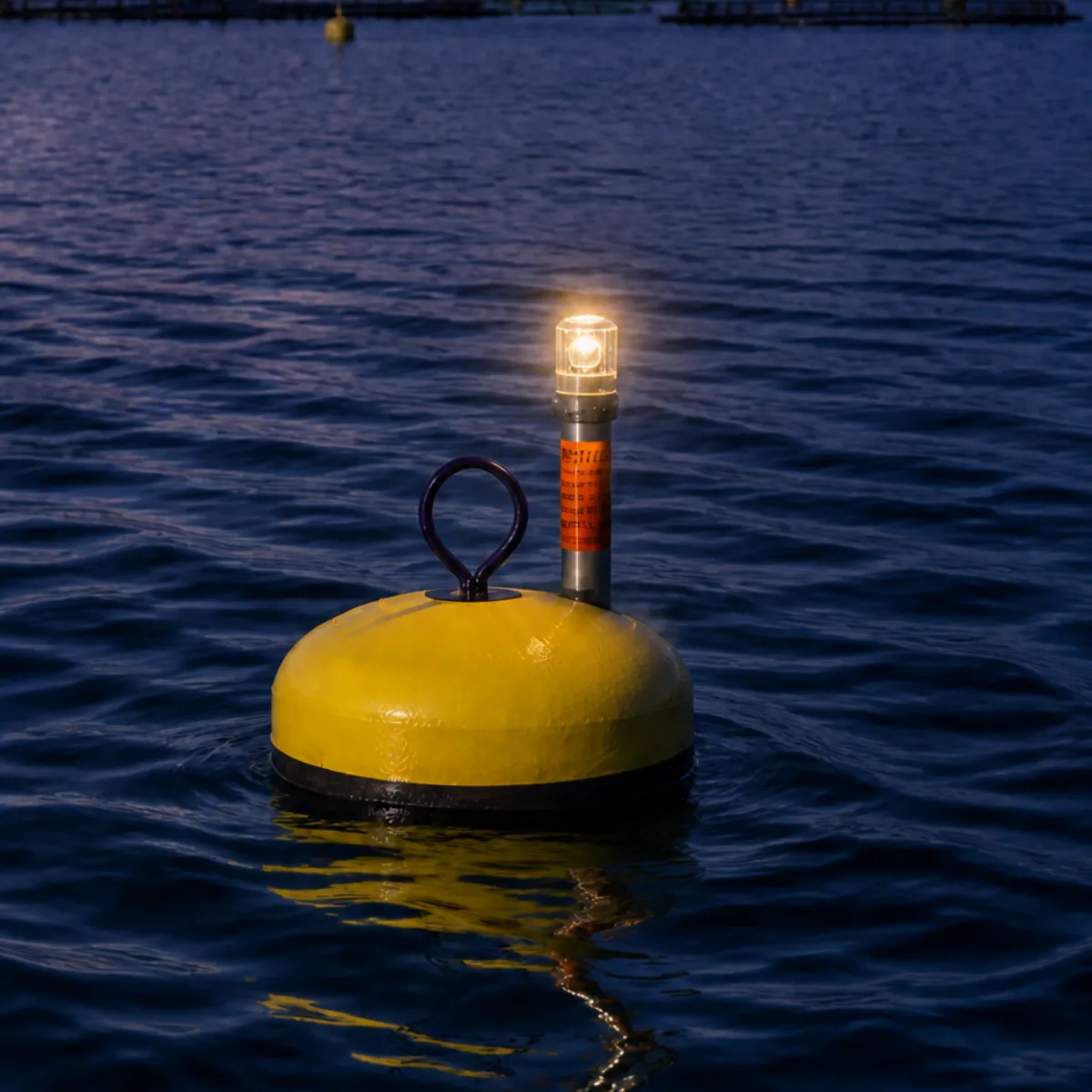
Mid range programmable LED marker light for buoys and offshore structures, with a stronger, longer range light than the ML 100 and built in synchronisation.
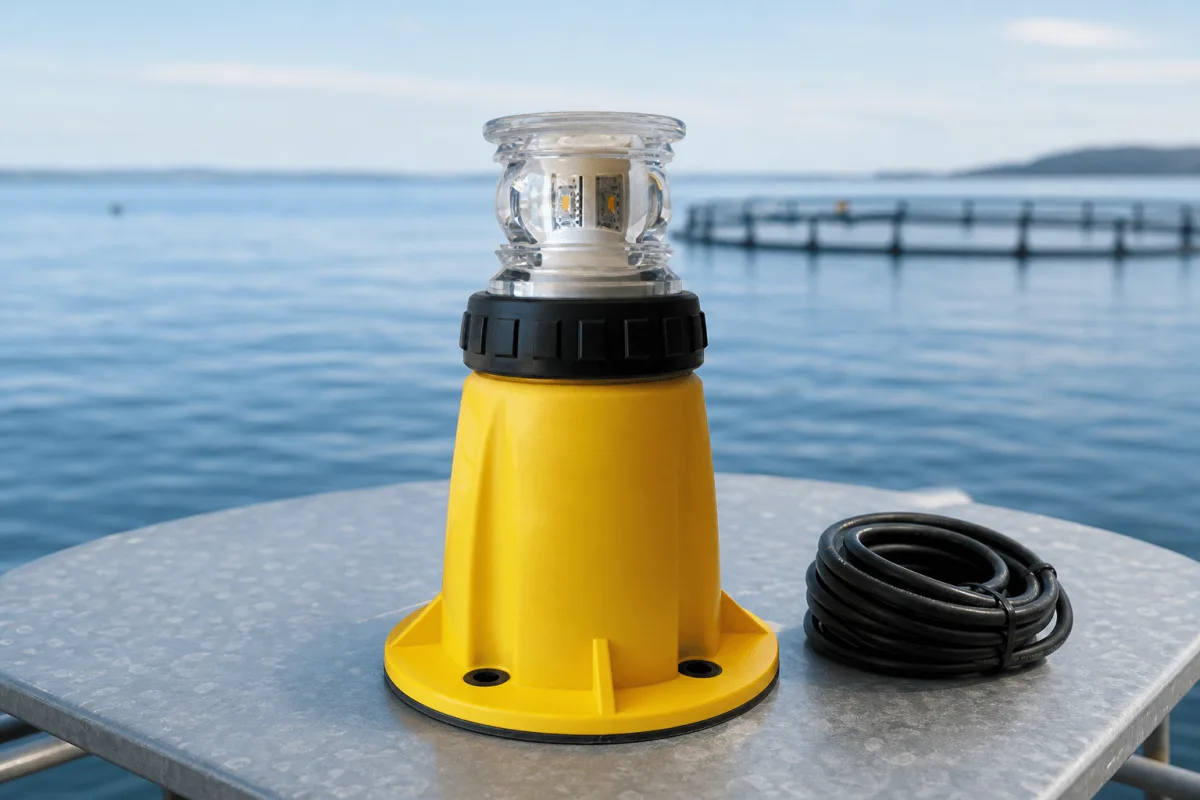
High intensity marker light for buoys, moorings, fish farms and offshore installations.
Ecosystem
Vikingegaarden supplies the ML series through AtoN House Nordic alongside marine lanterns, beacons and personal strobe lights.
Vikingegaarden A/S in Vonge, Denmark, supplies the ML marker lights together with the rest of its aids to navigation portfolio: lanterns, radar beacons, range lights, physical and virtual buoys and the AQ-4 MkII strobe light. We help you pick the right intensity class, colour and flash character for the site and can advise on synchronisation across a whole installation. Sales and support are handled from Denmark on +45 7580 3960.
Technical details
Dimensions, weight, IP rating and battery runtime are not published for these models. Ask us for the current data sheets.
Ask about a specification| Spec | ML 100 | ML 200 | ML 300 |
|---|---|---|---|
| Intensity | 5 to 6 cd | 5 to 18 cd | 5 to 70 cd |
| Power | 3 x D cells | Battery, 4.5 VDC | 10 to 27 VDC |
| Colours | 4 | 4 | 4 |
| IALA flash and sync | Supported | Built in, any character | All IALA characters |
| Vertical divergence | Not published | Not published | Up to 40 degrees |
Product guide
The ML 100, ML 200 and ML 300 serve different mounting and power requirements. Select the light around the equipment or boundary being marked.
The ML range is used on fishing nets, mooring lines, buoys, seismic cables and offshore installations. Fish farm operators and marine contractors specify the light colour and flash character for the marking scheme, together with the required intensity and power supply.
ML 100 is a compact light for nets and lines, powered by three D cells. ML 200 is a battery powered option for buoys and structures, with programmable IALA flash characters, master and slave synchronisation and a daylight sensor. ML 300 uses an external 10 to 27 VDC supply and flange mounting for aquaculture and offshore applications.
Compare the model specifications below and ask for the current data sheet for the colour and version required.
Coordinated flashing can help identify a line of marks or an installation boundary. Specify the flash character and confirm the synchronisation arrangement for the selected model. Daylight sensing is documented for ML 200; functions on other configurations should be confirmed before ordering.
For buoy and fixed navigation marking, compare LED marine lanterns. For a portable light attached to personnel or equipment, see the AQ-4 MkII strobe light Lattice masts. Vikingegaarden supplies and supports these products from Denmark.
A closer look
Good to know
Compare the required intensity, power supply and mounting. ML 100 is the compact option for nets and lines, ML 200 serves buoys and structures with synchronisation and daylight sensing, and ML 300 uses external DC power for aquaculture and offshore applications.
It depends on the model. The ML 100 runs on three D size battery cells, the ML 200 is battery powered at 4.5 VDC and the ML 300 takes an external 10 to 27 VDC supply. Battery runtime figures are not published; contact us for the current data.
Synchronisation options are available within the ML range. Master and slave synchronisation is documented for ML 200. Confirm the arrangement for the selected models and installation.
The ML 200 has a daylight sensor for automatic operation. Ask Vikingegaarden to confirm the available sensor functions for the other models and the version supplied.
Describe the net, buoy, line or structure to be marked, the required light character and colour, the viewing requirement and available power. Include any need to synchronise several lights.
The ML series marks marine equipment, buoys and structures. The AQ-4 MkII is a portable personal strobe with flashing and steady modes.
Have a question about your project?
Talk to our teamExplore
Let’s talk about your project
Tell us what you need to mark, how far it must be seen and how the lights will be powered. We help you choose between ML 100, ML 200 and ML 300 and set up synchronised flashing.
Tinnetvej 70, 7173 Vonge, Denmark