IALA marking function
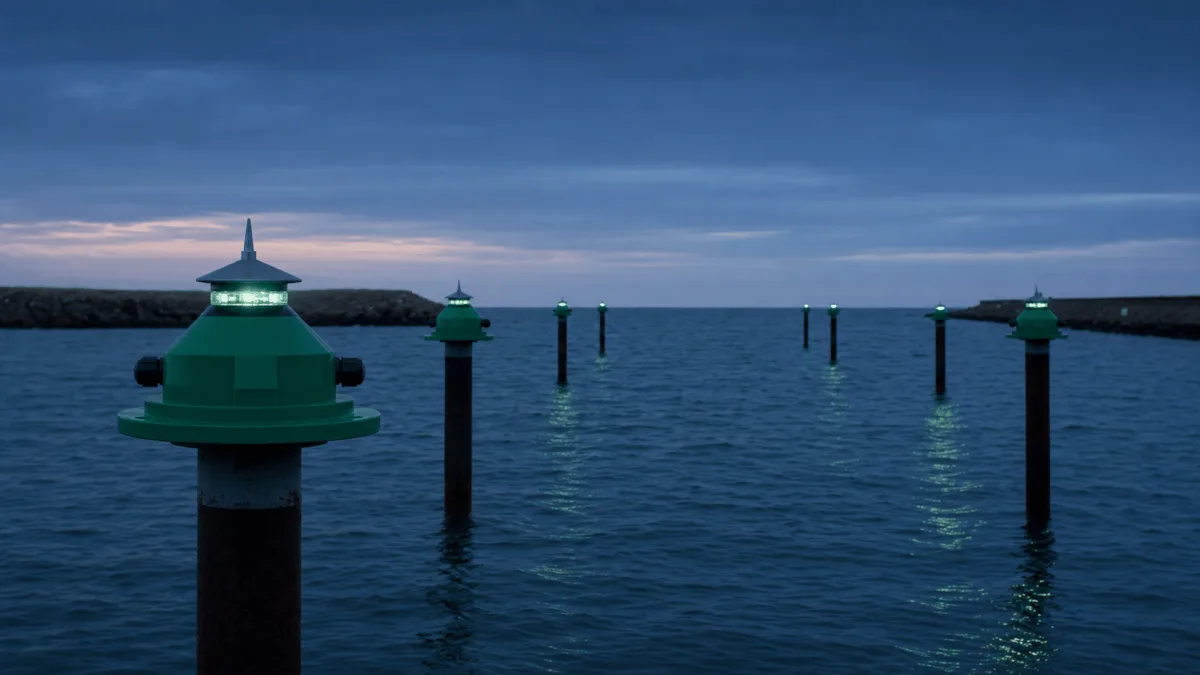
Lantern colours and flash characters identify the function of each mark. Lateral marking follows the applicable region and direction of buoyage in the IALA Maritime Buoyage System.
AtoN House Nordic · LED marine lanterns
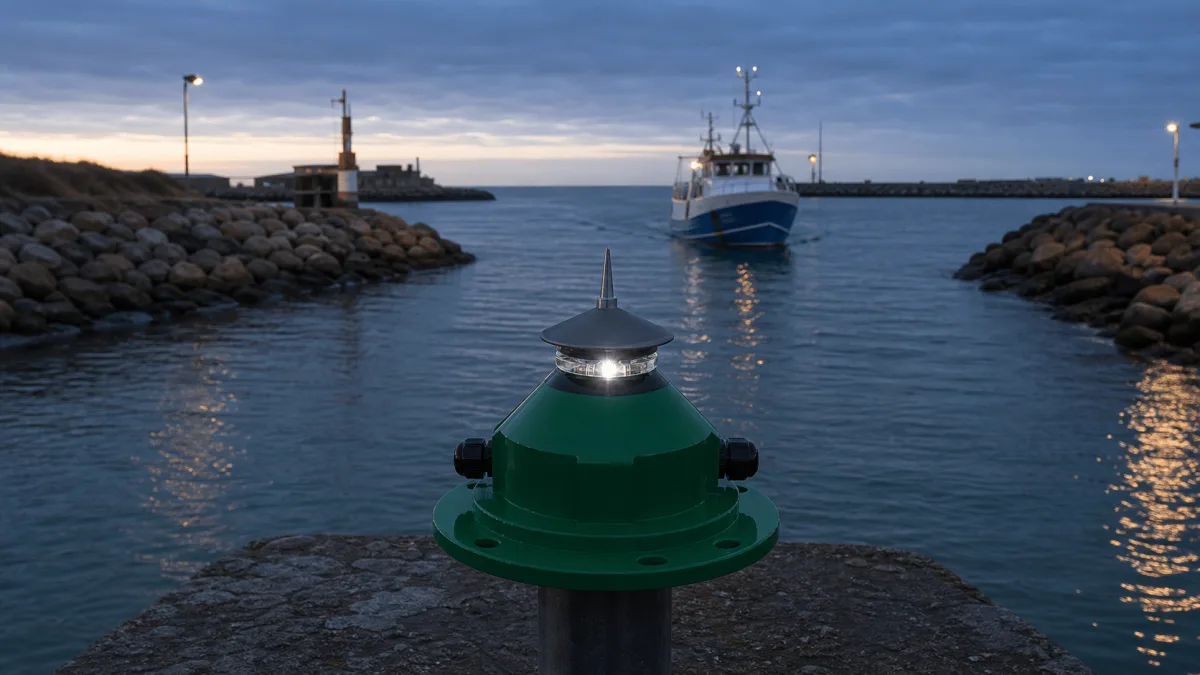
Omnidirectional LED lanterns for fixed and floating aids to navigation
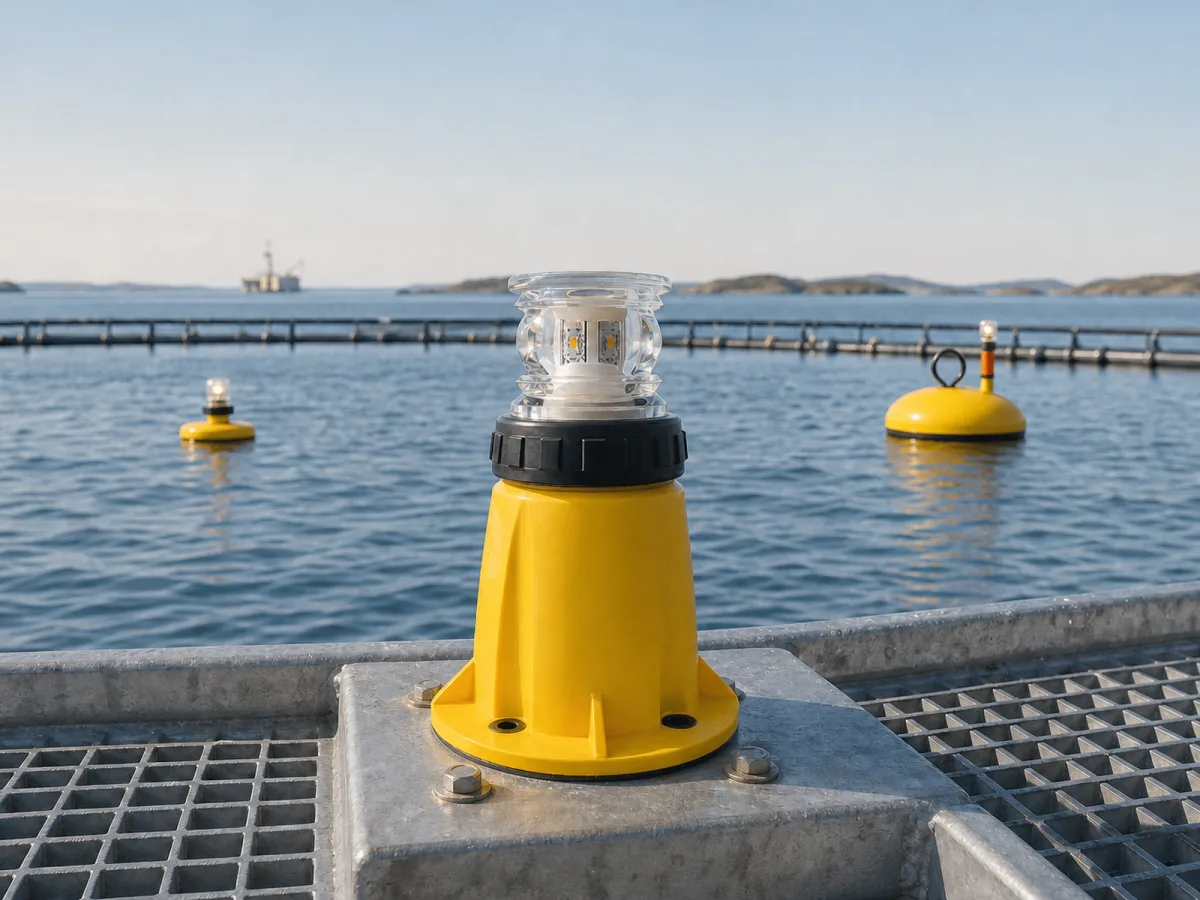
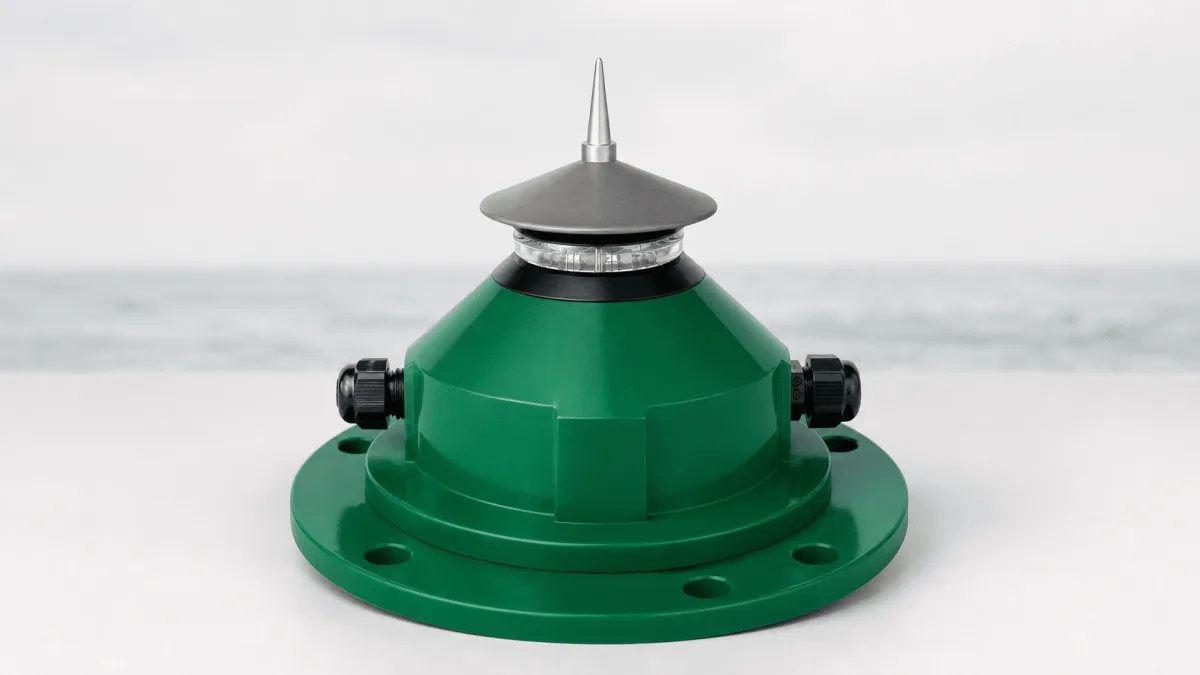
Marine lanterns provide the colour and flash character specified for an aid to navigation. Vikingegaarden supplies the externally powered Tideland Signal Nova-65 and the self-contained solar MSM MCL 360 for buoys, lateral marks and fixed structures.
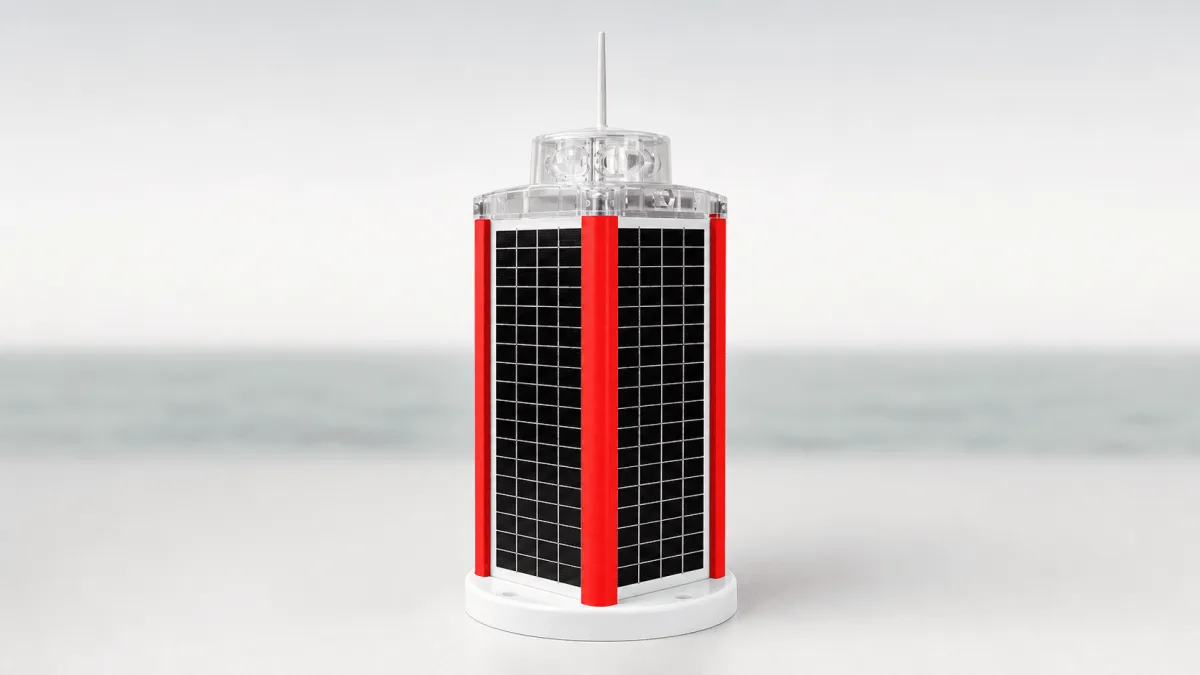
Key features
The marking plan determines colour, flash character and required nominal range. Lens selection and the power budget are assessed for the installation.
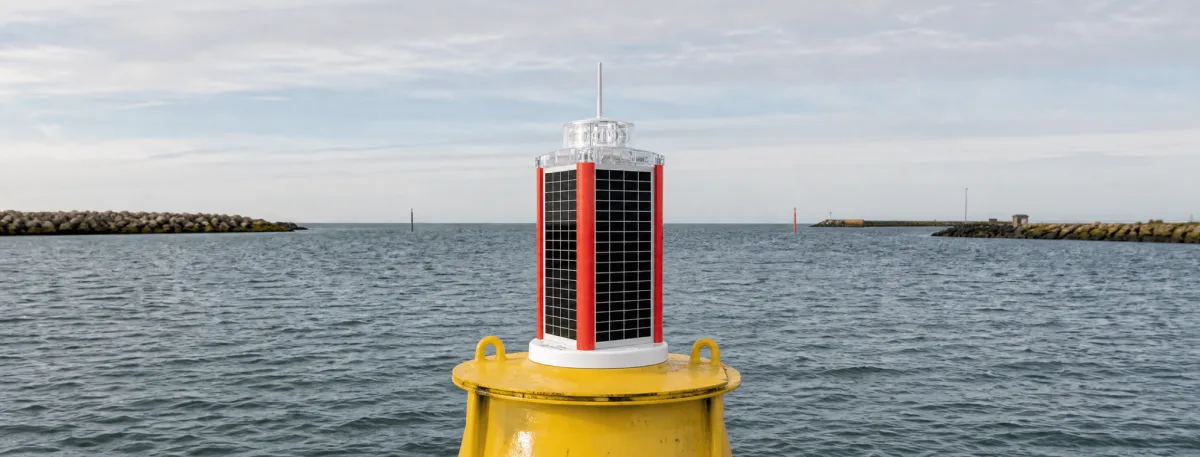
Lantern colours and flash characters identify the function of each mark. Lateral marking follows the applicable region and direction of buoyage in the IALA Maritime Buoyage System.
Nova-65 lenses provide 5°, 10°, 20° or 30° vertical divergence. Selection accounts for mounting height, viewing distance and movement of a floating platform.
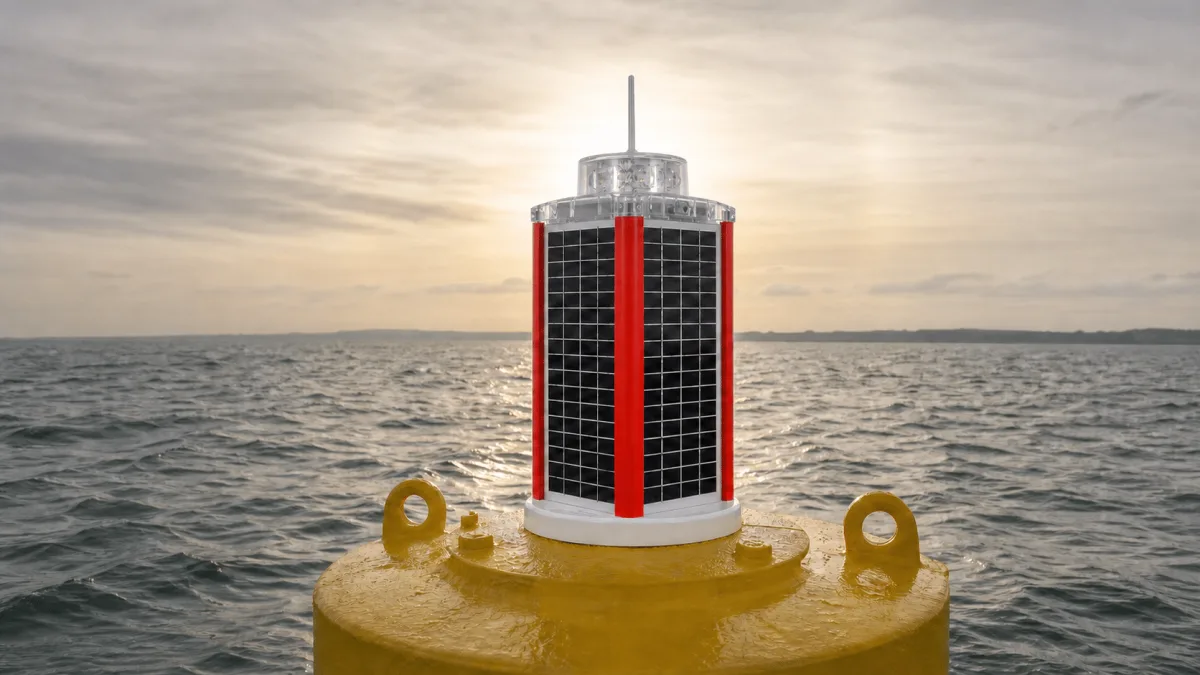
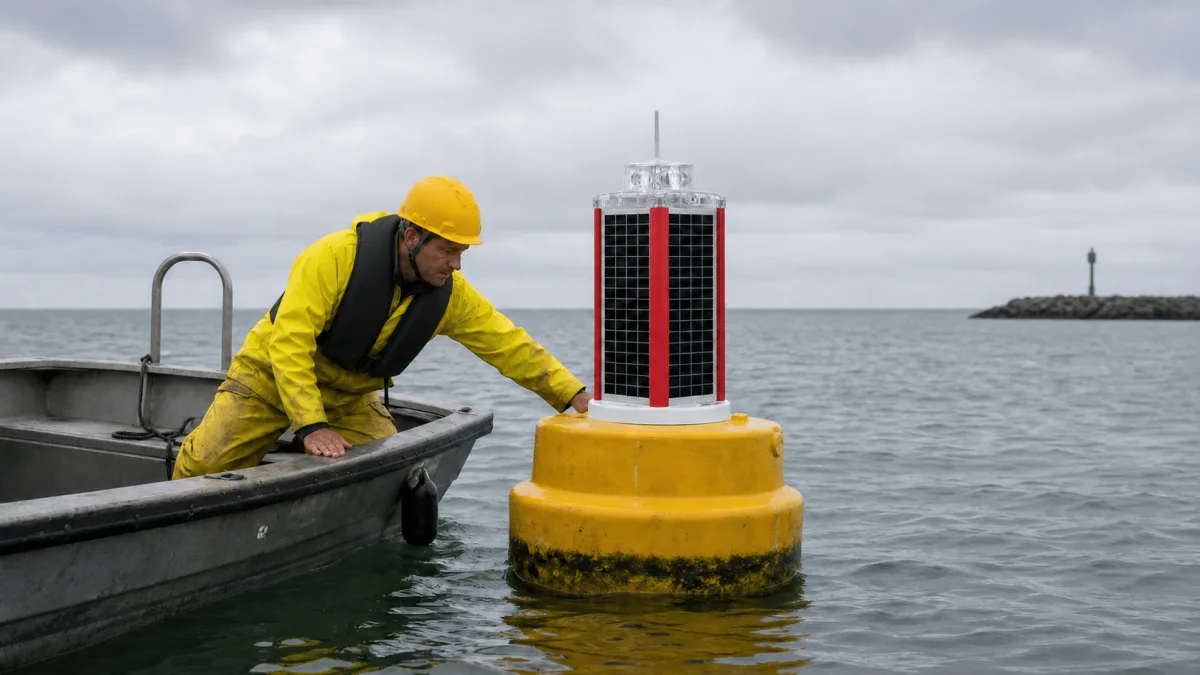
The MCL 360 integrates solar modules and a battery. The selected size must meet the light output, flash character and required autonomy under local seasonal conditions.
The Nova-65 uses an external electrical supply. Cable losses, supply capacity and any backup battery form part of the installation specification.
GPS synchronisation may be specified where supported by the selected configuration. The flash character remains subject to the marking plan.
MCL 360 communication options include GSM, UHF, satellite, IoT and AIS. Vikingegaarden confirms the available status signals and Emiko interface for the supplied configuration.
Tideland Signal lists USCG approval for Nova-65 offshore applications. The applicable approval and configuration must be confirmed for each project.
Service planning covers the optic, housing, mounting and power supply. Solar modules and batteries require inspection appropriate to the site and operating conditions.
How it works
Each lantern is specified against the marking plan and the site energy budget. Commissioning verifies the installed configuration.
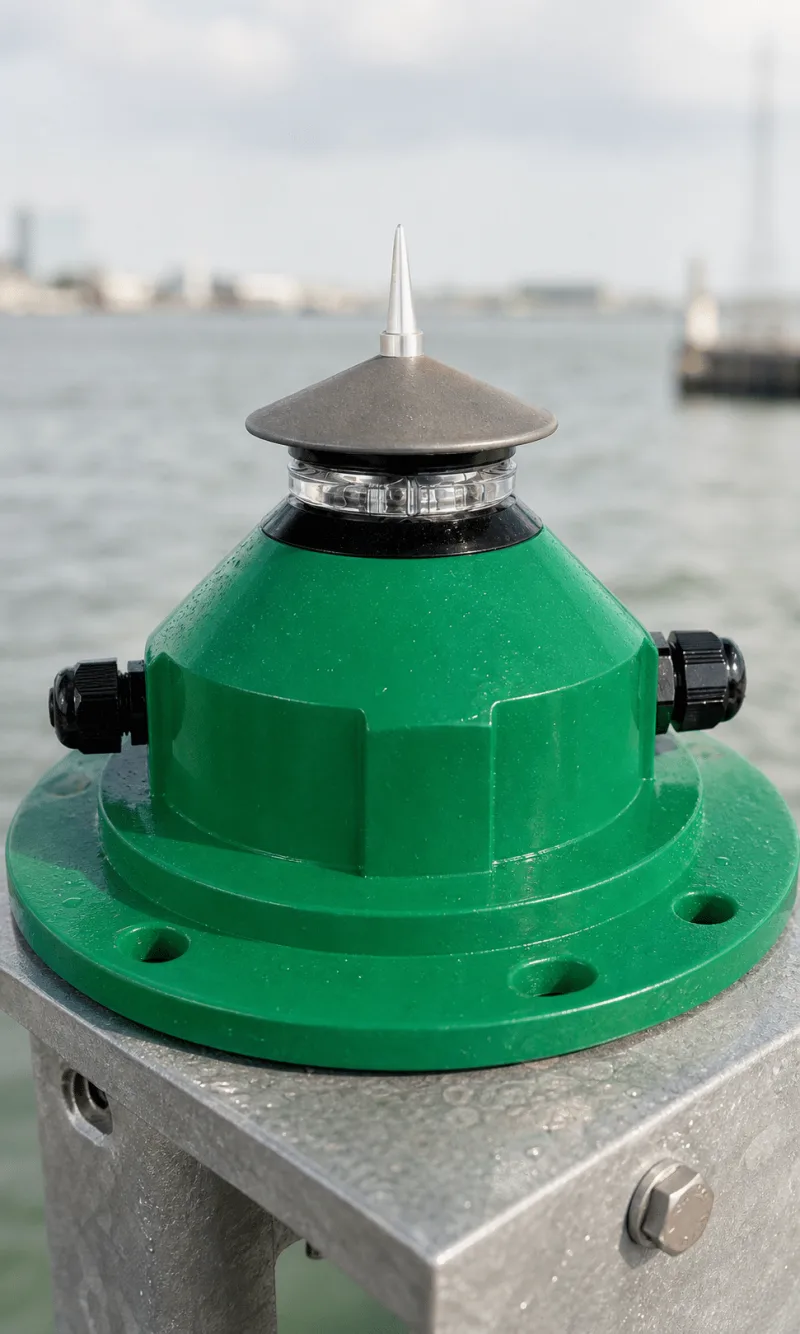
Nominal range is stated for atmospheric transmissivity T=0.74. Actual visibility also depends on meteorological conditions, background lighting and the heights of the lantern and observer.
The marking plan establishes position, colour and flash character.
The optical specification establishes nominal range and vertical divergence.
The power calculation confirms supply capacity and battery autonomy.
Commissioning records settings, mounting and monitoring checks.
Models
The range comprises Nova-65 lanterns from Tideland Signal and MCL 360 solar lanterns from MSM (Mediterráneo Señales Marítimas). Published values depend on the selected size and optic.
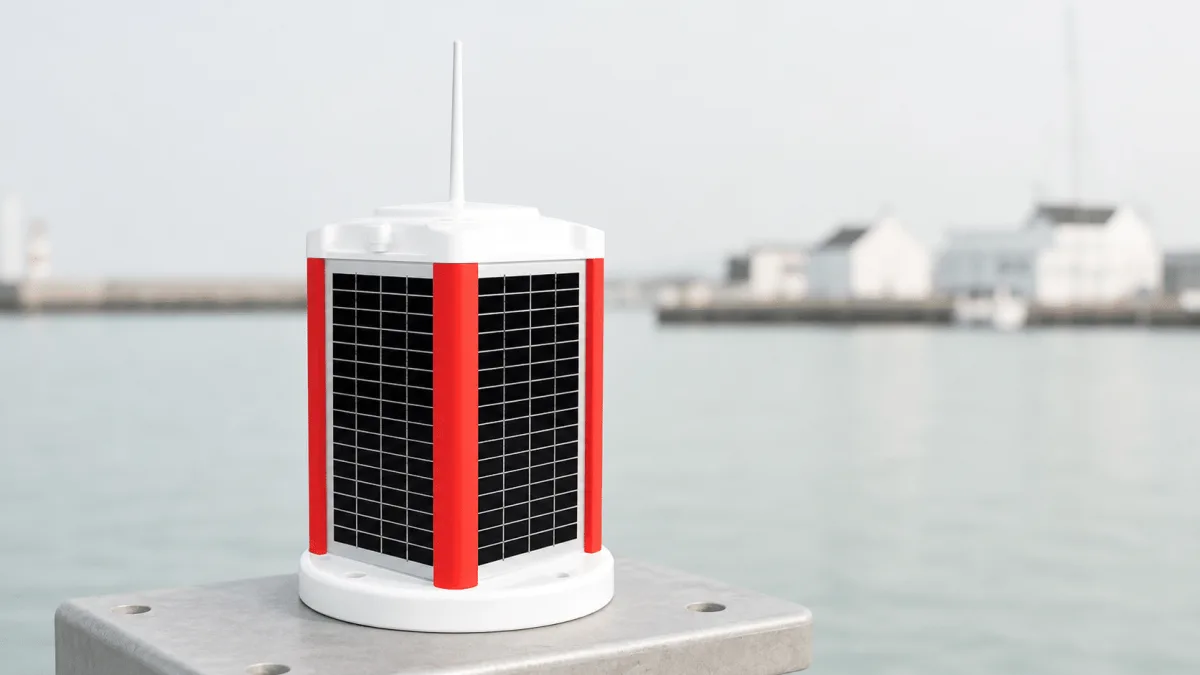
Nova-65 and MCL 360 provide omnidirectional marking for fixed and floating installations. Selection is based on optical requirements, available power and mounting conditions.
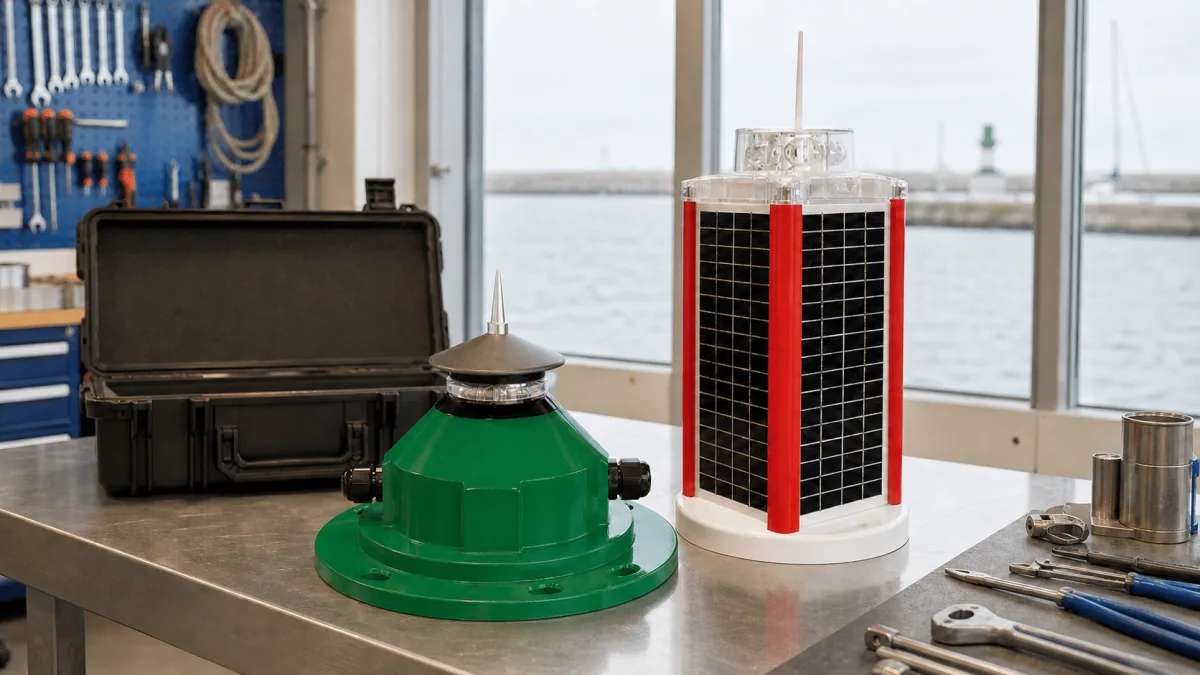
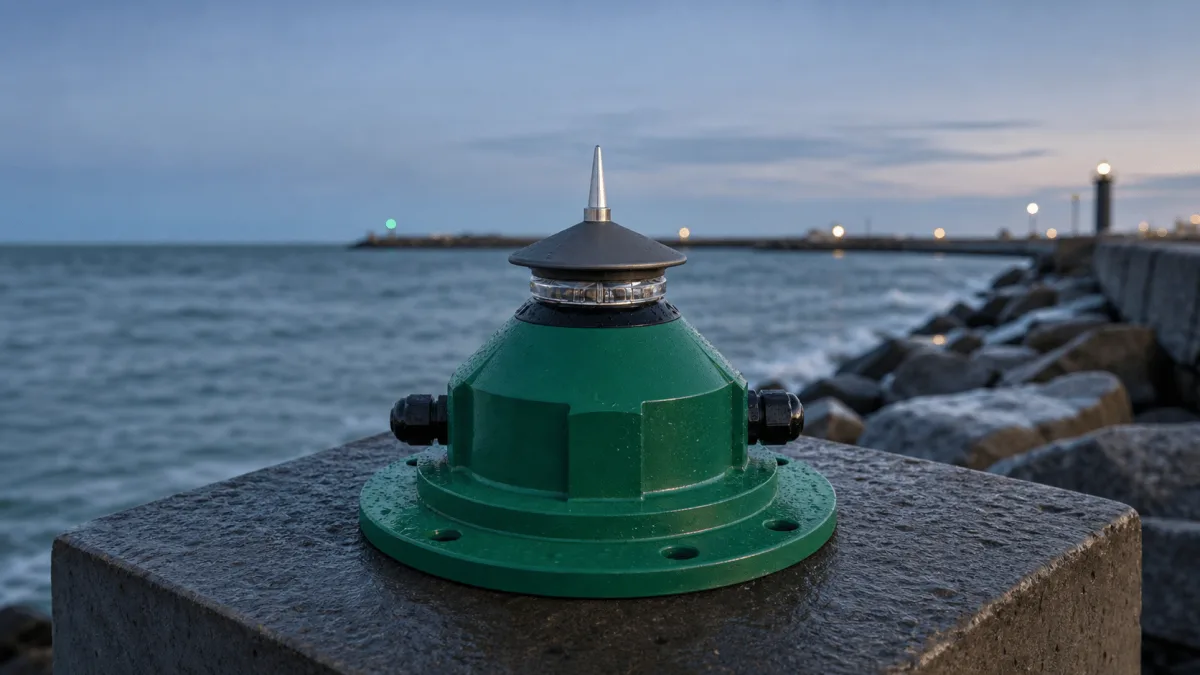
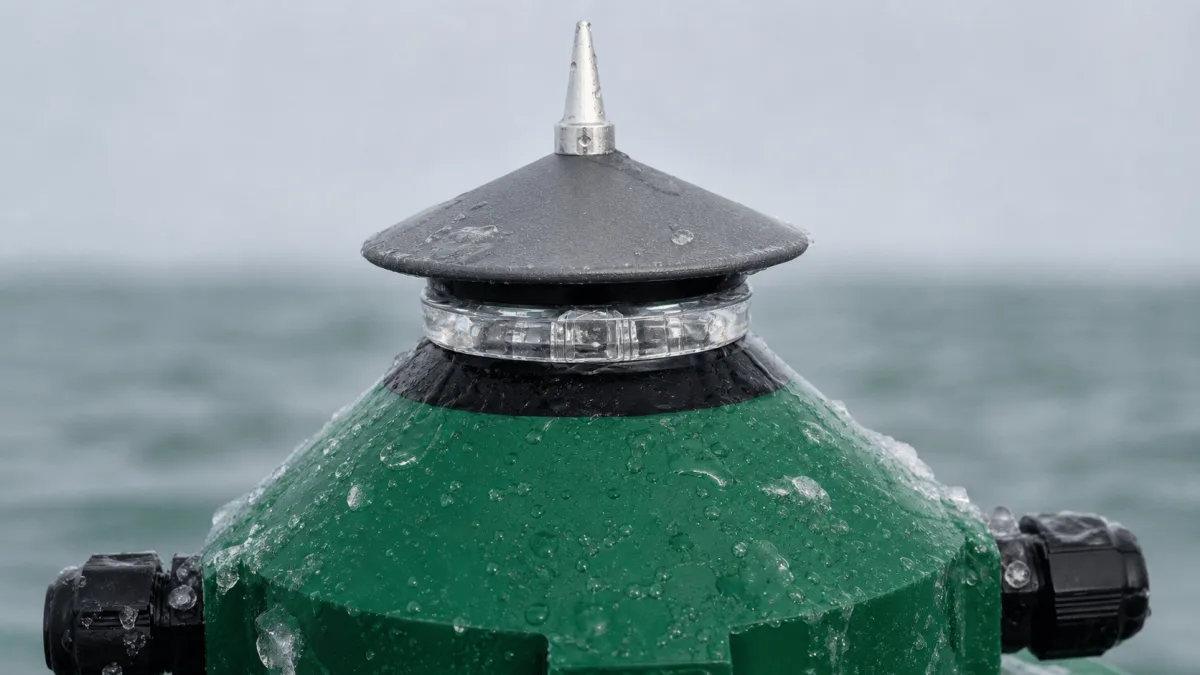
The Nova-65 is an omnidirectional LED marine lantern with selectable lens divergence. Polycarbonate and metal housings and the Nova-65 HI version are available within the range.
The MCL 360 is a self-contained solar lantern available in four sizes. MCL 360-XS is the smallest size; the published range across the series is 4–11 NM.
Ecosystem
Vikingegaarden specifies, supplies, installs and commissions the equipment. Technical support and service are coordinated from Denmark.
The project specification records the equipment configuration, power supply, mounting and acceptance checks. Emiko monitoring is included where the selected equipment and interfaces support it.
Technical details
Photometric data and approval documents are confirmed for the selected colour, optic and housing. Nominal range uses T=0.74; unspecified figures are available on request.
Ask about a specification| Parameter | Nova-65 | MCL 360 |
|---|---|---|
| Manufacturer | Tideland Signal | MSM |
| Published range | On request by colour and optic | 4–11 NM by configuration |
| Luminous intensity (cd) | On request | On request |
| Vertical divergence | 5° / 10° / 20° / 30° | On request |
| Power supply | External supply | Integrated solar modules and battery |
| Versions | Nova-65 and Nova-65 HI | Four sizes; MCL 360-XS is the smallest |
Product guide
The specification relates the optical requirement to the installation conditions. The quotation identifies the selected lantern and its supply arrangement.
The required submission includes mark coordinates, colour, flash character and nominal range. The applicable IALA buoyage region must be identified for lateral marks.
Available supply, mounting height, seasonal solar exposure and required autonomy define the electrical configuration. Floating installations also require an assessment of platform movement.
Equipment photographs
Technical questions
Nominal range uses atmospheric transmissivity T=0.74. Vikingegaarden confirms the photometric data for the selected lantern, colour and output setting.
The calculation uses the flash character, light output, seasonal solar conditions and required autonomy. Battery and solar capacity are confirmed for the selected MCL 360 size.
Colour availability and approval documents are confirmed for the model and intended application. The applicable certificate must accompany the project specification.
The quotation requires position, nominal range, colour, flash character, mounting details and available power. Monitoring requirements and any authority documentation should accompany the marking plan.
Technical enquiries and project specifications
Contact VikingegaardenExplore
Project specification
The quotation is based on the marking plan, site conditions and required equipment configuration. Vikingegaarden confirms the specification, installation scope and supporting documentation.
Tinnetvej 70, 7173 Vonge, Denmark