
Complete solution · AtoN House Nordic
Lit navigation buoy
A lit navigation buoy combines a buoy body, solar lantern and mooring with specified lantern monitoring.
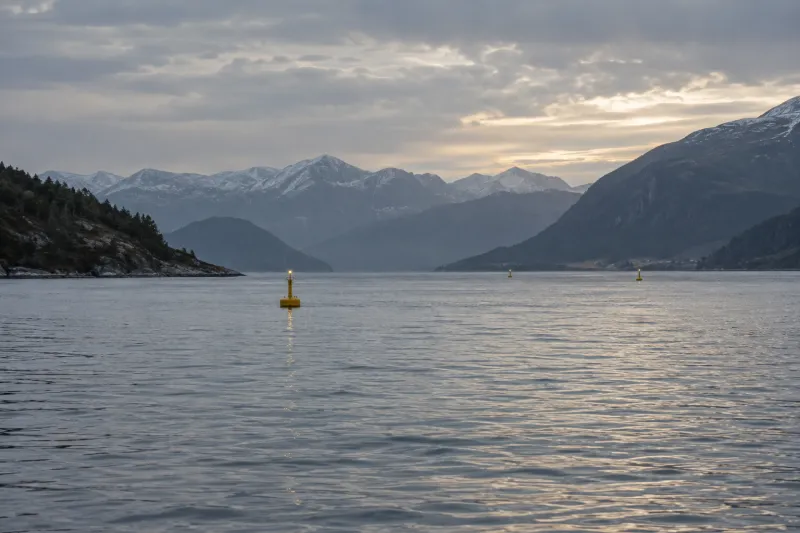
Commissioning verifies the status, alarms and controls supported by each connected instrument.
The components
Equipment
and interfaces
5 components with specified functions.
The labels identify their Emiko integration.
- 01Structure
Navigation buoys
Navigation buoy, FLC rotomoulded or spar
Provides the physical mark with the specified colour, shape and topmark; the buoy body has no electronic function.
Product page - 02Monitored through NaviGuard
LED marine lanterns
MSM MCL 360 with serial interface
Provides solar-powered marking; the specified MCL360 profile reports through the included NaviGuard controller.
Product page - 03Structure
Navigation buoys
Mooring: chain, sinker, swivel
Retains the buoy at its station; dimensions and capacity follow the site mooring calculation.
Product page - 04Full Emiko integration
NaviGuard
NaviGuard controller
Connects the specified serial profile or PowerMonitor current sensing to Emiko.
Product page - 05Full Emiko integration
PowerGuard
PowerGuard for telemetry
Powers NaviGuard and communications independently of the lantern; enclosure, payload and autonomy are specified.
Product page
How it works
From the plan to the
commissioned installation
The buoy, lantern and mooring are specified together. Monitoring uses the signals available from the installed equipment.
- 01
Define mark
The marking plan defines coordinates, mark type, colour, topmark and light character.
- 02
Select buoy
Select hull, ballast and payload positions for stability, freeboard, lantern divergence and lifting arrangements.
- 03
Specify lantern
Confirm lantern solar autonomy and a separate controller supply; include telemetry load and equipment weather protection.
- 04
Design mooring
The mooring design accounts for water depth, seabed conditions, tides and environmental loads.
- 05
Deploy equipment
Deployment records the installed position and tests light operation and supported monitoring functions.
Where it is used
Channels and designated water areas
Harbour authorities, municipalities and marine contractors specifying permanent or seasonal floating marks.
- 01
A navigation channel requiring lateral marks
- 02
A designated area requiring special marks
- 03
A charted hazard requiring a lit cardinal mark
Planning
Delivery scope
and equipment options
Delivered by Vikingegaarden
- Equipment specification from the marking plan, site data and operating requirements
- Component supply with the agreed manufacturer documentation
- Installation and commissioning, or technical support for the appointed contractor
- Emiko configuration and acceptance checks for supported equipment interfaces
- Service scope, inspection requirements and spare parts confirmed in the quotation
Good to know
Before the
quotation
What determines operation without solar charging?
Autonomy depends on lantern size, configured output, flash character, communications load and battery capacity. The quotation confirms the result of the site energy calculation.
How is buoy position monitored?
NaviGuard has no independent position sensor. Off-station alarms require a lantern variant that supplies position through a released integration; this must be demonstrated before inclusion. The base specification covers lantern and supply monitoring.
What is required for a quotation?
The enquiry requires mark coordinates, marking function, light character and range, water depth, seabed and exposure data. Deployment equipment, access, autonomy and monitoring requirements should be included.
Plan this solution
Project quotation
The specification defines the equipment, installation scope and price.
The enquiry requires a chart, positions, marking requirements, mounting details, available power and required autonomy.