
Complete solution · AtoN House Nordic
Emergency wreck marking kit
An emergency wreck kit combines a blue and yellow buoy, alternating lantern and site-specified mooring.
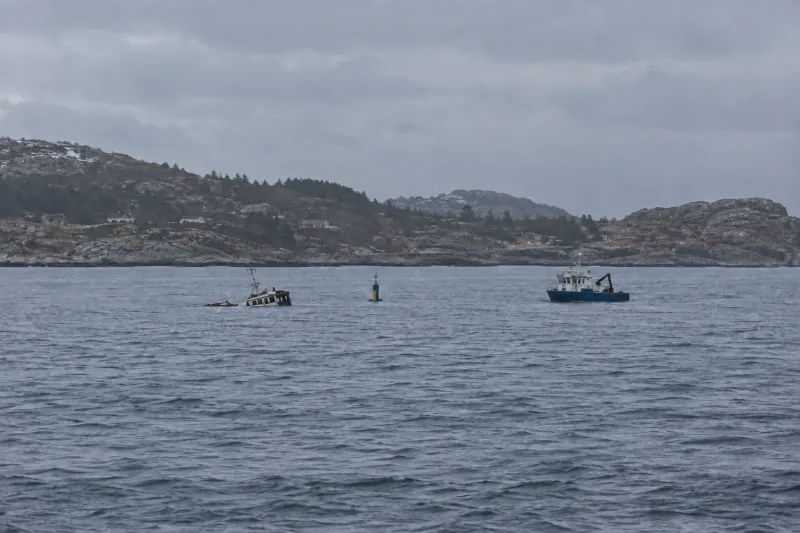
Marking at the site
A newly identified wreck in a fairway
A submerged container or obstruction requiring temporary marking
A new danger awaiting clearance or a permanent marking arrangement
Physical marking and self-contained lights. These components operate without Emiko telemetry.
The components
Equipment
and interfaces
3 components with specified functions.
The labels identify their Emiko integration.
- 01Structure
Navigation buoys
Emergency wreck buoy and topmark
Specifies blue/yellow vertical stripes and an upright yellow cross; hull configuration and availability are confirmed.
Product page - 02No telemetry
Marker lights
MSM MCL360N wreck lantern
Provides alternating blue and yellow flashes from integrated solar power and battery, without telemetry.
Product page - 03Structure
Navigation buoys
Mooring kit
Provides chain, sinker and swivel selected for the incident depth, seabed and exposure.
Product page
How it works
From the plan to the
commissioned installation
The readiness plan establishes the equipment package. Incident data confirms the mooring and deployment requirements.
- 01
Prepare equipment
The readiness specification records the buoy, lantern, mooring components and inspection requirements.
- 02
Confirm site
The incident position, depth and seabed conditions are confirmed before selecting the mooring arrangement.
- 03
Check signals
Check the upright cross and alternating blue/yellow character; synchronise multiple wreck lights where specified.
- 04
Deploy buoy
Deploy the buoy, verify its position and mooring, and promulgate the marking through the responsible authority.
- 05
Review marking
The authority determines when the temporary mark is replaced or removed; recovered equipment is inspected.
Where it is used
New dangers requiring temporary marking
Coastal authorities, harbour masters and salvage contractors preparing equipment for emergency marking.
- 01
A newly identified wreck in a fairway
- 02
A submerged container or obstruction requiring temporary marking
- 03
A new danger awaiting clearance or a permanent marking arrangement
Planning
Delivery scope
and equipment options
Delivered by Vikingegaarden
- Equipment specification from the marking plan, site data and operating requirements
- Component supply with the agreed manufacturer documentation
- Installation and commissioning, or technical support for the appointed contractor
- Emiko configuration and acceptance checks for supported equipment interfaces
- Service scope, inspection requirements and spare parts confirmed in the quotation
Good to know
Before the
quotation
What determines the emergency marking?
The authority defines the new-danger marking plan. The specified buoy has blue/yellow vertical stripes, an upright yellow cross and alternating blue/yellow light. Supplementary racon marking uses Morse D; temporary marking is reviewed as information is promulgated.
What determines deployment time?
Deployment depends on available stock, a suitable mooring, vessel capacity, access and conditions at the incident site. Availability and dispatch arrangements are confirmed on request.
What is required for a quotation?
The enquiry requires the readiness area, expected depths and exposure, deployment vessel details and equipment quantities. An incident enquiry should include confirmed coordinates, depth and the authority's marking requirements.
Plan this solution
Project quotation
The specification defines the equipment, installation scope and price.
The enquiry requires a chart, positions, marking requirements, mounting details, available power and required autonomy.