
Complete solution · AtoN House Nordic
Offshore racon buoy
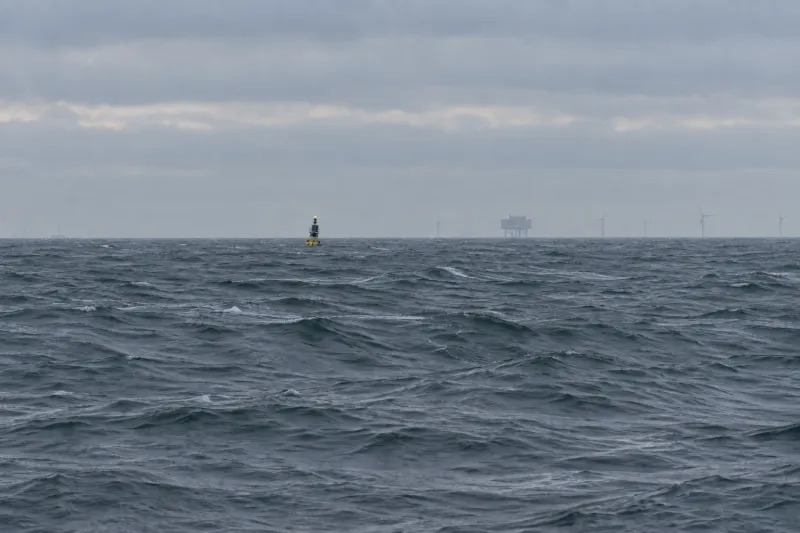
An offshore racon buoy combines visual and racon identification on a stable, moored platform with calculated power.
Commissioning verifies the status, alarms and controls supported by each connected instrument.
The components
Equipment
and interfaces
6 components with specified functions.
The labels identify their Emiko integration.
- 01Structure
Navigation buoys
Navigation buoy with equipment tower
Carries the lantern, racon and supply; payload, freeboard, antenna clearance and stability require a selected hull.
Product page - 02Monitored through NaviGuard
LED marine lanterns
Tideland Nova-65 with Halo2
Provides externally powered marking; the Nova-65 and Halo2 profile connects through the included NaviGuard.
Product page - 03No telemetry
Radar beacons
AMG HEKLEO 2 XS racon
Provides X- and S-band racon identification from an external supply; no racon telemetry is included.
Product page - 04Structure
Navigation buoys
Mooring, ballast and topmark
Complete the specified mark; mooring and ballast follow depth, seabed, tides, exposure and equipment loading.
Product page - 05Full Emiko integration
PowerGuard
PowerGuard and solar configuration
Powers racon, lantern and telemetry; voltage, peak load, energy, enclosure and buoy mounting require confirmation.
Product page - 06Full Emiko integration
NaviGuard
NaviGuard controller
Connects the specified serial profile or PowerMonitor current sensing to Emiko.
Product page
How it works
From the plan to the
commissioned installation
The hull, mooring and power system are sized for the complete payload. Radar and optical operation are checked after deployment.
- 01
Define mark
The authority defines buoy type, position, light character, radar bands and racon identifier.
- 02
Calculate stability
Select hull, tower, ballast and mooring for depth, exposure, equipment mass, centre of gravity and antenna clearance.
- 03
Size power
Size the supply for lantern, racon traffic and telemetry; verify voltage, autonomy, solar area and protected cabling.
- 04
Deploy buoy
Assemble and test equipment before deployment; verify lifting points, mooring installation and final buoy position.
- 05
Test identification
Verify light character and radar response afloat, then test the specified lantern profile and PowerGuard alarms.
Where it is used
Offshore positions requiring racon identification
Offshore operators, cable and pipeline owners, and authorities responsible for marking offshore hazards.
- 01
An exposed approach requiring a floating radar reference
- 02
A charted offshore obstruction requiring a racon-equipped mark
- 03
A cable or pipeline site where the authority specifies a buoy and racon
Planning
Delivery scope
and equipment options
Delivered by Vikingegaarden
- Equipment specification from the marking plan, site data and operating requirements
- Component supply with the agreed manufacturer documentation
- Installation and commissioning, or technical support for the appointed contractor
- Emiko configuration and acceptance checks for supported equipment interfaces
- Service scope, inspection requirements and spare parts confirmed in the quotation
Good to know
Before the
quotation
Does supply monitoring verify racon operation?
No. PowerGuard reports its own supply status. Radar response and the Morse identifier are checked on compatible radar. Remote racon diagnostics require a separately documented interface; no racon connection to NaviGuard is assumed.
How is racon power specified?
The calculation includes operating mode and radar traffic. HEKLEO 2 XS published values are 6 mA idle and 250 mA per band. Seabeacon supply and current figures are on request for the selected variant.
What is required for a quotation?
The enquiry requires the marking plan, position, depth, tides, seabed and exposure, plus light and radar requirements. Required autonomy, maintenance access and deployment vessel capacity are needed for the hull, mooring and power assessment.
Plan this solution
Project quotation
The specification defines the equipment, installation scope and price.
The enquiry requires a chart, positions, marking requirements, mounting details, available power and required autonomy.